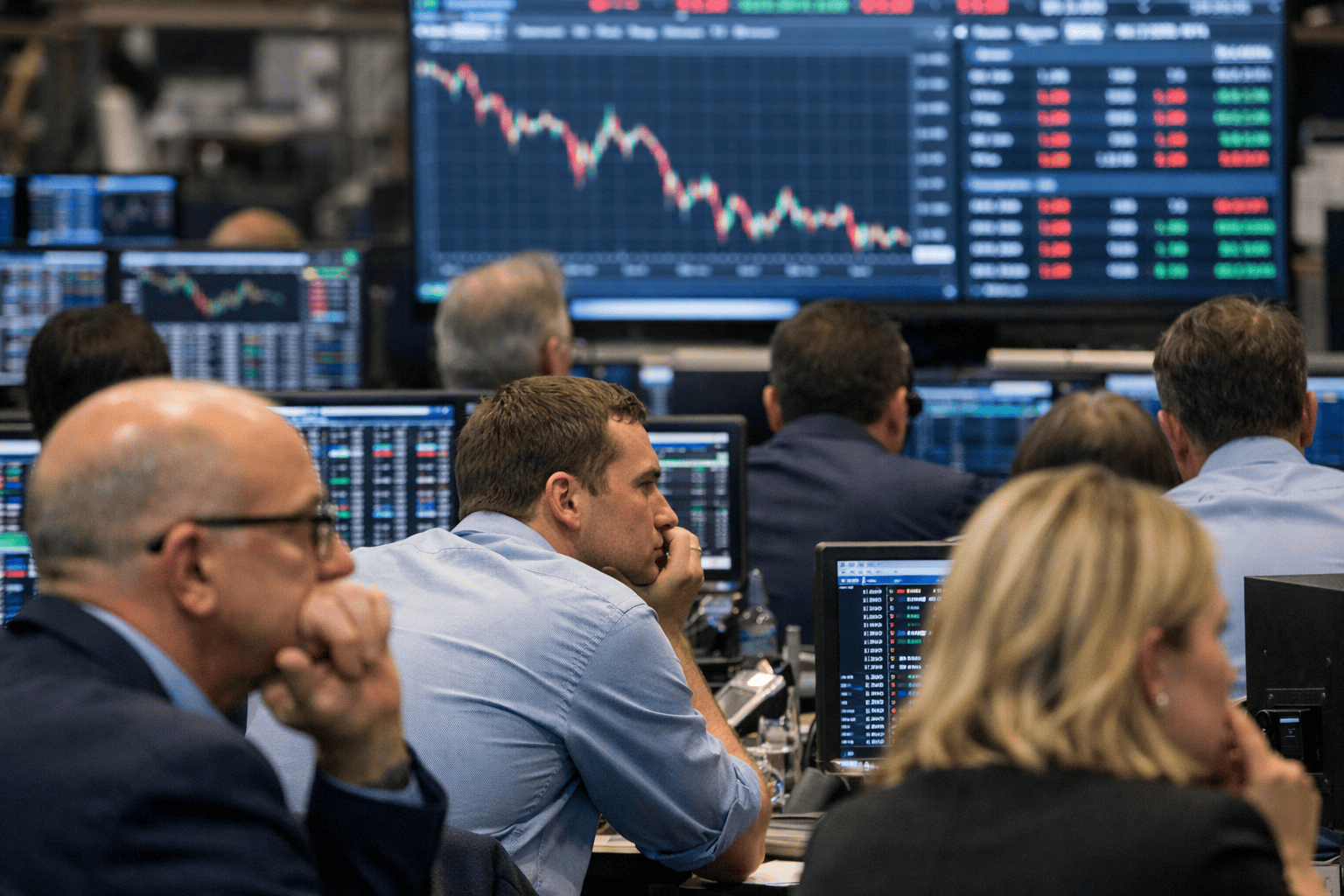
US stock futures advanced Tuesday, with the Dow Jones Industrial Average futures gaining 277 points (0.44%), as renewed hopes for a diplomatic resolution to the US-Iran conflict prompted investors to rotate back into beaten-down semiconductor shares. The S&P 500 futures rose 0.57%, while Nasdaq 100 futures jumped 1.44%, buoyed by a 3.8% premarket gain in the iShares Semiconductor ETF (SOXX).
The rebound follows three consecutive sessions of declines for major US indexes, driven largely by a sharp selloff in technology stocks. The Philadelphia Semiconductor Index recently entered bear-market territory, closing more than 20% below its late-June record, though it remains roughly 66% higher year-to-date. Tuesday's move appears partly driven by bargain hunting after the recent tech rout.

Ceasefire Talks Ease Oil Jitters
Markets are weighing a mediator-backed proposal for a 10-day ceasefire between the US and Iran. Brent crude oil pulled back from Monday's one-month high, alleviating immediate concerns that rising energy costs could feed into underlying inflation. UBS Global Wealth Management's Mark Haefele noted that the pass-through to inflation is likely to remain limited, allowing corporate earnings—rather than aggressive monetary tightening—to remain the primary driver for equities.
However, the relief remains fragile. The Houthi forces have threatened to restrict Saudi access to the Bab el-Mandeb strait, a critical chokepoint for global shipping. Such a disruption could widen beyond the Gulf region, raising freight and insurance costs and reintroducing supply-chain risks.
Alphabet and Intel: The AI Trade's Next Test
Investor attention now turns to two major technology earnings reports that will provide fresh evidence on whether artificial intelligence spending can justify elevated valuations. Big Tech Earnings: Wall Street Demands Proof of AI Monetization on $725B Capex highlights the stakes as Alphabet reports after Wednesday's close. Analysts will focus on Google Cloud growth, AI-related revenue, and capital expenditure trends, especially after a sharp rise in data-center investment. The numbers must demonstrate that spending is translating into stronger demand and margins, rather than merely increasing the cost of competing in generative AI.
Intel follows on Thursday after the closing bell. Guidance on data-center demand, manufacturing progress, and profitability will be critical in determining whether Tuesday's semiconductor rebound can be sustained. The chip sector has been under pressure amid concerns that AI spending may not deliver the expected returns, a theme echoed in Dow Plunges 394 Points as Chip Rout Deepens; Weekly Losses Mount on AI Spending Fears.
New Canada Tariffs Add Inflation Risk
Offsetting some of the relief from ceasefire hopes, President Donald Trump announced 50% tariffs on approximately $20 billion of Canadian imports, including dairy, alcohol, and consumer goods. Products such as energy, potash, and critical minerals were exempted. The measure introduces fresh inflation and supply-chain risks just as investors were embracing the possibility of Middle East de-escalation.
The combination of geopolitical tensions and trade policy uncertainty keeps the market outlook cautious. While Tuesday's futures action suggests a short-term bounce, the sustainability of the rally will depend on earnings results and further developments in both the ceasefire talks and trade negotiations.
This article is for informational purposes only and does not constitute financial advice.