Bloom Energy (NYSE: BE) saw its shares climb approximately 8% on Tuesday following the announcement that the company will be added to the S&P 500 index. The inclusion, set to take effect on September 21, adds a fresh catalyst for the fuel cell maker as demand for power solutions from artificial intelligence data centers continues to surge.
S&P Dow Jones Indices revealed the index change after Friday's market close. Bloom Energy will become the first energy company to join the benchmark index since 2022, a notable distinction that underscores its growing relevance in the power infrastructure landscape.

UBS raises target, cites passive demand boost
UBS analyst Manav Gupta raised his price target on Bloom Energy to $325 from $300, maintaining a Buy rating. Based on the stock's previous close, the new target implies more than 28% upside. Gupta noted that historical S&P 500 additions typically lead to a meaningful increase in passive ownership, as index funds are required to purchase shares of newly included companies. He described the inclusion as a significant positive catalyst for Bloom Energy.
The index addition comes as Bloom Energy benefits from the rapid expansion of AI infrastructure, which has created significant challenges around electricity supply. Securing a transmission connection to a regional power grid can take four to seven years, with transmission operators facing backlogs and shortages of high-voltage transformers and other equipment.
Fuel cells offer faster power deployment
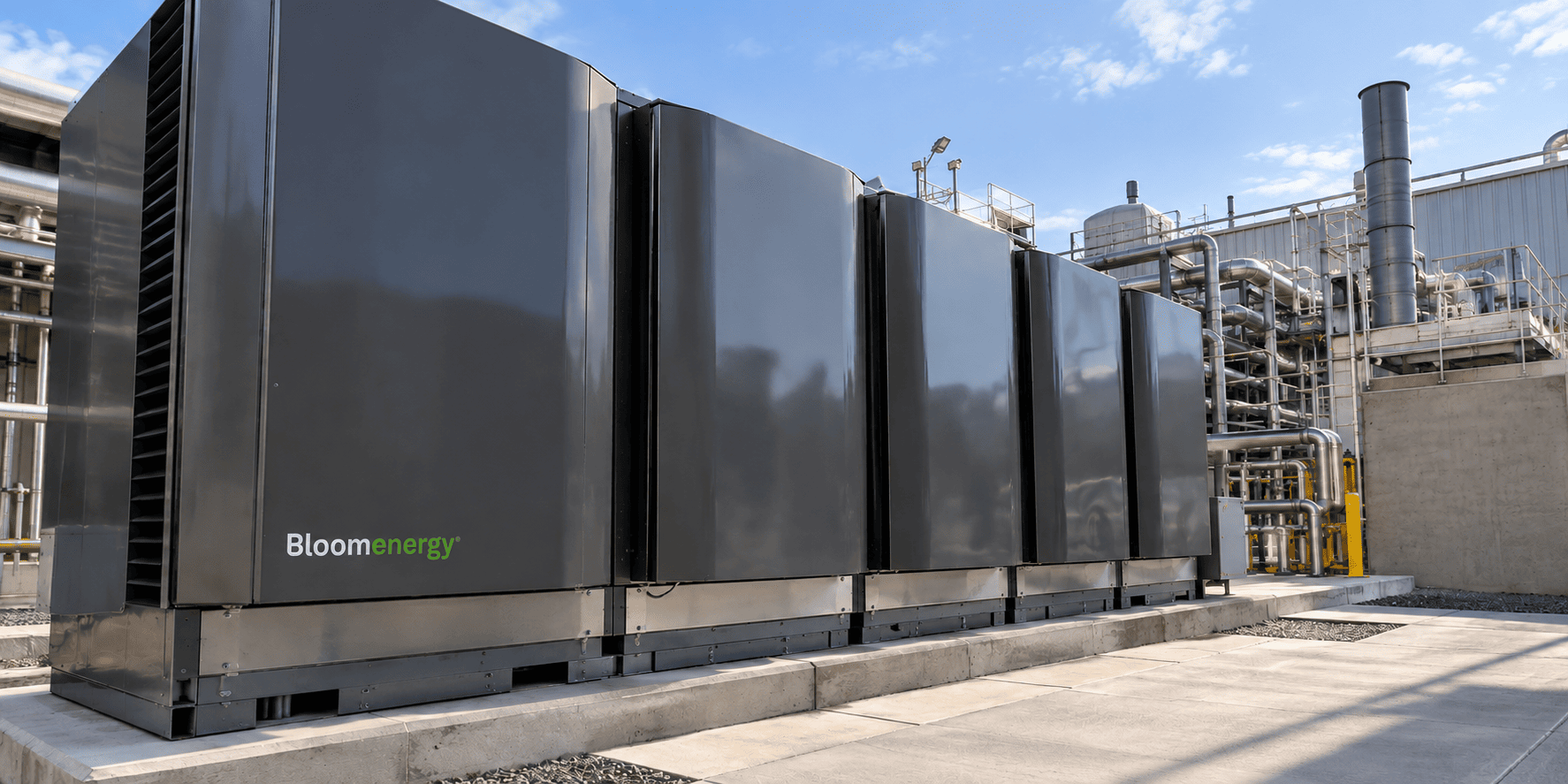
Bloom Energy's solid-oxide fuel cells, which can run on natural gas, biogas, or hydrogen, offer an alternative to traditional grid connections. The systems are factory-fabricated and can be installed on-site within three to four months, potentially allowing data center operators to secure power without waiting for a conventional grid hookup.
The company's technology has gained traction among hyperscalers and neocloud operators. In 2024, Bloom delivered a fuel cell power system for an Oracle cloud infrastructure AI data center in just 55 days. During the second-quarter earnings call, CEO K.R. Sridhar said that "over a dozen US neoclouds, AI labs and colocation data center operators have validated and approved our power solutions."
Revenue outlook strengthens
Bloom Energy reported more than $1 billion in quarterly revenue for the first time in the second quarter. Management subsequently raised its full-year revenue forecast to $3.9 billion to $4.2 billion, with the midpoint representing a 100% increase from the previous year. The company also expects full-year non-GAAP operating income of $800 million to $900 million.
To support growing demand, Bloom has expanded its financing and strategic partnerships. Brookfield Asset Management increased its project financing framework with Bloom from $5 billion to $25 billion. Separately, Industrial Development Funding partnered with Oaktree, MUFG, and Morgan Stanley on a $1.7 billion project investment supporting Bloom fuel cell deployments for Nebius' AI infrastructure. Bloom has also introduced Power Connect, which it says reduces on-site power installation time by more than 40%.
Analysts expect Bloom's earnings per share to reach $2.67 this year, up 251% from $0.76 in 2025. The stock trades at about 94 times projected earnings, while analysts forecast annual EPS growth of 84% in 2027 and 60% in 2028.
With index funds set to add Bloom Energy ahead of its September 21 S&P 500 inclusion, retail investors looking to gain exposure to the AI power infrastructure theme are likely to do so through investment platforms. For broader context on AI-driven market moves, see our coverage of Broadcom's raised AI revenue target and Snowflake's AI-fueled surge.
This article is for informational purposes only and does not constitute financial advice.