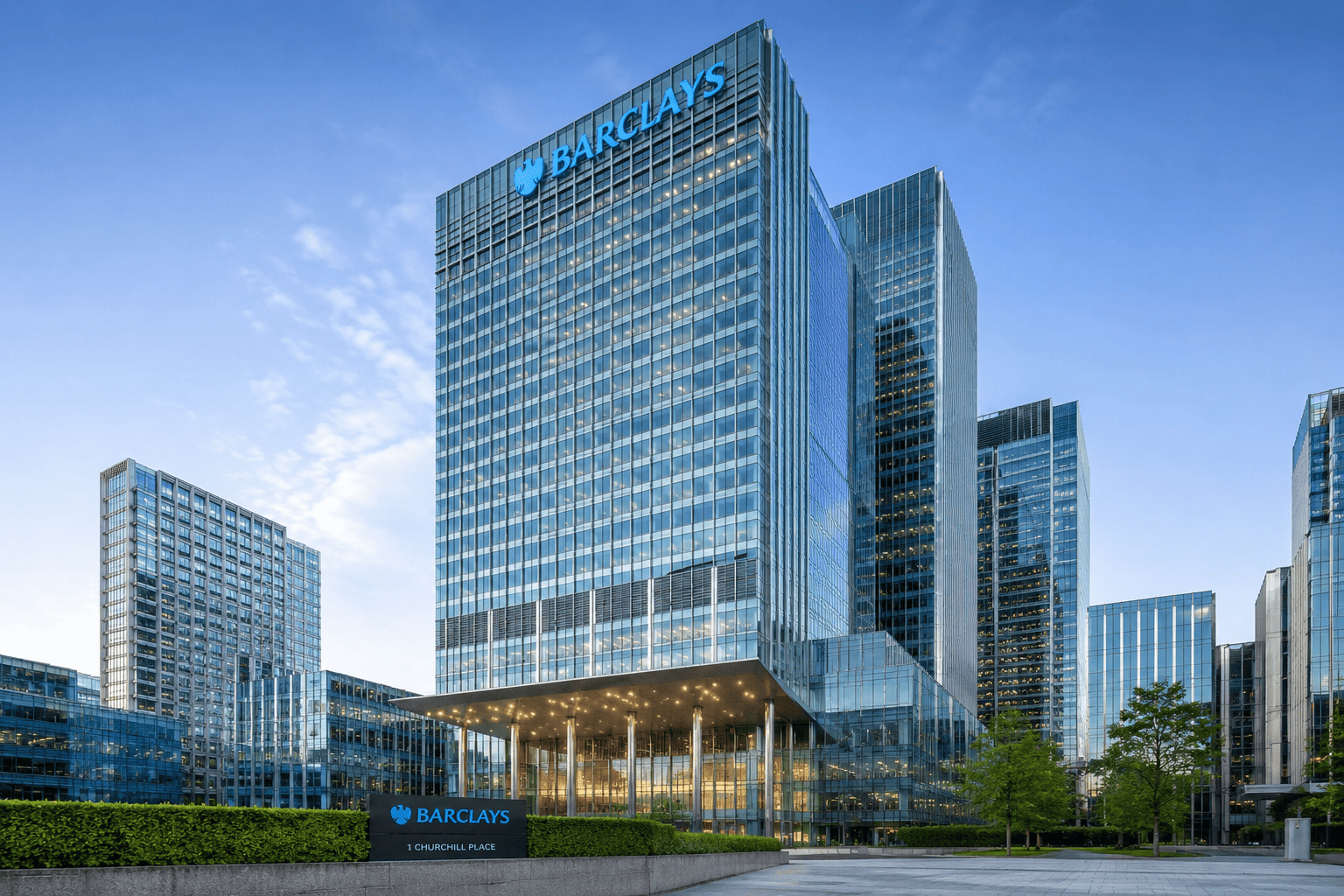
Barclays shares have surged to a 19-year high, climbing 55% over the past 12 months and outperforming UK peers Lloyds and NatWest, which rose 52% and 37%, respectively. The rally reflects a confluence of catalysts: a robust investment banking division, a pickup in European M&A activity, and the tailwind of sustained high interest rates.
Investment Bank Drives Growth
Unlike many UK-focused lenders, Barclays maintains a large global investment bank, which has become a key growth engine. According to WSJ data, the bank has advised on equity capital market transactions worth over $24 billion this year, more than double the $11 billion in the same period last year. In debt markets, it has handled deals exceeding $242 billion, up from $220 billion. Investment banking revenue is estimated at $1.8 billion year-to-date, versus $1.6 billion a year earlier.
The bank is well-positioned to benefit from the ongoing wave of European M&A. Notable deals include Nuveen's $13.4 billion acquisition of Schroders and EasyJet's agreement in principle to be bought by U.S.-based Castlelake. Such transactions could trigger further consolidation, particularly in the aviation sector.
Trading and Rate Environment Provide Additional Support
Barclays' trading business is expected to remain active amid elevated market volatility, driven by the AI supercycle and recent US-Iran tensions. Meanwhile, the Bank of England has held interest rates at 3.75%, with traders anticipating no cuts this year. Higher rates typically boost banks' net interest margins, benefiting Barclays' core UK retail and corporate lending operations.
Strong Q1 Results and Upbeat Guidance
Barclays reported first-quarter revenue of £8.2 billion and profit before tax of £2.8 billion, supported by its investment bank, trading desk, and higher interest income. The strong performance enabled the bank to announce a £500 million share buyback program.
Management raised its forward guidance, targeting a 2028 return on tangible equity of 14%. The bank also plans to return £15 billion to shareholders through buybacks and dividends between 2026 and 2028—a significant figure relative to its £71 billion market capitalization.
Segment-wise, Barclays UK revenue grew 9% year-over-year, helped by high rates and low delinquencies. Its UK corporate bank rose 10%, while the investment bank and US consumer bank posted gains of 4% and 14%, respectively.
Technical Outlook Points to Further Upside
From a technical perspective, Barclays shares have broken above the key resistance level of 506p, their highest since February, invalidating a potential double-top pattern. The Average Directional Index (ADX) has climbed to 36.7, indicating strong momentum, while the Relative Strength Index (RSI) sits at 70. Analysts see the next target at 550p.
For context, Barclays has also been active in other sectors: the bank recently upgraded Enphase, citing AI data center transformer opportunities, and lifted its chip equipment forecast on AI demand, boosting stocks like Applied Materials and KLA.
This article is for informational purposes only and does not constitute financial advice.