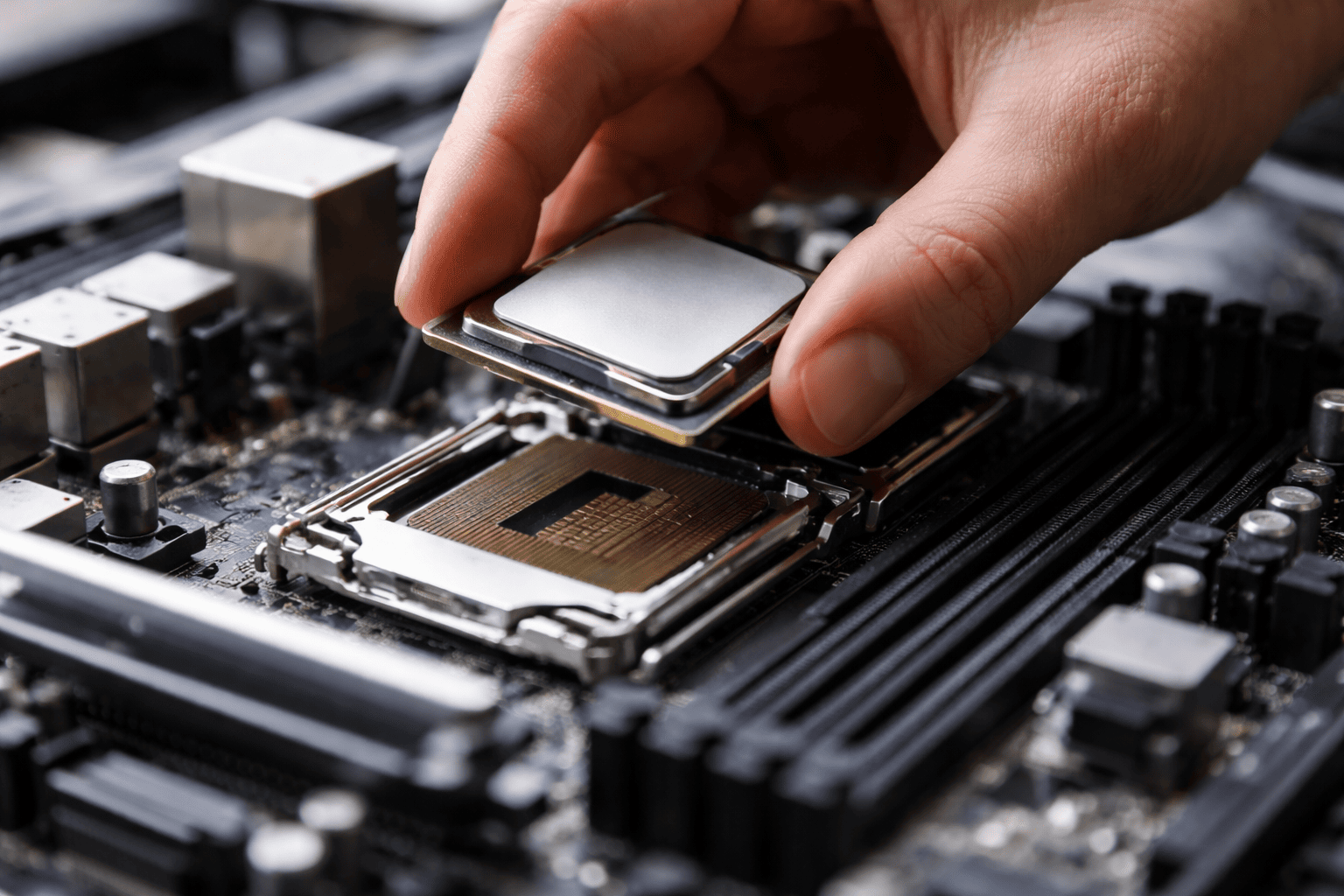
Shares of Intel (INTC) and Advanced Micro Devices (AMD) extended gains on July 9 after AMD's chief technology officer, Mark Papermaster, highlighted a coming renaissance in central processing units (CPUs) driven by agentic artificial intelligence. Speaking at the RAISE summit in Paris, Papermaster argued that the industry has overlooked a structural shift: autonomous AI agents require significantly more CPU horsepower, not just GPUs.
While Wall Street has been fixated on GPU clusters for training large language models, the commercialization of autonomous AI agents is expected to shift the infrastructure bottleneck by 2026. Running complex execution agents demands immense processing power for system orchestration, dynamic data movement, and parallel task execution—all of which could boost demand for both Intel and AMD products. Notably, both stocks have roughly doubled since the start of 2026.

Why AMD Is Better Positioned for the CPU Renaissance
AMD appears architecturally better suited to capitalize on the CPU resurgence. Its EPYC processors offer extreme core density, superior memory bandwidth, and chiplet-based scalability that excel in environments where thousands of autonomous agents must coordinate tasks, move data dynamically, and execute parallel decision loops. The tight integration between EPYC CPUs and Instinct accelerators under the ROCm software platform creates a coherent execution fabric that hyperscalers can deploy without fragmentation.
Papermaster's comments directly align with AMD's roadmap, making the company the most architecturally aligned beneficiary of a CPU-centric AI shift. As AMD shares surged 3.5% on analyst upgrades, the market is pricing in this thesis.
Where Intel Lags Behind AMD
Intel is well-positioned to ride rising CPU demand, but its architecture is not the best fit for agentic AI's orchestration-heavy workloads. Xeon 6's chiplet design uses a dense mesh interconnect optimized for consistency, not the distributed, modular scaling that agentic workloads reward. AMD's Infinity Fabric takes the opposite approach, treating chiplets as independently scalable units better suited to coordinating thousands of agents.
Intel's 18A node may narrow the gap, but it remains execution-dependent and unproven at scale. More critically, Intel lacks a unified CPU-GPU software ecosystem comparable to ROCm, leaving agent-level coordination more fragmented. However, recent milestones like Intel's 18A-P chip milestone signal a potential manufacturing comeback.
Wall Street's Verdict: AMD Over Intel
Investors should note that Wall Street currently favors AMD shares over Intel. The consensus rating on AMD is “Overweight,” with price targets as high as $700, implying potential upside of nearly 30% from current levels. In contrast, analysts rate Intel at “Hold” only, with a mean price target of about $107, signaling potential for further decline through the second half of 2026.
This divergence reflects the market's view that AMD's architecture is better aligned with the CPU renaissance, while Intel faces execution risks. For context, Intel and AMD both surged past Nvidia in H1 2026, but the question remains whether the momentum can last.
This article is for informational purposes only and does not constitute financial advice.