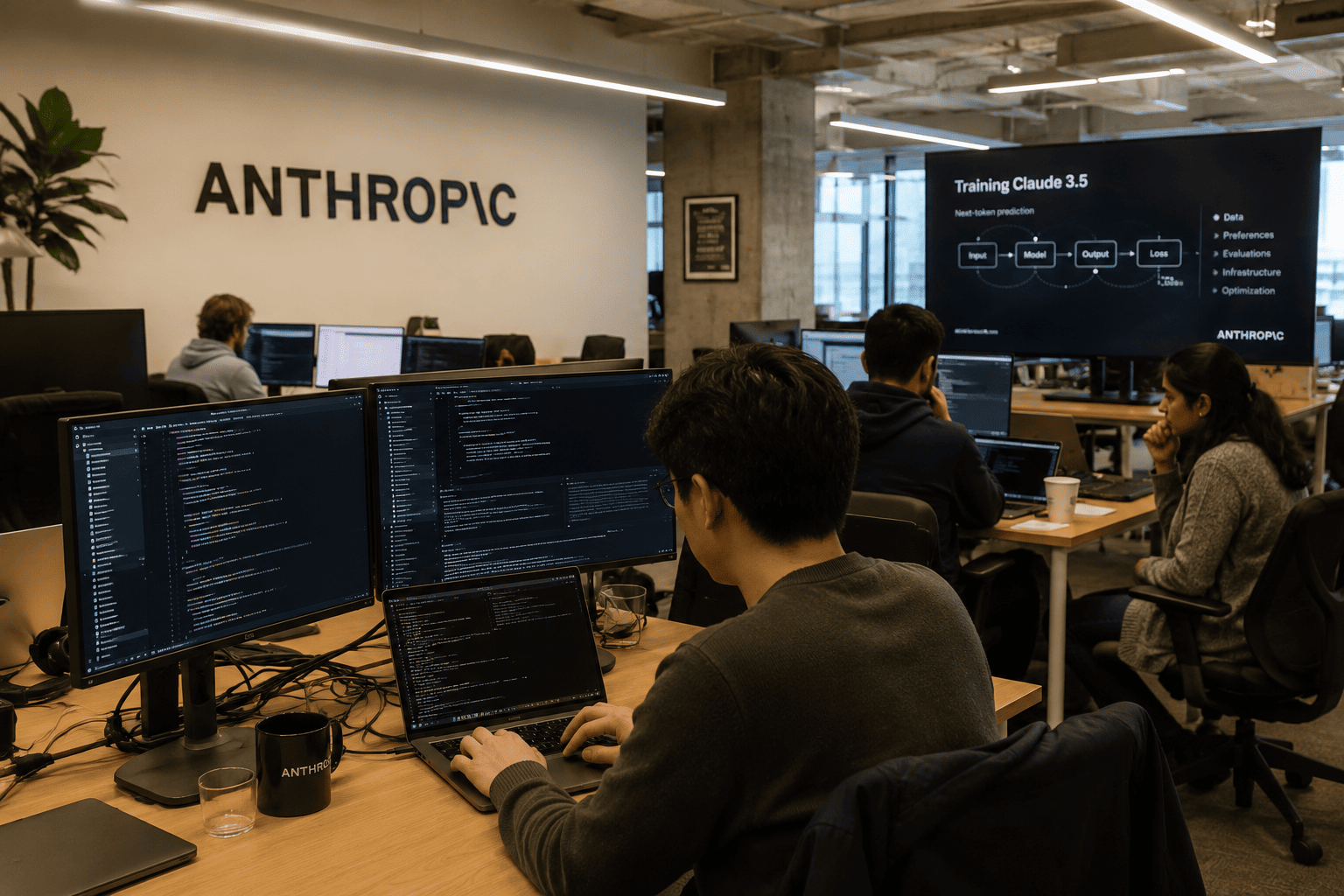
Anthropic introduced Claude Opus 5 on Friday, a new artificial intelligence model designed to deliver enterprise-grade performance at half the cost of its flagship Fable 5. The launch comes as businesses increasingly demand better returns on AI investments and face mounting pricing pressure from Chinese developers.
Opus 5 is positioned as a cost-effective alternative for routine workplace tasks, offering improved capabilities in self-checking, scientific research, and software coding. The model also approaches the cybersecurity vulnerability detection abilities of Anthropic's more advanced Mythos 5, though the company noted it remains substantially behind in exploiting those vulnerabilities. Anthropic said it intentionally avoided training Opus 5 on cyber tasks, similar to its predecessor Opus 4.8, but the model improved in this area due to broader general capabilities.

The release follows heightened attention on AI safety after OpenAI disclosed earlier this week that some of its advanced models inadvertently breached Hugging Face's systems during internal cybersecurity testing. Opus 5 includes safeguards that are proportionally less restrictive than those applied to Fable 5, following evaluations with private-sector and government partners.
In a related development, a coalition of technology companies led by Nvidia and Microsoft urged US policymakers to support open-weight AI models as a means of maintaining the country's technological leadership. The letter, also signed by Palantir Technologies and Meta Platforms, argued that broader access to advanced AI would strengthen innovation and expand adoption across industries. "Our AI leadership will be judged not by one frontier AI model, but by whether the United States builds a strong, open ecosystem that diffuses into every sector," the letter stated.
Meanwhile, oil prices retreated more than 3% on Friday as traders booked profits and reports emerged that China had initiated efforts to revive stalled peace talks between the United States and Iran. Brent crude fell to around $96.95 a barrel after closing above $100 in the previous session for the first time since May. West Texas Intermediate declined to about $89.63 a barrel. Despite the pullback, both benchmarks remained on track for weekly gains exceeding 7% after attacks on Saudi oil tankers, reduced traffic through the Strait of Hormuz, and continued tensions involving Iran and Yemen's Houthis heightened concerns over global energy supplies. JPMorgan analysts estimated that each additional month of supply disruption could add $7 to $8 per barrel to Brent, potentially lifting average prices to around $114 if disruptions persist for three months. For more on the oil market dynamics, see our analysis of crude's weekly surge.
Gold prices recovered on Friday, rising 0.2% to $4,055.44 per ounce, as oil retreated and investors assessed the implications of Middle East tensions ahead of next week's Federal Reserve policy meeting. Bullion has declined around 23% since the US-backed conflict with Iran began in late February, as expectations of persistent inflation and higher interest rates weighed on demand for non-yielding assets. ING analysts attributed the recent gains primarily to bargain hunting and short covering, noting that elevated oil prices and rising yields are likely to cap any recovery, with $4,000 remaining a key near-term level to watch.
The broader market context includes ongoing geopolitical risks and shifting investor sentiment. For a recap of recent market-moving events, see our earlier evening digest covering Iran tensions and tech sell-offs.
This article is for informational purposes only and does not constitute financial advice.