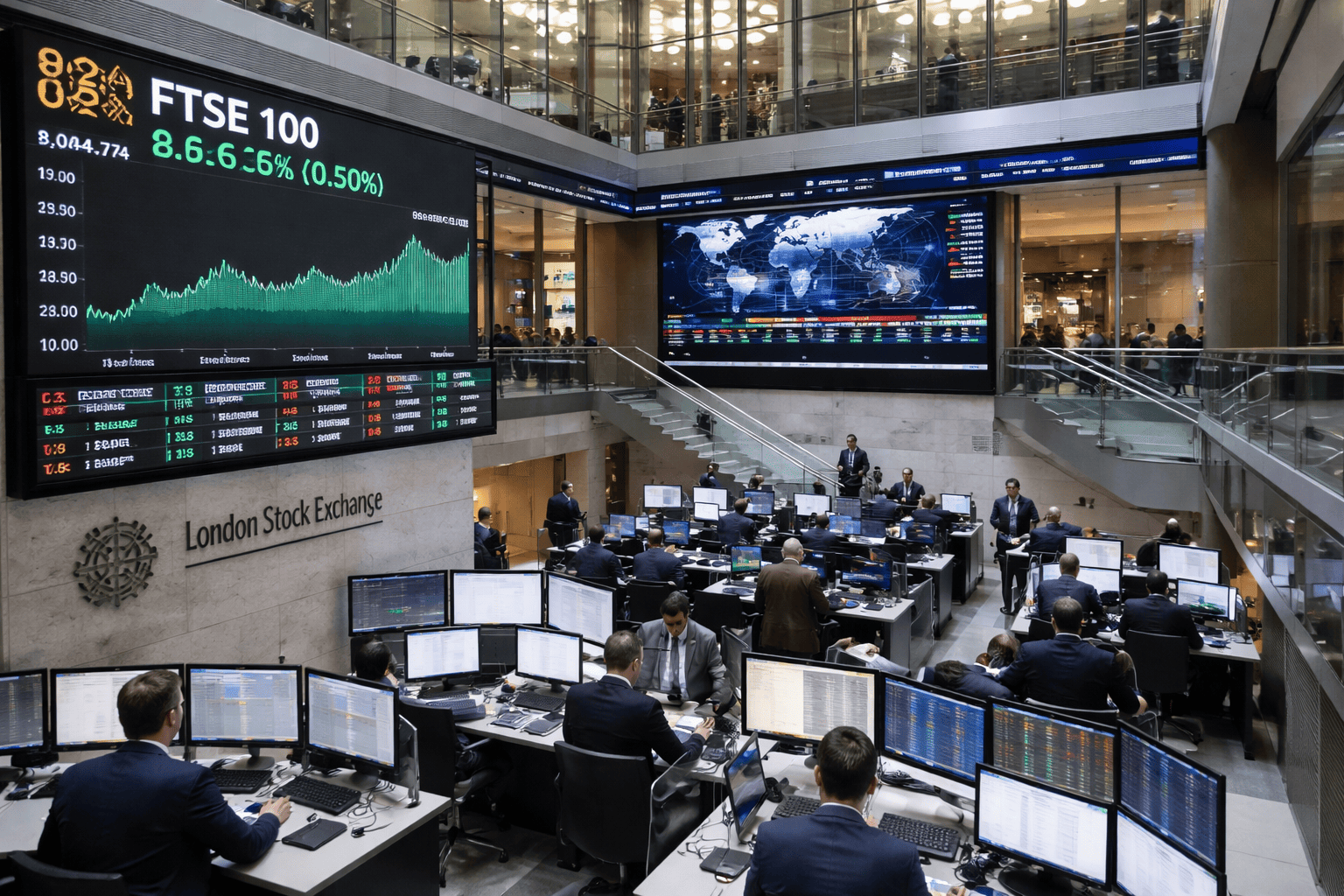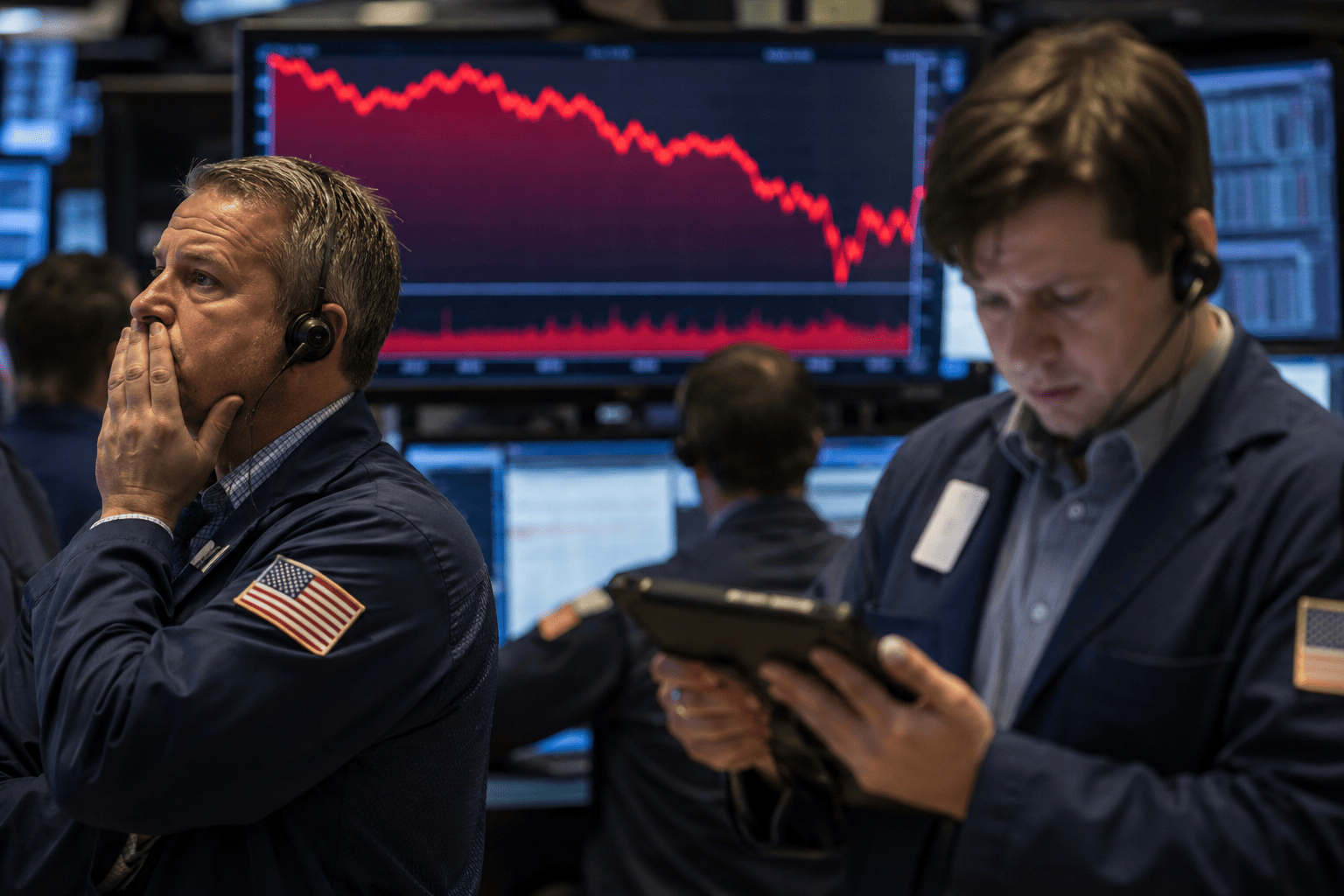
Global equity markets extended a punishing stretch for artificial intelligence and semiconductor shares on Thursday, capping a week in which roughly twenty of the world's largest AI-related companies surrendered more than $1 trillion in combined market value. The selloff reflects mounting unease about whether the capital-intensive buildout of AI infrastructure can withstand a prolonged period of elevated borrowing costs.
The trigger for the latest leg down was a US inflation reading that came in above consensus, reviving expectations that the Federal Reserve may need to raise rates further. Treasury yields remain near multiyear highs, and investors are recalibrating the discount rates they apply to long-duration growth stories. South Korea's Kospi closed 7.5% lower, Japan's Nikkei 225 dropped about 5%, and in the US the S&P 500 slipped 0.4% while the Nasdaq Composite fell more than 1%.
Chipmakers bear the brunt
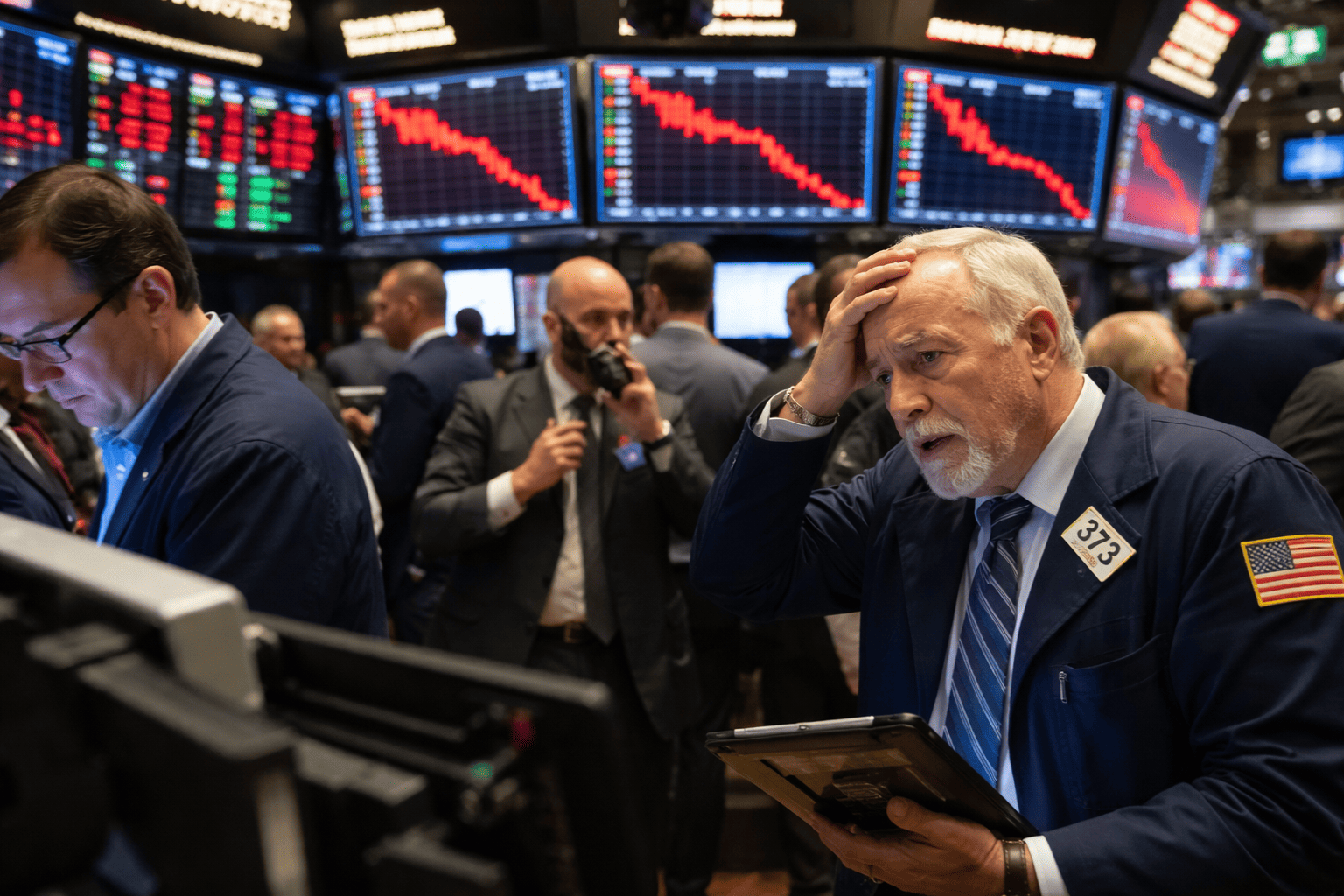
Losses among semiconductor names were pronounced. Nvidia, Intel, Advanced Micro Devices and Micron each declined between roughly 2.5% and 4.6% during Thursday's session, struggling to stabilize after three consecutive bruising days. The iShares Semiconductor ETF has now fallen about 11% over the past five trading sessions, a stark reversal for a group that had been among the market's strongest performers.
At the center of the debate is a straightforward question: will higher interest rates eventually curb the flow of capital into AI infrastructure, even if demand for computing power remains robust? The AI boom has so far appeared largely immune to rising costs, but its financing model is drawing intensifying scrutiny because it relies increasingly on borrowed money.
Executives flag capital as the key constraint
Industry leaders have begun to acknowledge that funding, not demand, may prove the binding constraint. Broadcom chief executive Hock Tan said at a conference in Singapore this week that capital could be the biggest limitation on the AI buildout. Intel chief executive Lip-Bu Tan echoed that view, pointing to the rising cost of capital and to open questions about whether companies making enormous AI investments will ultimately earn sufficient returns.
"If there's any challenge in the front, it's capital and the cost of capital, and then the other part is in the longer run, people want to see the ROI," he said.
IMF warns of broader economic fallout
The consequences of a meaningful slowdown in AI investment would not be confined to technology. The International Monetary Fund this week projected global growth of 3.1% for 2026, slightly above its July estimate of 3.0%, partly because strong AI infrastructure spending has offset higher oil prices tied to the war in the Middle East. But the fund cautioned that a steep decline in AI investment could trigger a sharp drop in asset prices and reduce global GDP by 1.1% by 2028, including a 1.8% hit to US output.
"We now have an economy that is standing on one leg, the AI leg," IMF Managing Director Kristalina Georgieva said at a Bretton Woods Committee event. "What if it wobbles? What if there is disappointment and that leads to potentially a more difficult environment?"
The IMF's Global Financial Stability Report urged policymakers to avoid complacency about a possible pullback in AI investment and valuations. Jason Wu, assistant director of the fund's Global Markets Analysis Division, warned that if questions arise about AI monetization, equity investments could lose value, debt could become difficult to service, and future revenue commitments might not materialize. A downturn could cascade: falling valuations would make equity raising harder, weaker cash flows would strain debt servicing, and reduced infrastructure spending would then ripple out to chipmakers, equipment suppliers and other dependent businesses.
Neoclouds and private credit in focus
The strain is already visible among neocloud providers that offer AI infrastructure as a service. CoreWeave shares fell 15% on Wednesday, Nebius dropped 10%, and IREN closed down 12%. These firms lean on debt to fund expansion and purchase AI servers, making them especially sensitive to rising rates. Yields on CoreWeave's bonds approached 15% on Wednesday, underscoring the climbing cost of borrowing.
Analysts see potential contagion into private credit. Kenneth Goh, director of private wealth management at UOB Kay Hian, told Reuters that investors are separating AI companies with deep cash flows from those that need debt to build, adding that listed lenders to tech and venture companies already trade at steep discounts to asset values and that more cautious lenders could slow the AI buildout well before defaults appear.
Meanwhile, revenue figures from Anthropic, the company behind Claude, were interpreted by some investors as a sign that AI growth may already be decelerating, a development that could eventually weigh on spending. For now, the market's focus remains on the cost of capital and the durability of the returns that justify it.
This article is for informational purposes only and does not constitute financial advice.