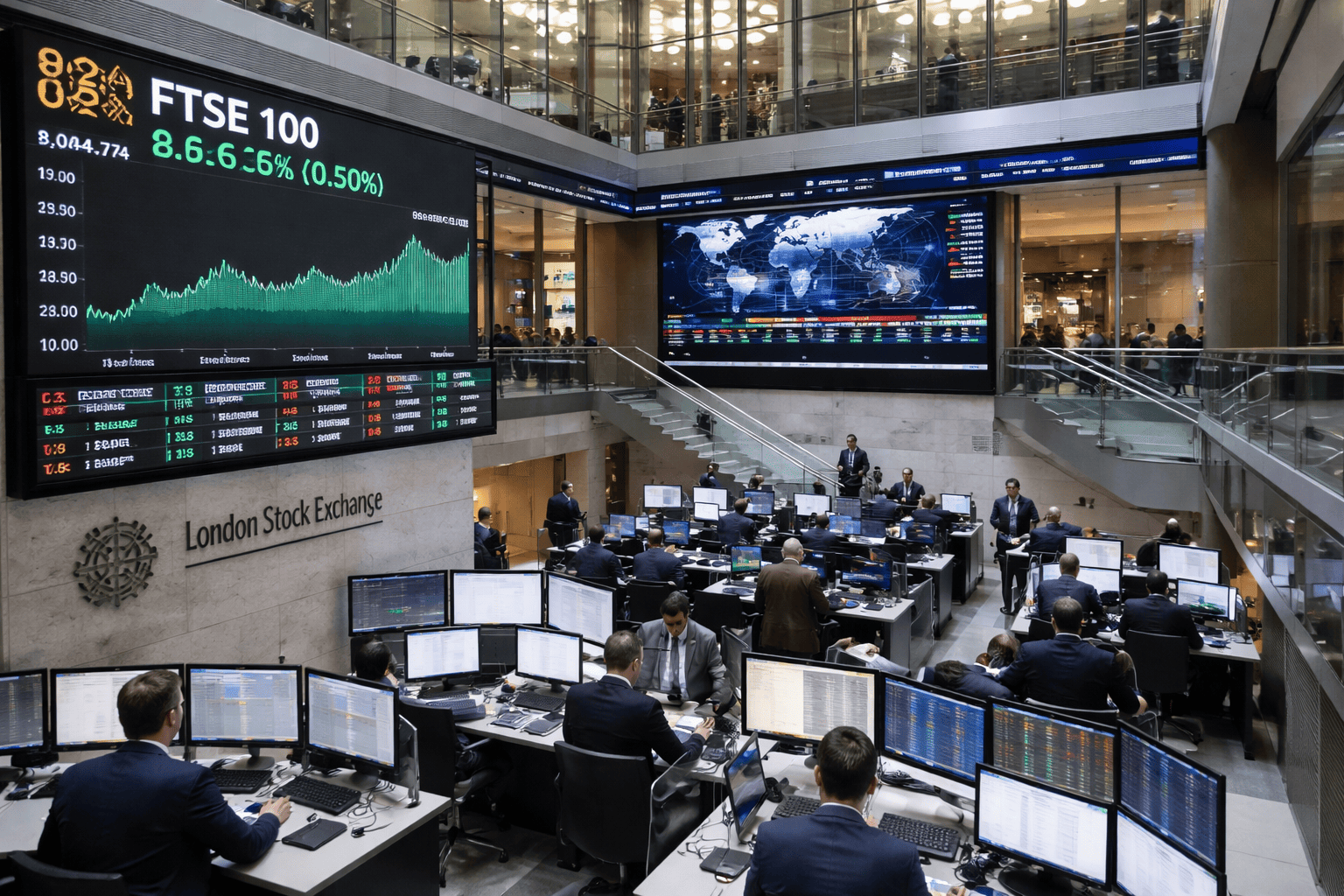
Britain's FTSE 100 advanced to its strongest level in almost a month on Thursday, propelled by a decline in gilt yields and economic data that came in ahead of expectations. The blue-chip index added 0.54% to close at 10,782.98, its highest since September 18, while the more domestically oriented FTSE 250 slipped 0.07%.
Banking stocks were the primary beneficiaries of the move. NatWest climbed 2.3% and Standard Chartered rose more than 1% as the yield on the 10-year gilt eased toward 5.34%. The market's reaction appears less a broad bet on a UK growth surge and more a vote of confidence that the government can keep fiscal risks contained ahead of the October 28 Budget.

Fiscal discipline puts gilts at the centre of the FTSE rally
Chancellor John Healey said the Budget would focus on economic resilience and reiterated that he and Prime Minister Andy Burnham were aligned on maintaining fiscal discipline. The message resonated in a market still sensitive to Britain's high borrowing costs.
The International Monetary Fund has reinforced that stance. It said this week that the UK does not need to accelerate deficit reduction, but should stay on its current consolidation path after already taking meaningful steps to control borrowing.
That helps explain why banks led the FTSE 100 higher as gilt yields fell. Lower sovereign yields reduce some of the valuation and financial-stability pressure created by disorderly bond markets, even as lenders continue to benefit from relatively high interest rates.
Ebury strategist Enrique Diaz-Alvarez told The Wall Street Journal earlier this week that UK assets could remain vulnerable before the Budget until investors receive firmer assurances over sustainable debt levels.
GDP beats forecasts, but the growth signal remains narrow
Official data added another tailwind. UK GDP rose 0.1% in August, beating expectations for a 0.1% contraction, according to the Office for National Statistics. Output was 2.1% higher than a year earlier, while GDP grew 0.7% over the three months to August.
Production increased 0.8% in August, while services were flat and construction fell 0.2%. That mix explains why investors should be careful about reading the FTSE move as evidence of a broad domestic acceleration.
Deutsche Bank and Barclays see AI-related investment as an increasingly important support for UK activity. But the weak FTSE 250 underlines that smaller companies tied more directly to domestic demand are not sharing fully in the optimism.
Banks rise even as another BoE hike moves closer
The rally also contains a monetary-policy contradiction. A poll of economists published Thursday showed the Bank of England is expected to raise Bank Rate to 4% in November, its first increase in more than three years. Normally, higher rate expectations would threaten equity valuations, but the picture seems more balanced for banks.
Higher rates can support lending margins, while Thursday's fall in gilt yields reduces broader stress around funding and sovereign risk. The gains were also selective, as weaker copper prices hit miners, with Antofagasta among the biggest FTSE 100 laggards.
This article is for informational purposes only and does not constitute financial advice.