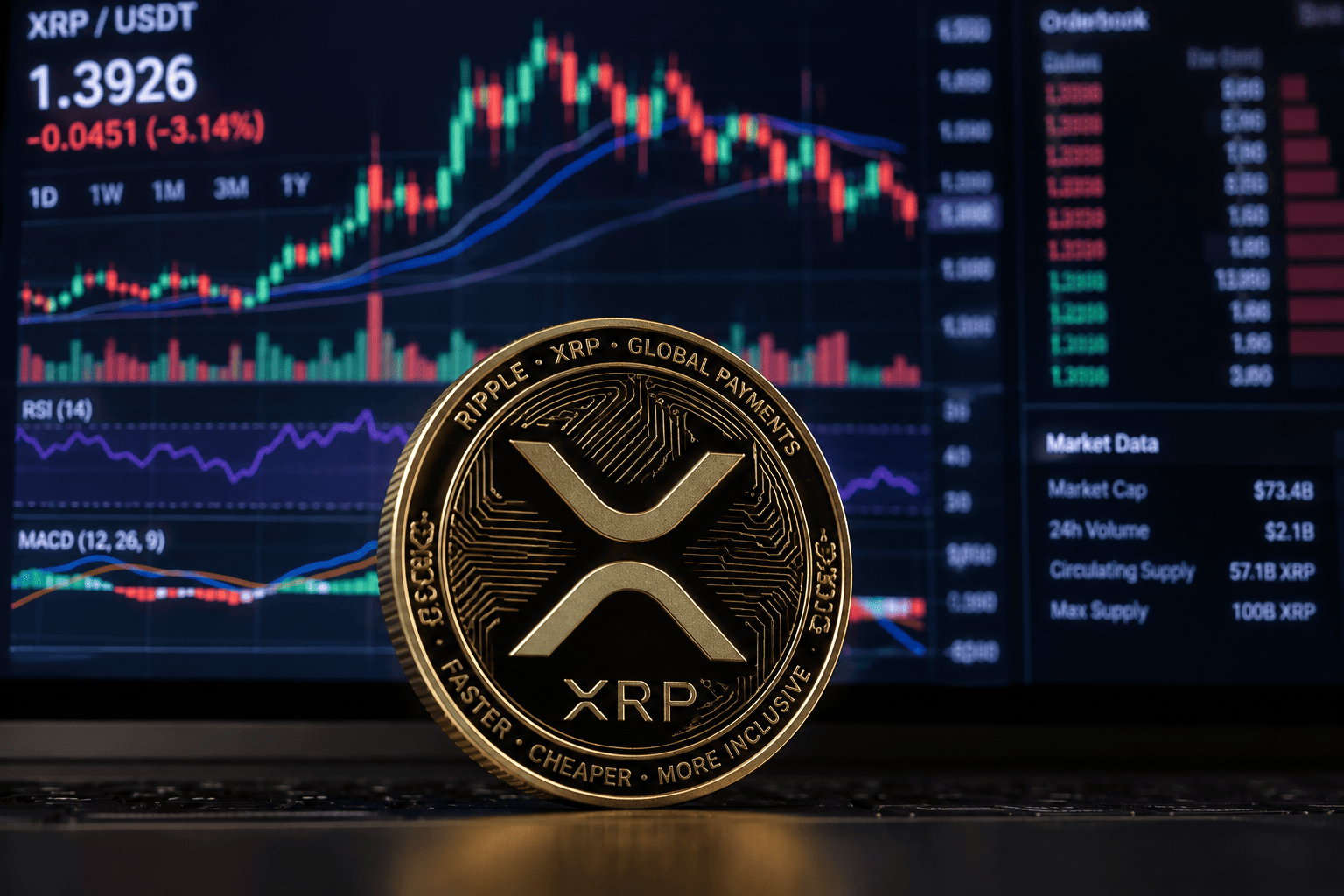
XRP traded around $1.30 on Thursday, stabilizing after a volatile week that saw leveraged longs forced out as the Federal Reserve resumed rate hikes and the Senate stalled on crypto legislation. The token rebounded 1.2% on September 16 to close near $1.30, after swinging between an intraday low of about $1.25 and a high above $1.31. It has since held that range but remains roughly 10% lower over the past seven days.
Fed hike and Senate setback trigger shakeout
The Fed raised its benchmark rate by 25 basis points to 3.75%–4% on Wednesday, its first increase since 2023, citing persistent inflation. That move, combined with the Senate's failure to advance the CLARITY Act—a bill aimed at establishing clearer U.S. rules for digital assets—delivered a one-two punch to XRP. The immediate damage was concentrated among leveraged bulls. Ahead of the Fed decision, about $26.9 million of XRP long positions had been liquidated during the recent volatility, compared with only $3.59 million of shorts, according to CryptoCompass.

That imbalance matters because forced liquidations can turn an ordinary decline into something sharper. When leveraged longs lose enough collateral, exchanges automatically close those positions, creating additional market selling. Egrag Crypto told CryptoCompass that “volatility creates opportunity” and identified $1.26–$1.30 as an initial accumulation zone, with a deeper selloff putting $1.25–$1.15 into focus.
Negative funding shifts the positioning landscape
The positioning picture now looks less aggressively bullish. A cross-venue snapshot from ApeX showed Binance’s XRP perpetual funding rate at about -0.0053%, while Bybit remained slightly positive. Negative funding means short traders are paying longs, indicating that positioning on Binance has tilted away from crowded bullish leverage. Cryptoinsightuk highlighted a similar setup on KuCoin earlier this week, saying rising open interest had been “matched by negative funding, suggesting that more shorts are entering the market than longs.”
That can create a different type of risk. If XRP attracts fresh buying while traders remain positioned defensively, shorts may be forced to cover, potentially amplifying an upside move. More importantly for bulls, reduced long leverage lowers the chance that every modest decline triggers another wave of forced selling. A healthier recovery would therefore rely less on traders borrowing to chase price and more on genuine spot demand.
Less leverage doesn't automatically create demand
The reset should not be mistaken for a bullish signal by itself. Recent CoinGlass data still showed XRP futures open interest near $2.86 billion, meaning leverage remains substantial. Derivatives activity also continues to dwarf spot trading, keeping futures positioning important for short-term price action. CryptoQuant contributor Amr Taha recently described XRP’s structure as unusual. His analysis found that derivatives exposure was returning even as aggressive sellers continued to dominate perpetual and spot order flow. “Fresh derivatives exposure is returning, but the aggressive side of that positioning continues to favor sellers even as price remains relatively resilient,” he wrote.
That is the key caveat. Lower long leverage removes one downside accelerant, but it does not create buyers. If XRP can hold the $1.25–$1.30 area while funding stays restrained and spot demand improves, bulls can argue that the shakeout created a healthier base. If leverage rises again without stronger spot buying, the same vulnerability could quickly return.
For context, recent XRP dips have been driven by leverage unwinding, and earlier pullbacks showed how quickly leveraged longs can amplify downside. Meanwhile, technical support at the 200-day EMA remains a key level to watch.
This article is for informational purposes only and does not constitute financial advice.

