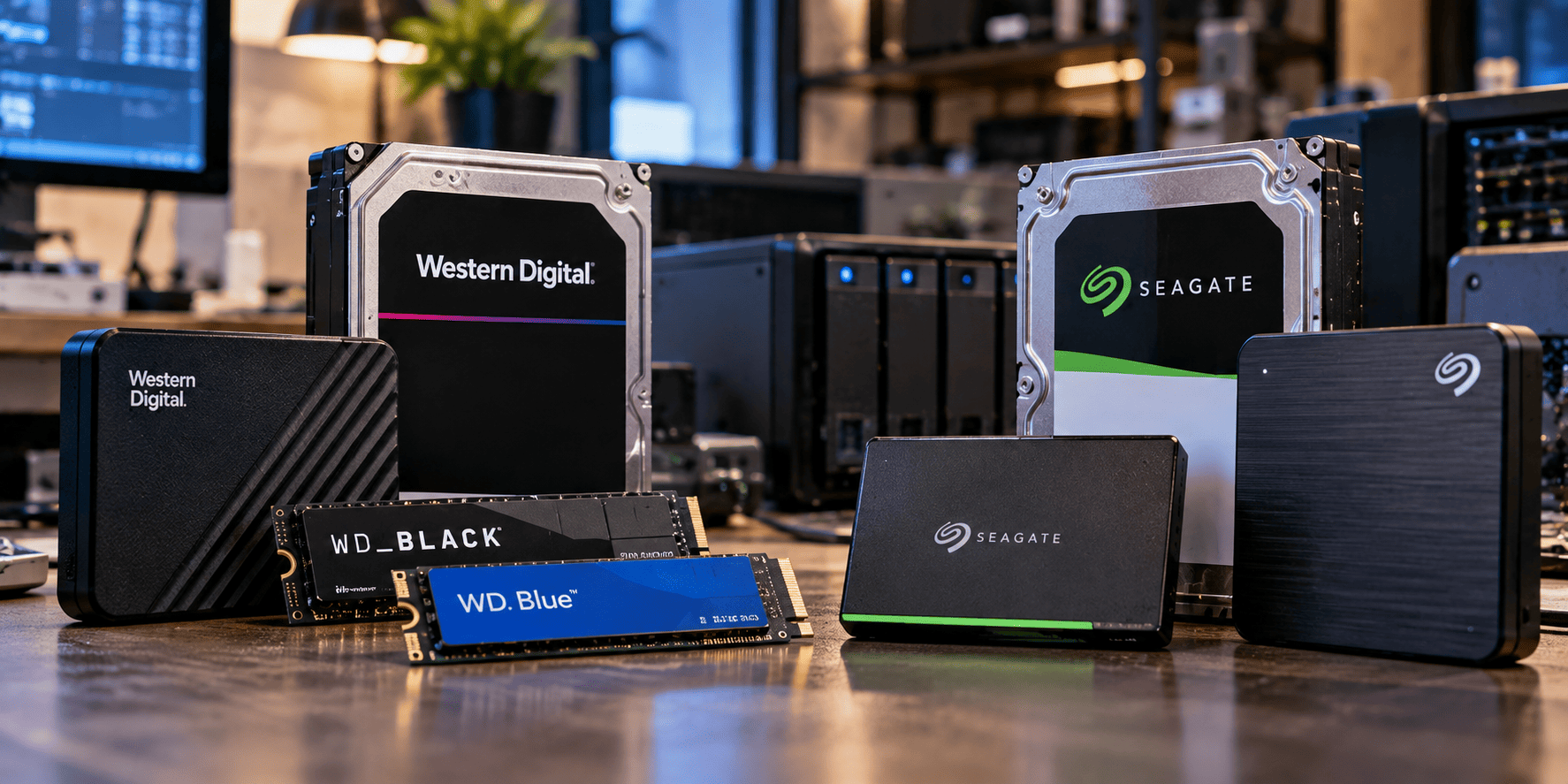
Shares of Western Digital and Seagate Technology recovered on Monday, with Western Digital climbing 6.8% and Seagate gaining 5.9% in afternoon trading, as analysts reassessed the competitive implications of Toshiba's reported plans to expand hard disk drive (HDD) production.
The rebound follows a sharp selloff on Friday after a Nikkei Asia report suggested Toshiba could significantly increase its HDD manufacturing capacity. That news had triggered concerns about potential oversupply and pricing pressure for the two U.S. storage makers.

Analysts downplay Toshiba's capacity expansion
TD Cowen analyst Krish Sankar said that while the prospect of Toshiba doubling its exabyte capacity "sounds bearish" for U.S. storage makers, the underlying figures are less concerning. Sankar estimated that Toshiba's expansion could add about 75 exabytes of incremental supply, leaving the company with around 15% to 17% of the overall HDD market. The industry currently faces a shortage of about 300 exabytes, he noted.
Sankar also factored in his expectation that demand for digital storage capacity will grow by about 30% annually in 2027 and 2028. He described Toshiba's capacity additions as "a natural response to tightness" rather than a sign of future excess supply.
Bernstein echoed that view, saying Toshiba's announcement had been misunderstood. The research firm noted that Toshiba is targeting nearly double its production capacity by fiscal 2027, which ends in March 2028, rather than immediately doubling its global market share. If Toshiba doubles its exabyte output while Western Digital and Seagate each increase shipments by 25%, in line with their long-term plans, Toshiba's share of exabyte capacity would rise from 11.2% to 16.8%, Bernstein estimated. The firm described the potential increase as "significant" but "isn't that alarming" and reiterated its Outperform ratings on both U.S. companies.
Toshiba faces a lengthy ramp and component challenges
The potential competitive threat also remains several years away. Sankar said doubling Toshiba's exabyte production could take about two years, based on a 12-month wafer cycle and another 12 months to build production capacity and install manufacturing equipment. He also noted that customers appear "skeptical about [the] capacity ramp trajectory for Toshiba," pointing to previous instances where the company fell short of production targets.
Western Digital and Seagate are also advancing their product roadmaps, potentially allowing them to extend their lead while Toshiba adds capacity. Sankar said the U.S. companies can supply some of their own components, while Toshiba will need to rely on other suppliers.
Evercore ISI analyst Amit Daryanani highlighted the component issue, saying Toshiba would need to "materially outgrow the market," which he expects to expand by at least 25%, while securing enough components and qualifying higher-capacity products with customers.
Supply shortage persists
Daryanani said Toshiba's planned $380 million investment to expand HDD manufacturing in the Philippines would still fall short of adding a meaningful amount of exabyte capacity. Citi analysts also said Toshiba's expansion was unlikely to materially ease the HDD supply shortage, noting that the industry is currently under-shipping unconstrained demand "by a wide margin." The analysts recommended buying Western Digital and Seagate following Friday's selloff.
Morgan Stanley likewise said the supply-demand gap through calendar 2028 is expected to remain wider than Toshiba's potential capacity expansion. The firm also noted that Toshiba lacks leading-edge capacity and HAMR technology.
This article is for informational purposes only and does not constitute financial advice.

