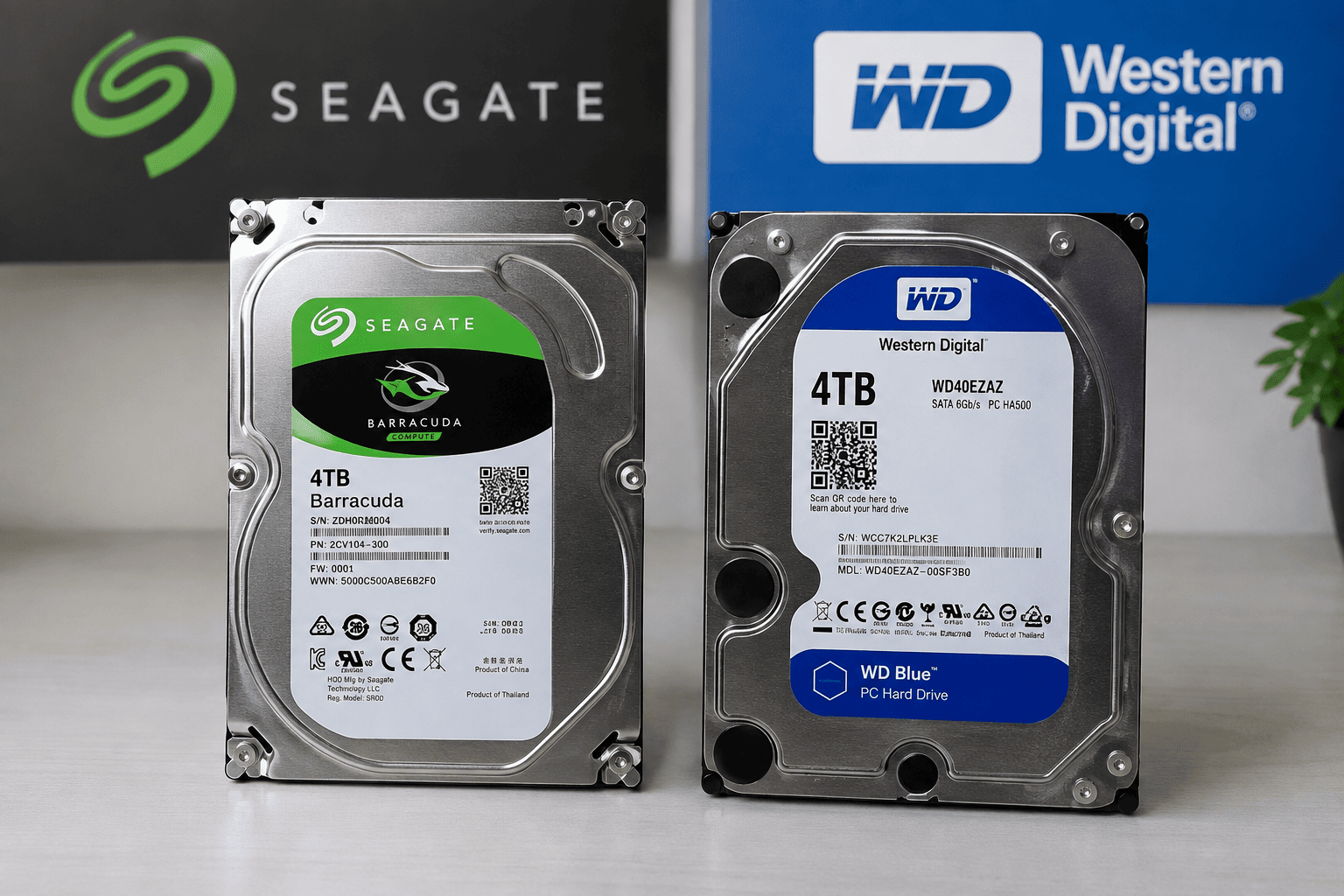
Shares of Seagate Technology and Western Digital tumbled on Friday following a report that Japan's Toshiba intends to significantly boost its hard disk drive (HDD) manufacturing capacity, raising concerns that increased supply could undermine pricing power in a market currently benefiting from the artificial intelligence boom.
Seagate's stock fell approximately 13%, while Western Digital declined about 10% in early trading. The selloff was triggered by a Nikkei Asia report stating that Toshiba plans to double its HDD manufacturing capacity for AI applications during its fiscal year 2027, which ends in March 2027. The expansion, which would be Toshiba's first major investment in HDDs in about five years, involves an estimated 60 billion yen ($380 million) investment to expand its facilities in the Philippines.

Toshiba's Market Share Ambitions
Toshiba, one of the three largest HDD manufacturers globally alongside Seagate and Western Digital, aims to increase its market share by storage capacity from just over 10% to 30% over the medium term, according to the report. The expansion is expected to include new production lines capable of manufacturing drives with up to 40% higher capacity per unit. Toshiba also plans to begin mass production of 65-terabyte-class HDDs by 2030 and eventually develop products with capacities up to 100 terabytes.
The prospect of substantially higher supply is significant for HDD manufacturers because demand has surged alongside the rapid expansion of AI infrastructure. Data centers continue to require large amounts of storage to support generative AI, inference, and other workloads. HDDs remain considerably cheaper than solid-state drives on a cost-per-capacity basis, encouraging operators to deploy high-capacity hard drives alongside faster storage technologies.
That demand has contributed to tight supplies of storage and memory components, allowing manufacturers to raise prices and generate strong profits. However, a sustained increase in HDD production could challenge that dynamic. If supply expands faster than demand, Seagate and Western Digital could face pressure on pricing and margins after benefiting from a period of strong supply discipline.
AI Demand Drives Strong Stock Gains
The concern is particularly notable because both US HDD makers have enjoyed enormous gains this year. Seagate shares have risen more than 228% year to date, while Western Digital has gained nearly 150%, driven by expectations that cloud companies will continue expanding storage infrastructure to support AI applications.
Seagate reported fourth-quarter revenue of $3.63 billion, up 48.5% year over year and above analysts' expectations of $3.49 billion. Adjusted earnings came in at $5.71 per share, compared with estimates of $5.09. The company also forecast quarterly revenue and profit above Wall Street expectations, citing continued demand for high-capacity HDDs as AI infrastructure expands.
Western Digital, meanwhile, reported a more than elevenfold increase in fourth-quarter profit, while revenue rose 44% year over year to $3.75 billion. CEO Irving Tan said, "As global data creation continues to accelerate, we enter fiscal year 2027 with continued confidence in the durability of demand and with increasing visibility into our business." Western Digital is also negotiating long-term agreements with customers extending through calendar 2031, providing greater visibility into future demand.
Analysts Remain Optimistic on Long-Term HDD Opportunity
The sharp market reaction comes despite continued optimism among some analysts about the long-term HDD opportunity. Evercore ISI analyst Amit Daryanani included Seagate and Western Digital among his "top six stocks to own" for the second half of 2026 last month. Daryanani said strong HDD demand could support further upside for both companies. He expects Seagate's pricing power to increase while storage supply remains tight and highlighted the company's "two-year technology lead that is scaling" through its Mozaic 3+ platform. He said Mozaic 3+ is qualified and in production at major hyperscalers, while Mozaic 4+ is ramping with the world's two largest cloud service providers. Mozaic 5+ is expected to begin shipments for customer qualification later next year.
For Western Digital, Daryanani said accelerating data creation from inference and agentic AI could provide another boost. He also pointed to the company's plan to return all of its free cash flow to shareholders after funding research and development.
The Toshiba expansion therefore introduces a new supply-side variable into an HDD market that has so far been dominated by surging AI-driven demand and constrained capacity.
This article is for informational purposes only and does not constitute financial advice.

