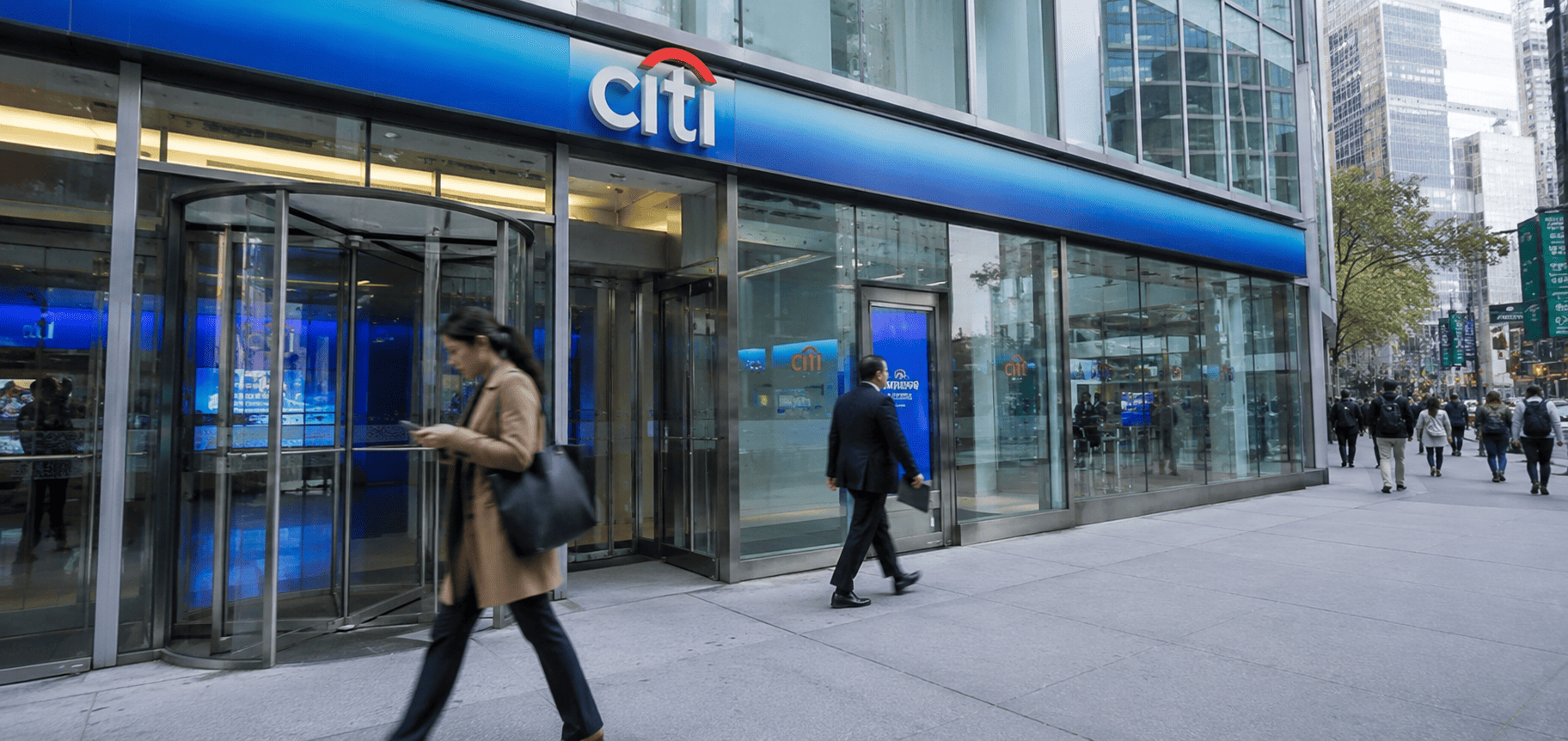
Wells Fargo (WFC) shares slipped on October 13 following the bank's third-quarter earnings release, which showed a revenue shortfall even as earnings per share edged past expectations. The mixed report has investors weighing whether the miss signals deeper issues or simply reflects a challenging rate environment that management had already flagged.
Earnings Beat, Revenue Miss
On a per-share basis, Wells Fargo earned $1.87, topping the $1.85 consensus estimate. However, total revenue came in at $21.87 billion, below the roughly $22.31 billion analysts had projected. Net interest income reached $12.52 billion, about 0.9% shy of the $12.63 billion consensus, while overall revenue missed by 2%. These shortfalls were modest, especially considering that funding costs remain a pressure point across the banking sector.

Full-Year Guidance Reaffirmed
Crucially for the bull case, Wells Fargo maintained its full-year net interest income outlook of approximately $50 billion and guided to roughly $13 billion for the fourth quarter. That gives investors a concrete benchmark to assess whether the recent weakness is temporary or persistent. Management's decision to hold guidance steady suggests confidence in the bank's underlying earnings power.
Credit Quality Holds Up
Credit performance offered additional reassurance. Despite higher provisions, the annualized net loan charge-off rate was 0.38%, down from 0.40% a year earlier. Nonperforming assets also improved, falling to about 0.70% of loans from 0.83%. These metrics support a measured interpretation of the reserve increase, rather than signaling that borrowers are under stress.
Fee-Based Businesses Show Strength
The strongest argument for buying the dip lies in Wells Fargo's fee-generating franchises. Wealth and Investment Management revenue rose 12%, Commercial Banking grew 6%, and Consumer Banking and Lending advanced 5%. This breadth matters because multiple segments contributed to growth even as weaker trading gains weighed on overall results. The bank opened over 660,000 credit card accounts, auto originations climbed 15%, and wealth client assets increased 11%, strengthening the base from which advisory fees can be earned. These figures bolster the investment thesis beyond a hoped-for trading rebound.
Buybacks and Cost Discipline
Shareholders have another source of support: Wells Fargo repurchased $2.5 billion of stock during the quarter, retiring 28.6 million shares. Buybacks can increase each remaining share's claim on future profits, provided the bank pays sensible prices and preserves sufficient capital. Meanwhile, noninterest expenses declined 1%, helped by efficiency initiatives and an approximately 8% reduction in headcount. That discipline matters because it gives revenue growth a better chance of reaching the bottom line.
The Bull Case Beyond the Headline
For prospective buyers, the compelling case rests on operational progress and capital return, not the two-cent EPS surprise alone. Tuesday's pullback offers a lower entry price into that thesis, with future execution set to determine whether the opportunity pays off. Investors should continue to monitor acquisition costs and lending discipline, but the Q3 report demonstrated that Wells Fargo can attract business while navigating uneven capital-markets conditions.
This article is for informational purposes only and does not constitute financial advice.