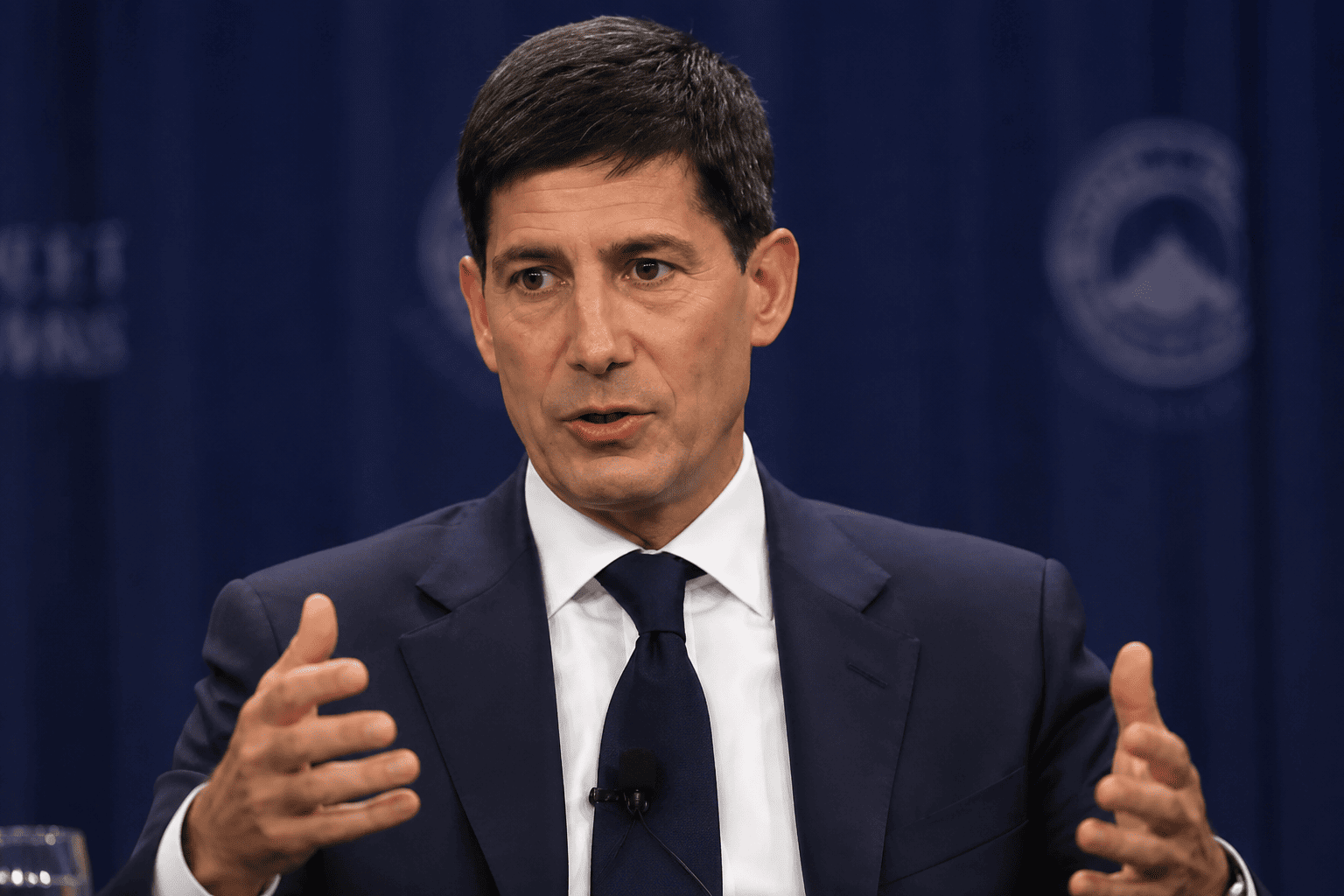
Federal Reserve Chair Kevin Warsh used his first press conference as central bank leader on Wednesday to announce a sweeping review of the institution's policies and operations, unveiling five new task forces while reaffirming the Fed's commitment to price stability. The announcement followed a unanimous decision to leave the benchmark federal funds rate unchanged at a range of 3.5% to 3.75%, marking the fourth consecutive meeting with no rate adjustment.
Financial markets reacted negatively to the news, with Treasury prices falling, the US dollar strengthening, and stocks moving lower. Investors are now digesting the implications of Warsh's reform agenda, which signals a potential shift in how the Fed communicates and implements policy.

Five Task Forces to Reshape Monetary Policy
Warsh announced that the Federal Reserve will establish task forces in five critical areas: Fed communications, the balance sheet, data usage, productivity and jobs in a changing economy, and inflation frameworks. These groups are expected to begin work in the coming weeks and provide initial findings by the fall, with most completing their reviews by year-end.
“These subjects are timely, consequential, and in my view, worthy of a fresh look,” Warsh said during the press conference. He added that he is still recruiting members for the task forces, which will focus on modernizing the central bank's approach to a rapidly evolving economy.
The post-meeting statement was notably shorter than recent releases and removed language that had previously suggested an easing bias toward future rate cuts, a clear signal that the Fed is shifting its forward guidance under new leadership.
Questioning Traditional Data Methods
Warsh also expressed concerns about the government's reliance on traditional economic data collection methods, noting that some data used by the Fed and other agencies depends on “old-fashioned survey methods” that bear little resemblance to the economy in 2026. He pointed out that many private-sector executives rely on real-time information subject to fewer revisions than government reports, which are frequently updated after initial publication.
The new data-focused task force will examine these issues, and Warsh indicated that changes could eventually be made to the Fed's Summary of Economic Projections, including the closely watched “dot plot” of interest-rate forecasts. He confirmed that he did not participate in Wednesday's Summary of Economic Projections, a departure from tradition that underscores his desire for a fresh perspective.
Market Reaction and Forward Guidance
During the press conference, Warsh acknowledged that investors were facing a significant amount of new information. “It's a lot of change for financial markets to digest,” he said, adding that the most important thing for markets and households to know is that the Fed will deliver on price stability. He cautioned against overinterpreting short-term market moves, stating, “I wouldn't be particularly intrigued by how they react in the first several minutes, or even first several days.”
The Fed's decision to hold rates steady comes amid a complex macroeconomic backdrop, with inflation still above target and labor markets showing resilience. For more context on Warsh's first meeting, see our earlier analysis: Warsh's First Fed Meeting: No Rate Cut Expected, But Inflation and Forward Guidance in Focus.
Investors are also watching other developments, such as the Gold Targets Fourth Consecutive Weekly Gain Amid Shifting Macro Forces, as safe-haven assets gain traction amid policy uncertainty. Meanwhile, the Analysts Forecast Dollar Decline as Energy Shocks and Policy Uncertainty Erode Safe-Haven Appeal, adding another layer of complexity for global investors.
Warsh's reform agenda marks a significant departure from his predecessors, emphasizing transparency, data modernization, and a more agile policy framework. As the task forces begin their work, market participants will closely monitor any signals of future rate moves or changes in the Fed's communication strategy.
This article is for informational purposes only and does not constitute financial advice.