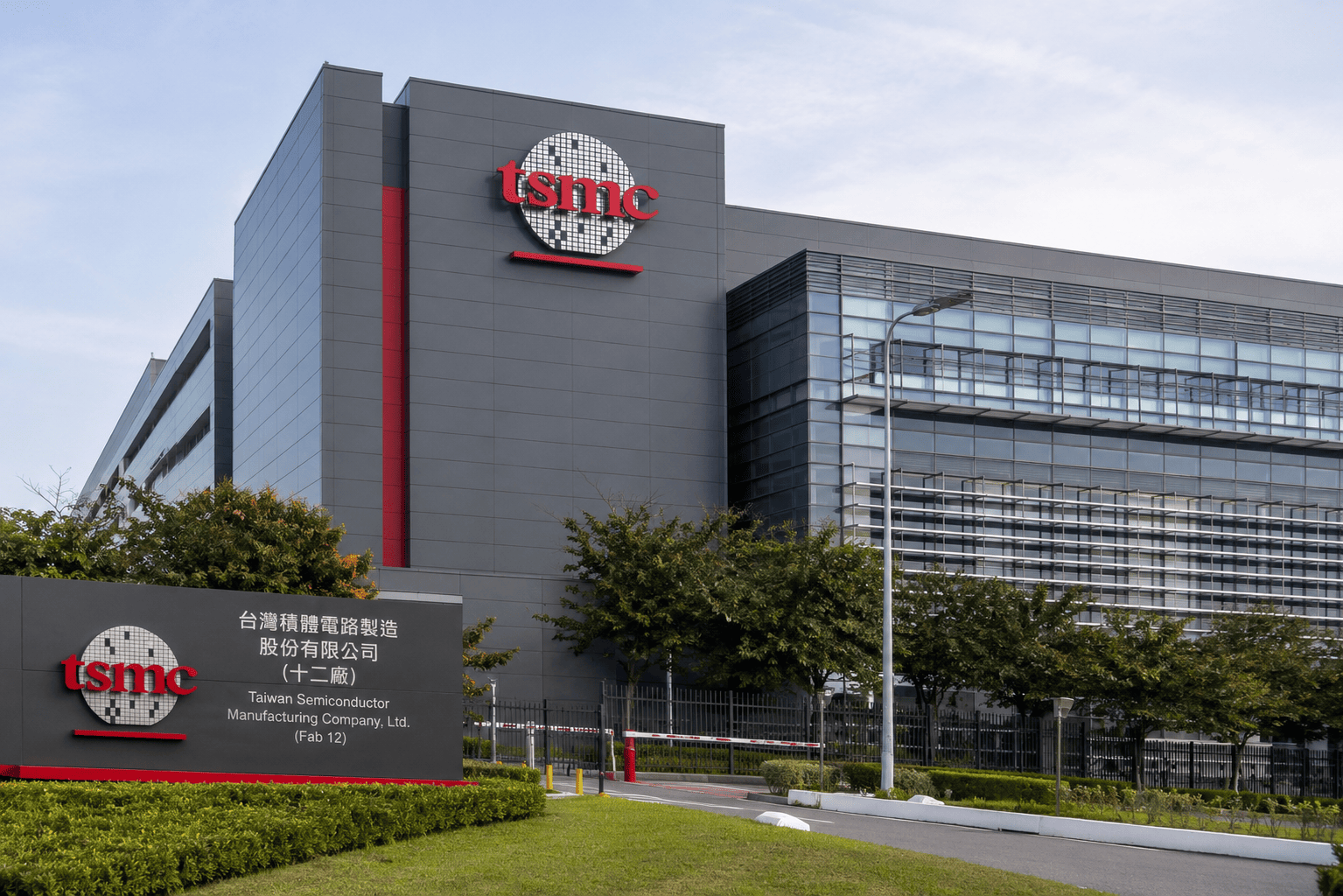
Taiwan Semiconductor Manufacturing Co. (TSMC) reported record second-quarter earnings on Thursday, yet its US-listed shares declined more than 2.2%, signaling that investors are focusing on the company's aggressive spending plans and near-term margin outlook rather than the headline earnings beat.
The world's largest contract chipmaker posted net profit of T$706.6 billion ($22 billion) for the quarter, a 77% year-over-year surge that comfortably surpassed market expectations of T$632.6 billion. Revenue reached T$1.27 trillion ($39.45 billion), slightly above analyst estimates. The results marked TSMC's ninth consecutive quarter of double-digit profit growth, underscoring its dominant position in the semiconductor supply chain, particularly for artificial intelligence chips.
Record Earnings Overshadowed by Capex Hike
Despite the strong quarterly performance, TSMC's stock declined in US trading, while its Taiwan-listed shares ended the session modestly higher. The divergence highlights investor unease over management's revised capital expenditure forecast. TSMC raised its 2026 capex guidance to between $60 billion and $64 billion, up from the previous upper end of $52 billion to $56 billion. The increased spending is directed at expanding advanced manufacturing capacity to meet surging AI chip demand, but it also raises questions about near-term profitability.
Adding to the concern, TSMC announced an additional $100 billion investment in its Arizona facility, part of a broader strategy to diversify production outside Taiwan. The US expansion is expected to pressure margins initially, as new nodes—particularly the 2-nanometer process—come online.
Margin Dilution Fears and Analyst Perspectives
Gytis Zizys, an analyst at Seeking Alpha, noted that the higher capex likely contributed to the stock's decline. "Another reason might be that the company raised its capex forecast to over $60B, which is a lot; however, I think this is totally necessary to remain on top of the game," Zizys said. He added that investors are reacting to the expected margin impact from next-generation nodes, which management has indicated could dilute margins by 2% to 3% initially, widening to 3% to 4% later. "The increase in overall revenue will more than offset the loss in margins, in my opinion," he concluded.
The company guided for third-quarter revenue between $44.6 billion and $45.8 billion, well ahead of Wall Street expectations of roughly $43.1 billion, and an operating profit margin of 56% to 58%. Yet the market's muted reaction suggests that near-term margin pressure is weighing more heavily than the strong demand outlook.
Brokerages Maintain Positive Outlook
Despite the stock's decline, most brokerages remain bullish on TSMC. KGI Securities raised its price target on the Taiwan-listed stock to NT$3,200 from NT$3,000, maintaining an Outperform rating. The brokerage cited higher earnings expectations and based its valuation on 20 times forecast earnings per share for the second half of 2027 through the first half of 2028.
KGI analyst Michael Liu acknowledged that some investors may be disappointed by the lack of upside surprises in the quarterly results and may worry about margin dilution. However, he urged investors to focus on the company's technology leadership. "While investors may be somewhat deflated by the lack of upside surprises in 2Q26 results, and may even harbor concerns about margin dilution, we suggest investors focus on the company's sustained, outstanding technology leadership and how still-strengthening AI-related demand will drive a robust long-term earnings CAGR," Liu said.
The broader semiconductor sector has seen mixed reactions to earnings recently. For context, Kioxia stock plunged 40% from its peak despite record memory demand, while the Kospi index fell 6.4% as Samsung and SK Hynix declined ahead of TSMC's earnings. These moves highlight the market's sensitivity to capital expenditure and margin dynamics in the chip industry.
TSMC's long-term demand drivers remain intact, with AI hyperscalers continuing to invest heavily in advanced chips. The company's ability to maintain its technological edge and scale production will be critical in balancing growth with profitability. For now, investors appear to be taking a cautious stance, weighing the record earnings against the costs of maintaining leadership.
This article is for informational purposes only and does not constitute financial advice.