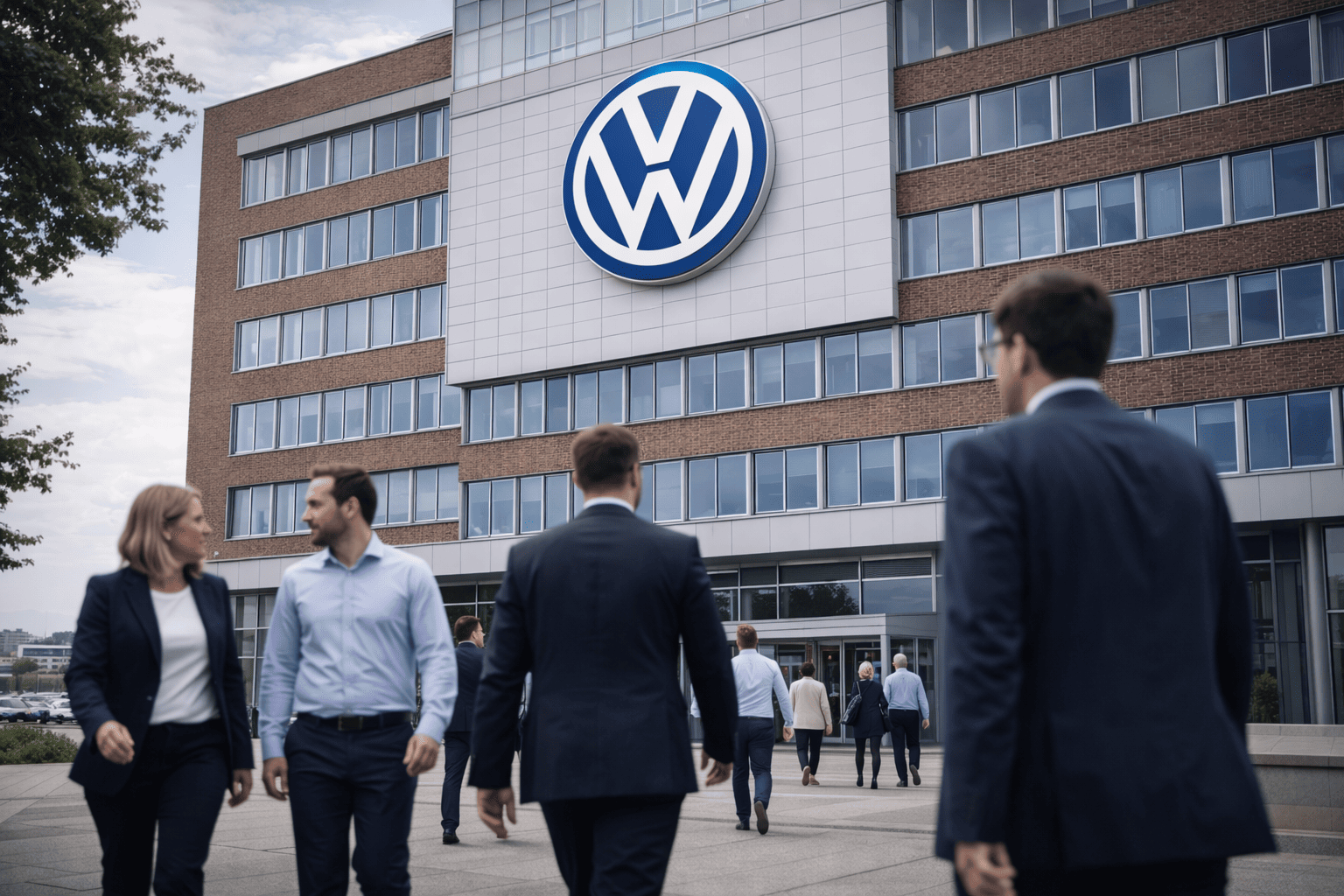
Volkswagen's shares dropped 5% on Friday after the automaker cut its 2026 profit outlook to a margin of just 1%, down from its previous guidance of 4% to 5.5%. The company cited a sharp contraction in China's car market, rising costs from its job-cutting plan, and a major write-down on its stake in Porsche AG.
The stock fell as much as 7.5% intraday, its biggest one-day drop in a year, and the selloff spread to rivals BMW and Mercedes-Benz, which also saw their shares decline.

Where the €10 billion hit is coming from
Volkswagen said it expects negative effects totaling roughly €10 billion to weigh on this year's results. A €6 billion write-down on the value of its Porsche AG stake accounts for a large share of that figure. The rest reflects provisions tied to a hard-won agreement with workers reached this month, which will double Volkswagen's planned job cuts to 100,000 globally.
China remains the core problem
China, Volkswagen's largest market, continues to be the company's biggest drag. China's overall car market has shrunk by more than a fifth through August this year, hit by an extended real estate crisis weighing on consumer spending. The decline has hit Volkswagen even harder than the broader market, as the company struggles to offer electric vehicles competitive with local Chinese brands.
Volkswagen's own first-half results, reported earlier this year, showed the strain building well before Friday's announcement. First-half revenue stood at €158.1 billion, while operating profit fell 11.6% to €5.9 billion, an operating margin of 3.8%, already below the low end of the company's prior full-year guidance range. China sales fell 20% in the first half of 2026, the company said in July, even as electric vehicle orders in Europe rose more than 50% in the second quarter.
A guidance cut that keeps getting worse
Friday's announcement marks the second time this year Volkswagen has lowered its 2026 outlook. In July, the company cut its expected sales revenue range to between a 3% decline and flat growth, while still maintaining its operating margin guidance of 4% to 5.5% at the time. That guidance has now been abandoned entirely.
Volkswagen has also been grappling with underused plant capacity in Germany, adding to its cost pressures even as it pushes through a broader transformation program covering products, technology and its overall business structure.
Investors will now be watching whether Volkswagen can stabilize its China business and offset rising costs through its restructuring plan, or whether Friday's 1% target becomes the starting point for further cuts rather than a floor. Operating return on sales has fallen every year since 2022, from around 8% that year to roughly 6% in 2023, near 5% in 2024, and just over 2% in 2025. The originally guided 2026 range of 4% to 5.5% would have marked a rare improvement on that trend. Instead, the updated 1% forecast makes 2026 set to be Volkswagen's weakest year for profitability across the entire period shown.
For context, other automakers are also facing headwinds, but Volkswagen's challenges are particularly acute. As the company navigates these issues, investors may look to SpaceX's recent gains for a contrast in market sentiment, while Oracle's climb shows how tech optimism can diverge from traditional auto sector woes. Meanwhile, Dell's jump on AI server demand highlights the broader market's focus on growth areas, and TELUS's plunge reminds that dividend cuts can also hit other sectors.
This article is for informational purposes only and does not constitute financial advice.

