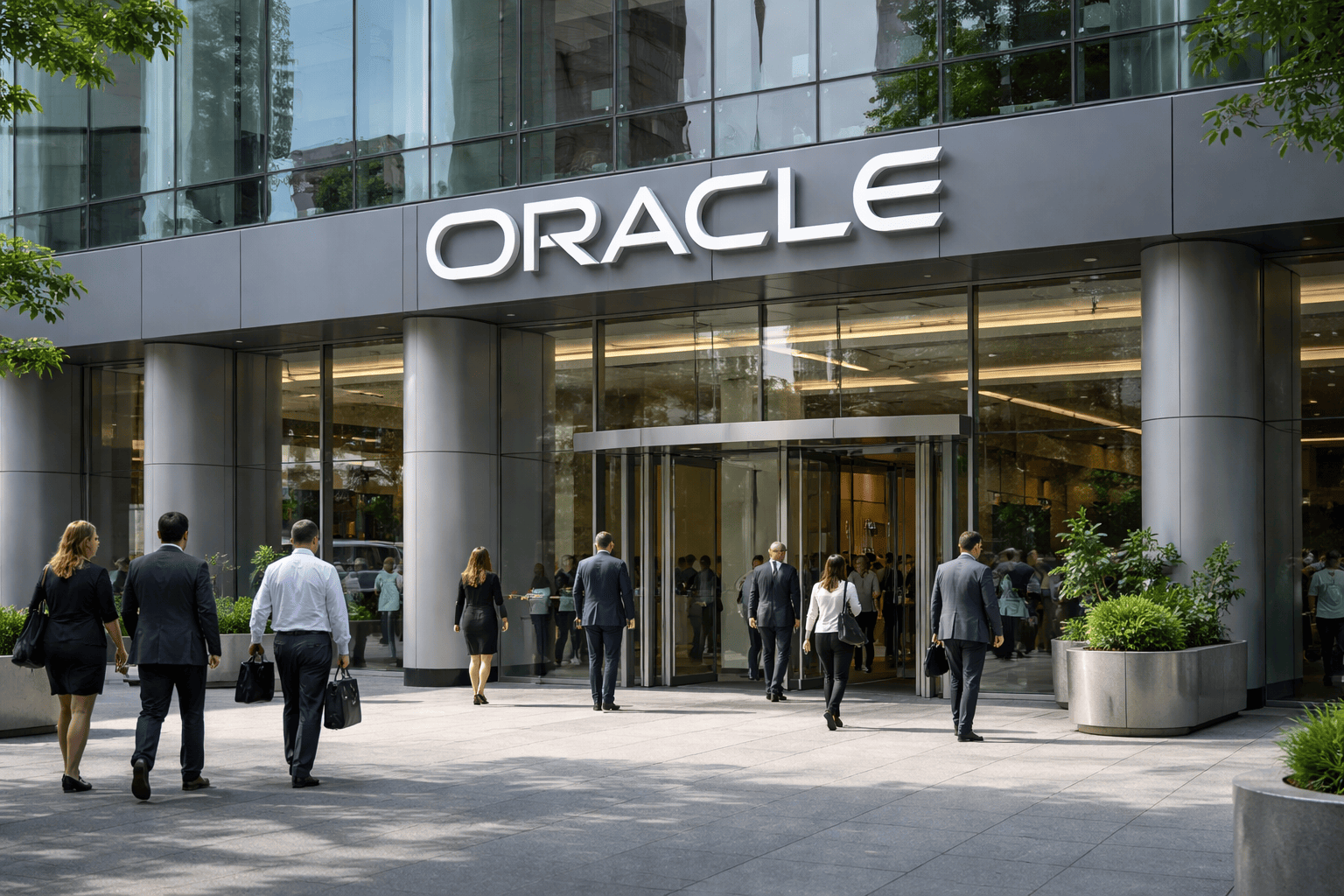
Oracle (ORCL) shares advanced roughly 4% in midday trading Thursday, buoyed by positive developments surrounding its key AI partner, OpenAI. The move underscores how closely Oracle's fortunes are now tied to the AI startup's financial health and expansion plans.
OpenAI funding talks lift sentiment
Investor optimism was fueled by reports that OpenAI is in discussions to raise capital at a valuation of $1.2 trillion. Such a funding round would bolster OpenAI's balance sheet, potentially easing concerns about its ability to meet the massive computing commitments it has made with Oracle.

Last September, the two companies agreed to a $300 billion computing deal, positioning Oracle as a major hyperscaler in the AI infrastructure race. However, that scale has also raised questions about Oracle's spending, debt levels, and its concentration risk with a single customer.
Earlier reports that OpenAI might delay its initial public offering from 2026 to at least 2027 had weighed on Oracle's stock. The latest funding news provides a counterbalance, suggesting OpenAI can secure private capital to fund its growth without immediate public market pressure.
Oracle's $664B backlog: opportunity and risk
Oracle's latest quarterly results revealed remaining performance obligations (RPO) of roughly $664 billion, representing contracted services not yet delivered or recognized as revenue. That backlog is about 9.2 times Oracle's trailing-twelve-month sales of approximately $71.8 billion, highlighting the enormous potential demand for its AI cloud infrastructure.
However, the concentration is striking: around $300 billion of that RPO is linked to OpenAI. If OpenAI were to scale back its plans or face financial difficulties, it could delay or reduce its contracted spending with Oracle, slowing the conversion of backlog into revenue.
Despite these risks, Oracle expects revenue to grow about 34% this year and earnings to rise roughly 19%, even as it invests heavily in expanding its cloud infrastructure. The stock trades at approximately 17 times this year's expected earnings, according to the provided text.
Job cuts amid AI infrastructure spending
Oracle is also trimming its workforce to manage costs while ramping up AI-related capital expenditures. The company is laying off 359 Seattle-based employees, including program managers, software developers, and engineers, according to a Worker Adjustment and Retraining Notification filing reported by the Business Journal. This follows 491 earlier job cuts in Seattle this year, bringing the total to at least 850 in 2026.
The layoffs, which affect two Seattle locations including the JPMorganChase Center, were announced Monday. They come as Oracle continues to balance its aggressive AI infrastructure buildout with the need to control operating expenses and debt.
Oracle's relationship with OpenAI remains central to its growth narrative. The reported funding talks could provide additional assurance that OpenAI will be able to honor its commitments, supporting Oracle's long-term revenue visibility. For more context on Oracle's recent stock movements, see the recent slide on AI spending fears and analyst views on the AI backlog.
This article is for informational purposes only and does not constitute financial advice.

