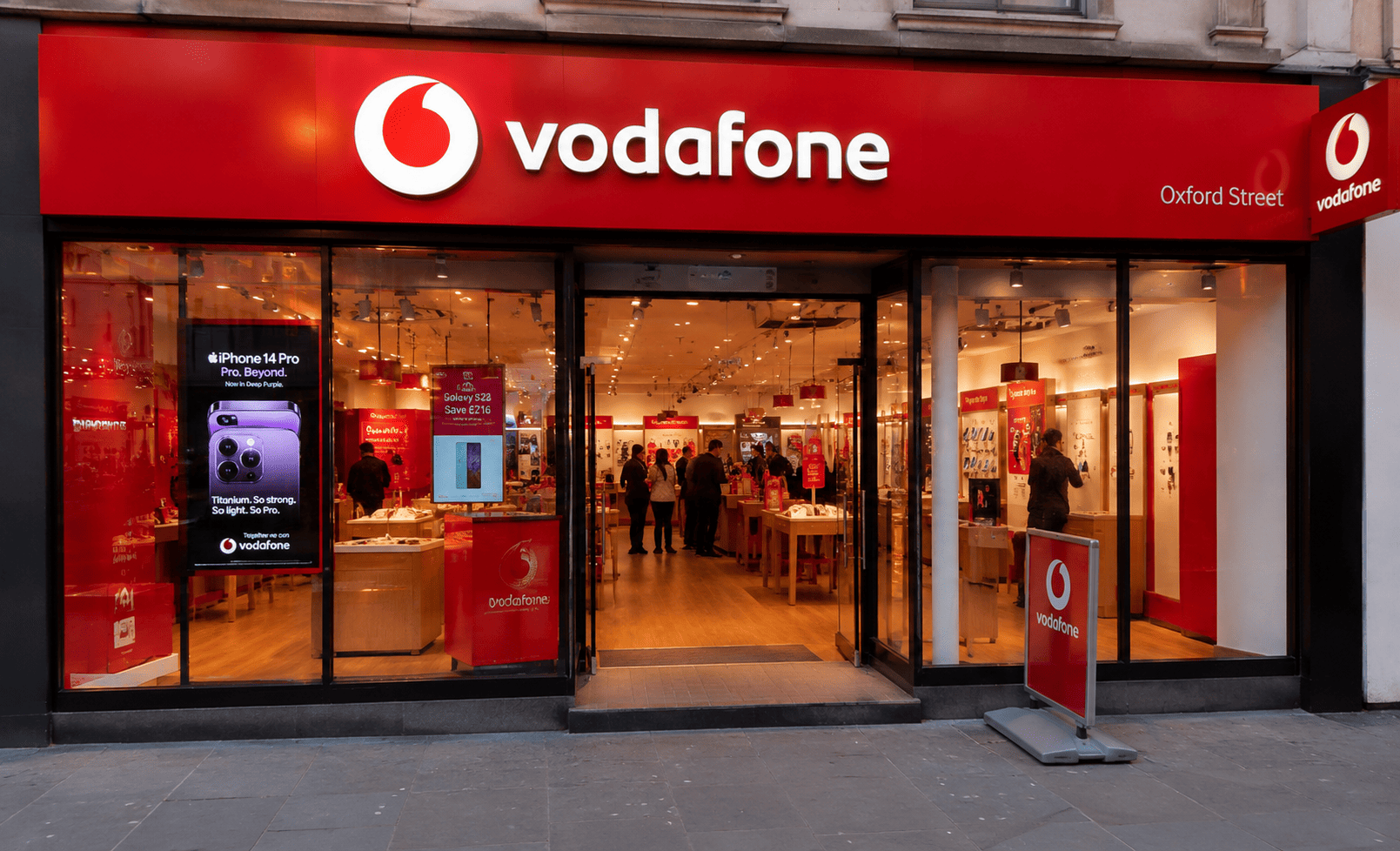
Vodafone Group's stock has staged a sharp recovery, climbing 23% from its monthly low to trade near 120p, after the telecom giant released better-than-expected quarterly earnings and lifted its forward outlook. The rally reflects growing investor confidence in CEO Margherita Della Valle's restructuring strategy, which is beginning to deliver measurable results.
Strong Q2 Results and Upgraded Guidance
For the second quarter, Vodafone reported a 9.7% year-over-year increase in revenue to €10.3 billion, driven by its service segment and the consolidation of Three UK. Service revenue rose 9.8% to €8.6 billion. In Germany, the company's largest market, organic growth reached 1.2%, supported by higher wholesale and fixed-line revenue. The UK business posted a modest 0.6% organic revenue gain, lifted by consumer broadband and enterprise segments.

Africa continued to be a standout performer, with double-digit growth, while the business segment expanded 5%. Della Valle noted that the company is entering a new chapter of stronger, multi-year growth, with broad-based improvements across all divisions.
Looking ahead, Vodafone now expects full-year EBITDAaL (earnings before interest, taxes, depreciation, amortization, and lease costs) to land between €13 billion and €13.3 billion, up from prior guidance. Adjusted free cash flow is forecast at €2.6 billion to €2.9 billion, with a significant contribution from its increased stake in Safaricom.
Safaricom Stake Adds Firepower
Vodafone recently raised its ownership in Safaricom to 55% after Vodacom acquired an additional 20% stake. Safaricom, East and Central Africa's largest company, operates the mobile money platform M-Pesa, which processed over $317 billion in transaction volume last year. This holding provides Vodafone with a high-growth, cash-generating asset that diversifies its revenue base beyond mature European markets.
Turnaround Strategy Gains Traction
Under Della Valle, Vodafone has been executing a multi-year turnaround plan that includes both acquisitions and divestitures. The purchase of Three UK is intended to strengthen its competitive position in the British market. Simultaneously, the company has exited operations in Spain, Italy, the Netherlands, Hungary, and Ghana, streamlining its portfolio to focus on core markets with better growth prospects.
These moves are beginning to resonate with investors, as evidenced by the stock's recent upward momentum. For context, the broader telecom sector has faced headwinds from high capital expenditure requirements and regulatory pressures, but Vodafone's strategic pivot appears to be differentiating it from peers. Meanwhile, recent market movements such as the Dow eking out gains amid mixed earnings reports show that sector-specific catalysts remain critical for stock performance.
Technical Outlook Points Higher
On the weekly chart, Vodafone's share price has broken above the 38.2% Fibonacci retracement level and formed a golden cross, with the 50-week moving average crossing above the 200-week average. The Relative Strength Index (RSI) and MACD indicators are both trending upward, signaling sustained bullish momentum.
The stock has also cleared a key pivot resistance on the Murrey Math Lines tool. The next major target is the 125p level, which represents the ultimate resistance on that framework. If the current trajectory holds, Vodafone could test that zone in the coming weeks, especially if upcoming earnings from other major tech and telecom firms, such as Alphabet and Tesla, continue to support risk appetite.
However, investors should remain mindful of potential headwinds, including currency fluctuations in emerging markets, regulatory changes in Germany, and the broader economic slowdown in Europe. The company's ability to sustain organic growth in its core markets will be key to maintaining the rally.
This article is for informational purposes only and does not constitute financial advice.