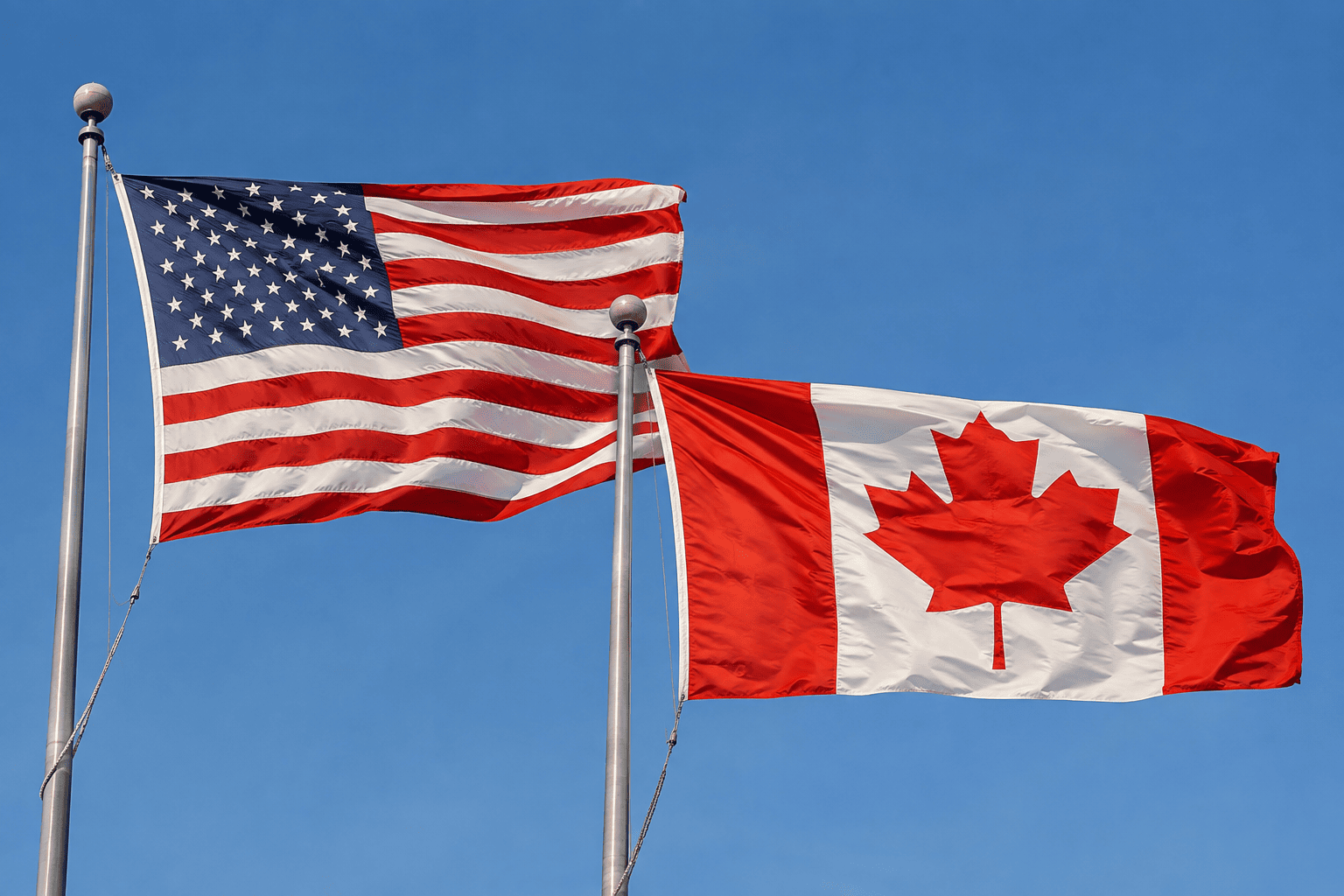
The United States and Canada appeared close to a trade agreement earlier last week, but negotiations broke down on Friday, prompting Washington to impose 50% tariffs on roughly $20 billion of Canadian exports starting Saturday. The affected products include wine, furniture, dairy, cement, clothing, fishing rods, and hockey equipment.
The breakdown followed days of talks in which both governments had signaled a deal was within reach. President Donald Trump had even postponed an earlier Wednesday deadline, saying an agreement was near. By Friday, however, the two sides could not bridge their differences.

US Trade Representative Jamieson Greer said Canada refused to finalize terms that had been negotiated earlier in the week. Canada offered a different account. Prime Minister Mark Carney said progress was made but that last-minute US changes were unacceptable, calling them “unfair, uneconomic, and called into question the reliability of any deal.” At a press conference in Ottawa, he was blunter: “They asked too much and offered too little.”
Canada's retaliation and support package
Canada announced it will impose retaliatory tariffs on Sept. 8, targeting sectors such as steel, dairy, agricultural equipment, pulp and paper, and other products. Carney said the measures would match the US tariffs on a “dollar for dollar” basis, though full details are pending. Ottawa had previously levied tariffs on US steel, aluminum, and automobiles, and had offered to remove them if Washington reduced its own duties—an offer that did not lead to a deal.
Carney also unveiled a domestic support package for affected businesses, indicating Ottawa is prepared to sustain it “beyond the life of this US administration.” He said, “We will support these businesses for as long as it takes,” signaling the dispute may be prolonged.
Political blame and market reaction
The collapse has widened the political divide. Trump criticized Canada's trade policies on Truth Social, writing, “Canada wants the benefits of being a State, without being one!!! They have also charged our great farmers, for many years, massive amounts of Tariffs. No more!!!” Carney emphasized Canada's energy exports to the US, saying, “Canada fuels American growth … I don’t think they want us to stop sending any of that energy.”
The Canadian dollar weakened, falling 0.44% against the US dollar to around 0.723 per USD, after strengthening for much of the previous two months. The economic risk is significant for Canada given its deep trade ties with the US. Canadian manufacturers and exporters could face weaker demand if US buyers shift to alternative suppliers, but the costs are unlikely to be borne entirely by Canadian producers.
What products are covered and what's next
The new US tariffs cover a wide range of goods, including parchment paper, paper cups and plates, kraftliner (a durable paperboard used for cardboard boxes), and roughly three dozen varieties of plywood. These categories accounted for about $1.5 billion of US imports from Canada last year. Canadian alcoholic beverages—wine, beer, whiskey, vodka, and gin—are also subject to the tariffs, with US imports of those products from Canada totaling roughly $1.5 billion last year. Alcohol has been a contentious issue, as Canadian provinces removed many American alcohol products from shelves in response to earlier US tariffs, and most restrictions remain.
People familiar with the Canadian government's thinking told Bloomberg that Ottawa sees little chance of talks resuming before the US midterm elections, though the situation remains fluid. Greer indicated no immediate plans for renewed discussions, telling Fox News, “We don't have new talks planned with the Canadians. We're moving forward with measures that respond to Canadian retaliation.”
The uncertainty could complicate planning for companies on both sides of the border. The trade rupture adds to concerns about inflation, Treasury yields, and economic growth. For investors, the situation echoes earlier tariff disputes, such as the 72-hour delay that preceded this collapse, and could weigh on market sentiment, as seen in recent cautious trading.
This article is for informational purposes only and does not constitute financial advice.