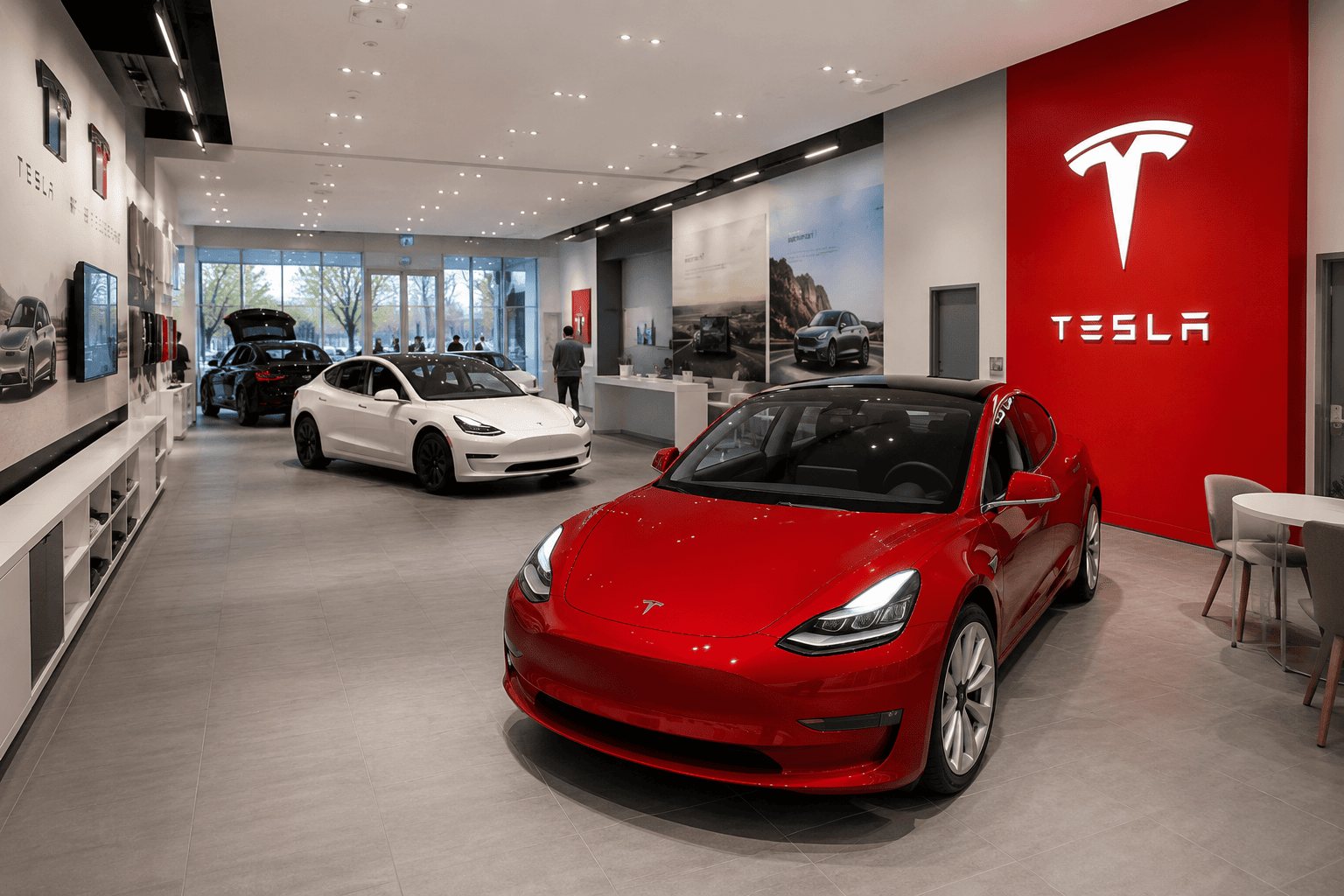
Tesla's European recovery is gaining traction, with new vehicle registrations surging across key Nordic markets in October. According to data from local automotive authorities and industry platforms cited by Reuters, registrations jumped 248% year-over-year in Sweden, 131% in Norway, and 34% in Denmark.
This marks a sharp improvement from September, when registrations in Norway and Denmark rose by just 2.2% and 2.9%, respectively. However, the October figures were flattered by comparisons with a weak performance in the same month last year.

The rebound comes amid elevated global energy prices, partly driven by geopolitical tensions and supply disruptions through the Strait of Hormuz. Higher fuel costs are making electric vehicles more attractive to consumers seeking to reduce their reliance on petrol and diesel, supporting demand for Tesla's models.
Government incentives and growing interest in EVs are also contributing to the recovery. Tesla's ability to sustain this momentum will become clearer once registration data from Germany and the UK—Europe's two largest car markets—are released later this week.
Competition remains intense, particularly from Chinese manufacturers like BYD, which has been expanding its European footprint. Tesla's market share in the region has faced pressure from these rivals, but the recent registration surge suggests a potential turnaround.
The improved figures add to signs that Tesla's automotive business may be stabilizing after two consecutive years of declining annual sales. In the third quarter, the company delivered 486,532 vehicles and reported its largest passenger-vehicle order backlog in four years.
CEO Elon Musk told analysts on the earnings call that demand is growing faster than production capacity. "Demand is growing rapidly for our vehicles. It's exceeding our production by a significant margin," he said, adding that after years of relatively flat performance, Tesla is heading toward "a lot of fun and significant growth."
Despite the optimism, Tesla's net income fell 43% in the third quarter as the company continues heavy investment in future initiatives. Musk has set an ambitious target to expand annual production to 5 million vehicles by 2030, more than double the current capacity of around 2.4 million.
Tesla's annual deliveries declined in 2024 and again in 2025, allowing BYD to overtake it as the world's largest EV seller. A strong fourth quarter, supported by improving European demand, could help Tesla return to annual sales growth in 2026.
This article is for informational purposes only and does not constitute financial advice.