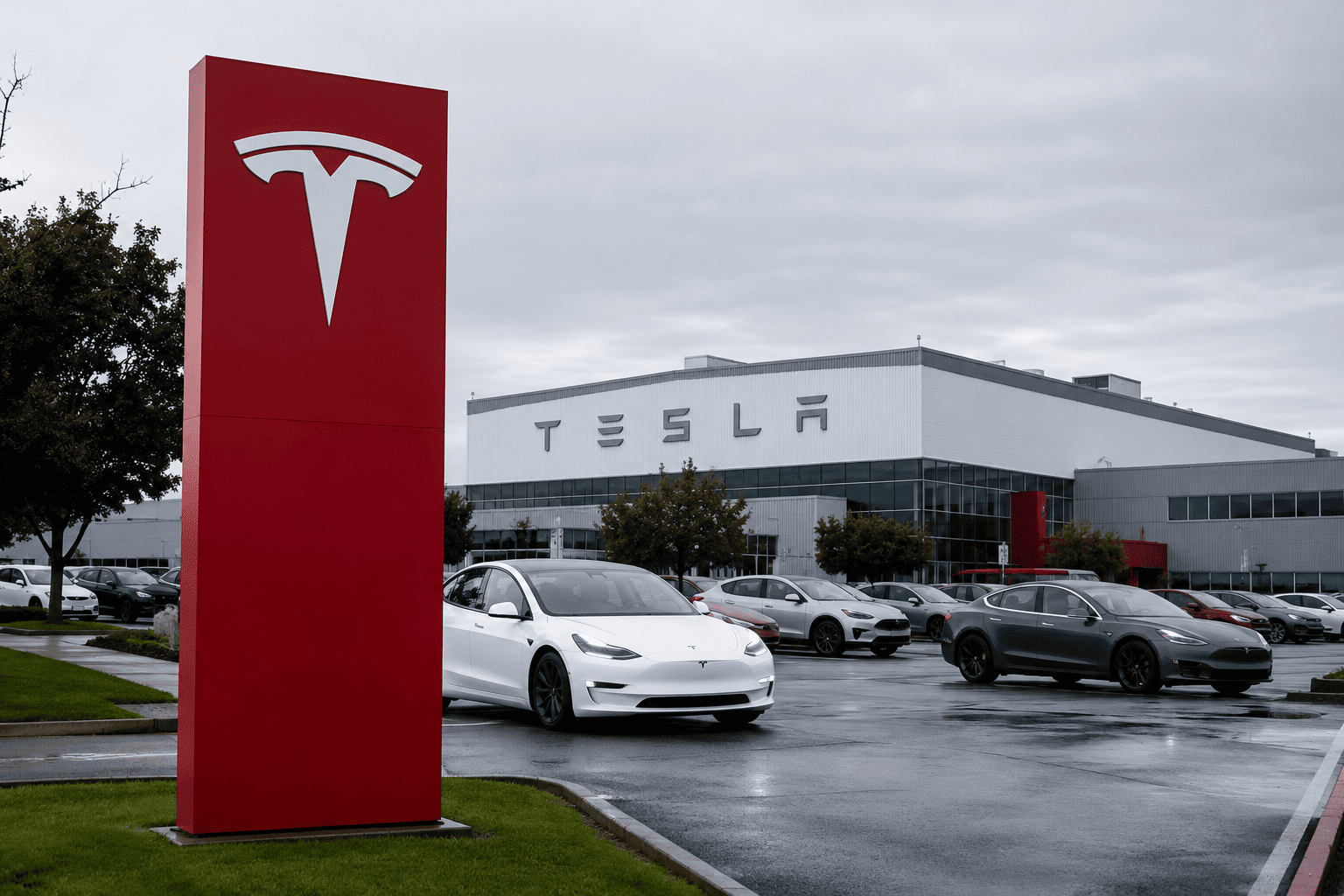
Tesla shares rebounded sharply on Thursday, climbing 3.7% to $309.44 and snapping a six-session losing streak. The move was driven by a broad technology rally fueled by Microsoft's better-than-expected quarterly earnings, rather than any company-specific catalyst for the electric vehicle maker.
The broader market also advanced, with the S&P 500 gaining 1.68% and the Dow Jones Industrial Average rising 1.21%. The technology sector was the standout performer, surging 5.33%, while Consumer Discretionary—Tesla's sector—rose 1.91%, ranking second among the 11 major sectors.
Microsoft's earnings lift AI sentiment
Microsoft reported earnings per share of $4.81, up from $3.65 a year earlier and above analyst estimates of $4.24. Revenue came in at $90.01 billion, an 18% increase year-over-year and above the consensus estimate of $87.62 billion. Azure and other cloud services revenue grew 43%, highlighting continued strength in the company's AI-driven cloud business.
The strong results eased investor concerns about returns from artificial intelligence investments, a theme that has weighed on tech stocks recently. Microsoft shares surged nearly 17%, lifting sentiment across AI-related names, including Tesla, which is considered part of the "Magnificent Seven" group of megacap tech companies.
While Microsoft is expanding its AI business through cloud services, Tesla continues to invest heavily in artificial intelligence for autonomous driving and robotics. The company launched its AI-trained robotaxi service in Austin, Texas, in June 2025, but the rollout to additional cities and fleet expansion has been slower than many investors anticipated. For more on Tesla's AI ambitions and recent stock performance, see our analysis of Tesla's AI strategy.
Rebound follows post-earnings selloff
Thursday's rally offered some relief after a difficult stretch for Tesla. The stock had declined for six consecutive sessions and closed below the $300 level for the first time in more than a year. The selloff followed Tesla's weaker-than-expected second-quarter earnings, which showed operating profit of roughly $400 million—approximately $1.3 billion below analyst projections.
Despite the rebound, market breadth remained relatively narrow, with the session's advance-to-decline ratio suggesting gains were concentrated in a smaller group of stocks. The rally was largely driven by Microsoft's results, which highlighted continued strength in its Azure cloud business and boosted investor appetite for higher-beta technology stocks.
Technical picture remains challenging
Despite Thursday's gains, Tesla's longer-term technical indicators continue to point to weakness. The stock remains 12.65% below its 20-day moving average, 18.35% below its 50-day moving average, and 20.83% below its 200-day moving average, indicating persistent overhead resistance.
A death cross that formed in April, when the 50-day moving average fell below the 200-day moving average, remains in place. Momentum indicators also remain weak, with the MACD below its signal line and the histogram in negative territory. The nearest major resistance level is around $349, an area where previous recovery attempts have struggled to gain traction.
Investors continue to watch for stronger AI-related catalysts and improving fundamentals before sentiment shifts more decisively. For context on how Tesla's recent earnings miss and AI spending surge have impacted the stock, see our coverage of Tesla's Q2 earnings.
While Thursday's rally provided some relief, the broader tech rally driven by Microsoft's results may not be enough to sustain Tesla's recovery without company-specific developments. The market remains focused on Tesla's AI progress and the pace of its robotaxi rollout, which could provide the catalyst needed to break the current technical resistance.
This article is for informational purposes only and does not constitute financial advice.