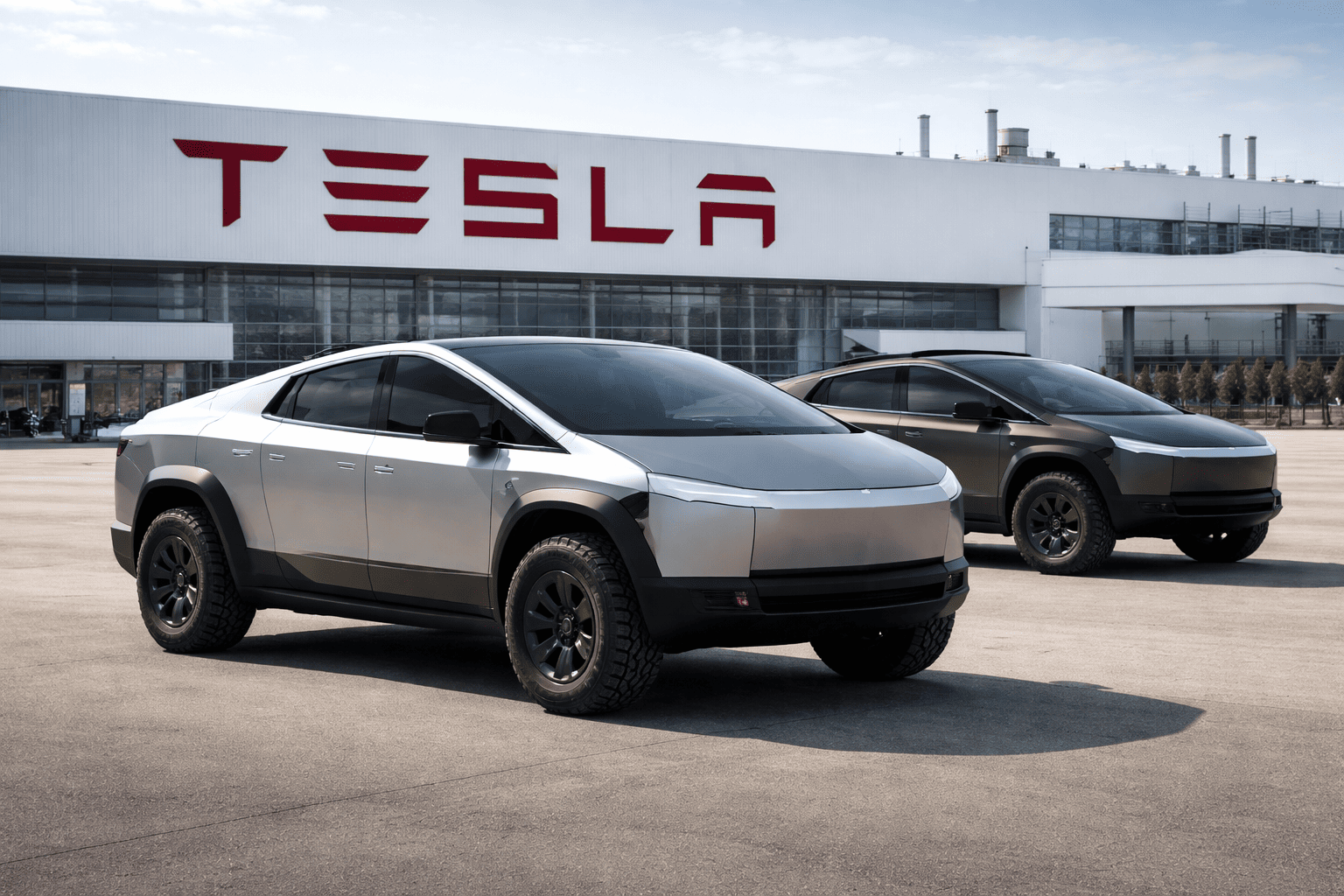
Tesla (NASDAQ: TSLA) shares experienced a sharp decline of 13% on Thursday following the release of its second-quarter earnings report, which highlighted a significant increase in spending on artificial intelligence infrastructure and a shift to negative free cash flow. The selloff extended a 1.3% drop from the prior session, bringing the company's market capitalization close to the $1 trillion threshold.
Earnings Miss Despite Revenue Beat
The electric vehicle manufacturer reported adjusted earnings of $0.33 per share, falling short of the $0.51 consensus estimate. However, revenue climbed to $28.24 billion from $22.5 billion a year earlier, surpassing the $25.71 billion analysts had projected. Automotive revenue rose 23% year over year to $20.52 billion, while the energy business—encompassing solar and battery storage systems—grew 13% to $3.14 billion. Services and other revenue, including out-of-warranty vehicle repairs, jumped 50% to $4.58 billion.
Despite the top-line growth, net income declined 5% to $1.11 billion, or $0.32 per share, compared to $1.17 billion, or $0.33 per share, in the same period last year. Gross margin contracted to 16.8% from 17.2%, missing the 19.4% expected by StreetAccount. Tesla attributed the margin pressure partly to lower average selling prices after introducing more affordable versions of the Model 3 and Model Y, following the discontinuation of the higher-priced Model S and Model X.
Capital Expenditure Surge and Negative Free Cash Flow
A key concern for investors was the sharp rise in capital expenditure, which surged 142% year over year to $5.79 billion, driven by accelerated investments in AI infrastructure. The company reaffirmed plans to spend over $25 billion this year on AI compute, autonomous driving, robotics, and computing capacity. This spending spree resulted in negative free cash flow for the quarter, echoing a similar trend seen at Alphabet (NASDAQ: GOOGL), which also reported negative free cash flow and raised its 2026 capex forecast to between $195 billion and $205 billion.
CEO Elon Musk defended the elevated spending during the earnings call, stating, "This is a massive capex year. I'm confident that all the things that we're investing in will yield incredible returns. Really, maybe the best capex returns that we've ever seen." The company is also installing first-generation production lines for its Optimus humanoid robot, with production expected to begin soon, and reported that its autonomous Cybercab fleet has completed 380,000 unsupervised miles.
Analyst Reactions: Near-Term Pain, Long-Term Optimism
Despite the market's negative reaction, several Wall Street firms maintained constructive long-term views while adjusting their price targets. JPMorgan analyst Rajat Gupta lowered his target to $445 from $475, keeping a Neutral rating, and noted that shares are "likely to remain range-bound near-term" as forward earnings estimates decline amid rising investment spending. Mizuho's Vijay Rakesh cut his target to $450 from $480 but reiterated an Outperform rating, citing Tesla's position as a "well-positioned leading physical AI" company through its Cybercab platform, with humanoid robotics offering a longer-term growth opportunity.
Piper Sandler maintained an Overweight rating and a $500 price target. Analyst Alexander Potter commented that the post-earnings selloff was not surprising despite improving long-term indicators, but added that Tesla will need to "disprove doubts re: Optimus and Cybercab" before the stock can break out of its current trading range. He noted that while he remains optimistic, "catalyst timing is difficult to predict."
Broader Market Context
The decline in Tesla shares aligns with broader market concerns about AI spending outpacing cash generation across the technology sector. Alphabet shares also fell over 6% after its earnings report, highlighting investor unease. Tesla's stock had already declined about 11% in July and 17% year-to-date through Wednesday's close before Thursday's selloff. The weakness has coincided with a drop in SpaceX shares, which have fallen more than 40% from their post-listing peak.
For related coverage, see Micron Rises 3% as Alphabet's $205B Capex Plan and Tesla's Praise Boost AI Memory Demand and Dow Plunges 604 Points as Oil Spike and Tech Earnings Disappoint Investors.
This article is for informational purposes only and does not constitute financial advice.