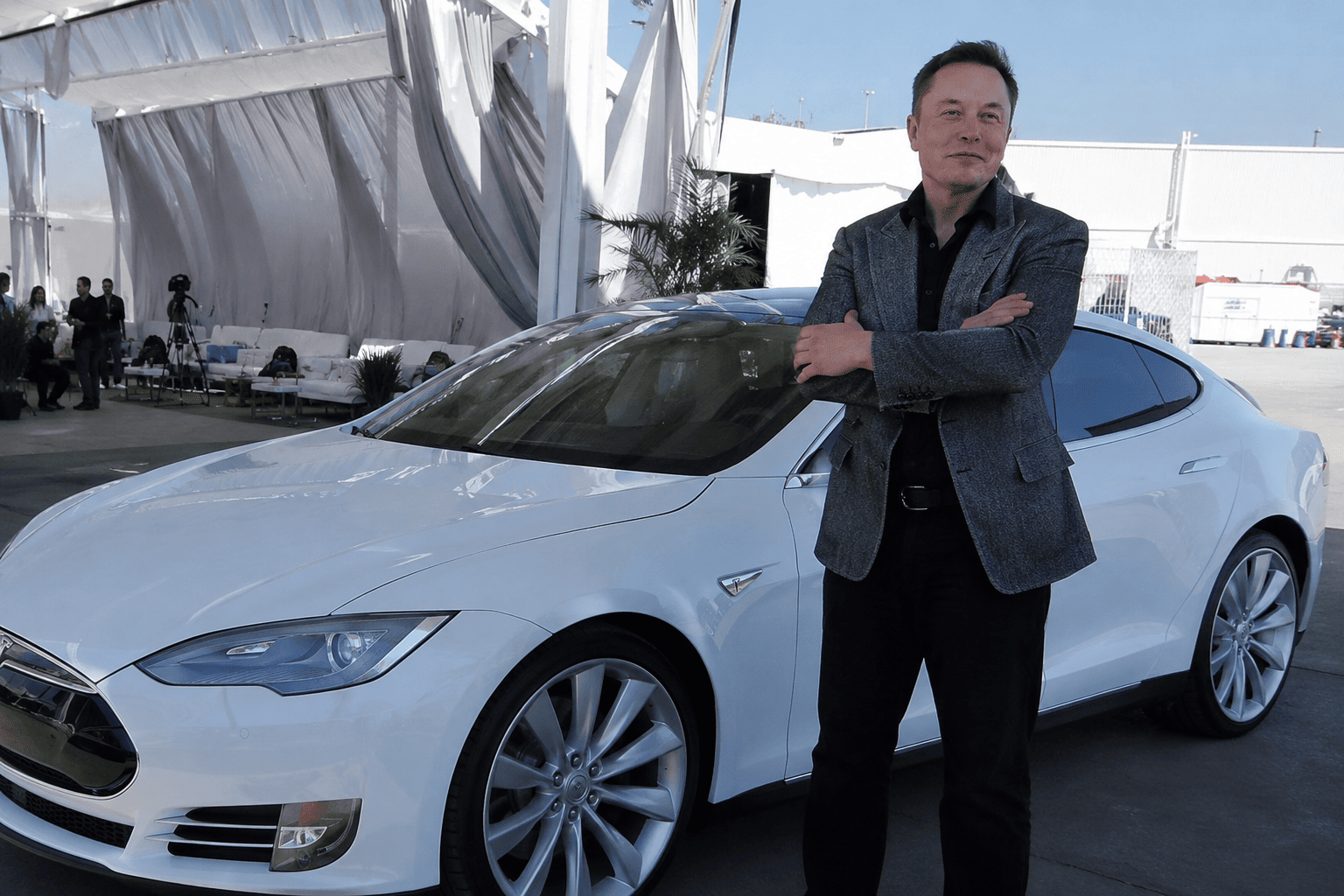
Tesla's market capitalization briefly slipped below the $1 trillion threshold on Friday, as shares extended losses following a second-quarter earnings report that disappointed investors. The electric vehicle maker's stock fell as much as 3.65% during the session to an intraday low of $308, pushing its market value to approximately $996.1 billion before recovering later in the day.
The decline followed a 14% plunge on Thursday after Tesla reported second-quarter operating profit of $398 million, down sharply from $923 million a year earlier and well below the $1.7 billion consensus estimate from FactSet. Despite delivering roughly 480,000 vehicles during the quarter—a 25% year-over-year increase and about 80,000 more than analysts had projected—weaker pricing, an unfavorable vehicle mix, lower regulatory credit sales, rising costs, and higher research spending weighed heavily on profitability.
Earnings Miss Fuels Valuation Debate
For many investors, the earnings miss itself was less concerning than growing questions about whether CEO Elon Musk can sustain Tesla's premium valuation through future growth initiatives. During the earnings call, Musk reiterated his long-term ambitions, highlighting continued progress on robotaxis and humanoid robots while introducing the concept of the Megapod, a modular AI data center built with Tesla hardware.
“We’re working on what we believe is the most ambitious buildout of advanced infrastructure manufacturing capacity ever in history,” Musk said.
Despite the earnings disappointment, Wall Street analysts largely maintained their ratings on the stock. According to FactSet, the average analyst price target declined by only $8 to $392. RBC analyst Tom Narayan maintained optimism around Tesla's robotaxi and humanoid robot opportunities, stating that nothing is “fundamentally wrong with the business.”
Valuation Stands Apart from Peers
Tesla's valuation continues to diverge sharply from traditional automakers and even its Magnificent Seven peers. The company trades at roughly 175 times projected 2026 earnings, compared with an average multiple of about 24 times for the rest of the group. Bill Birmingham, managing director at Rex Shares, noted in a Barron's report that the valuation reflects investors' focus on future software and autonomous technologies rather than current vehicle sales.
“The valuation is already saying that investors are paying less attention to vehicle deliveries and more attention to whether high-margin software, autonomy, power, and eventually robot revenue arrive quickly enough to offset structurally lower auto margins,” Birmingham said.
Canaccord analyst George Gianarikas maintained a Buy rating but reduced his price target by $40 to $410. “We have walked this Tesla tightrope before,” he said. “History has taught us, betting against Elon Musk is usually a fool’s errand.”
Ark Invest Buys the Dip
Cathie Wood's Ark Investment Management used the selloff to increase its Tesla exposure. According to the firm's daily trading disclosures, Ark purchased approximately $51.2 million worth of Tesla shares across four exchange-traded funds following the earnings release.
The broader market context also includes notable movements in other sectors. For instance, Intel's earnings lifted the chip sector, while American Express options signaled a $12 swing as its earnings revealed split sentiment. Meanwhile, Ethereum dipped below $1,900 amid weakening retail demand, and Brent crude remained volatile despite a 14% weekly surge.
This article is for informational purposes only and does not constitute financial advice.