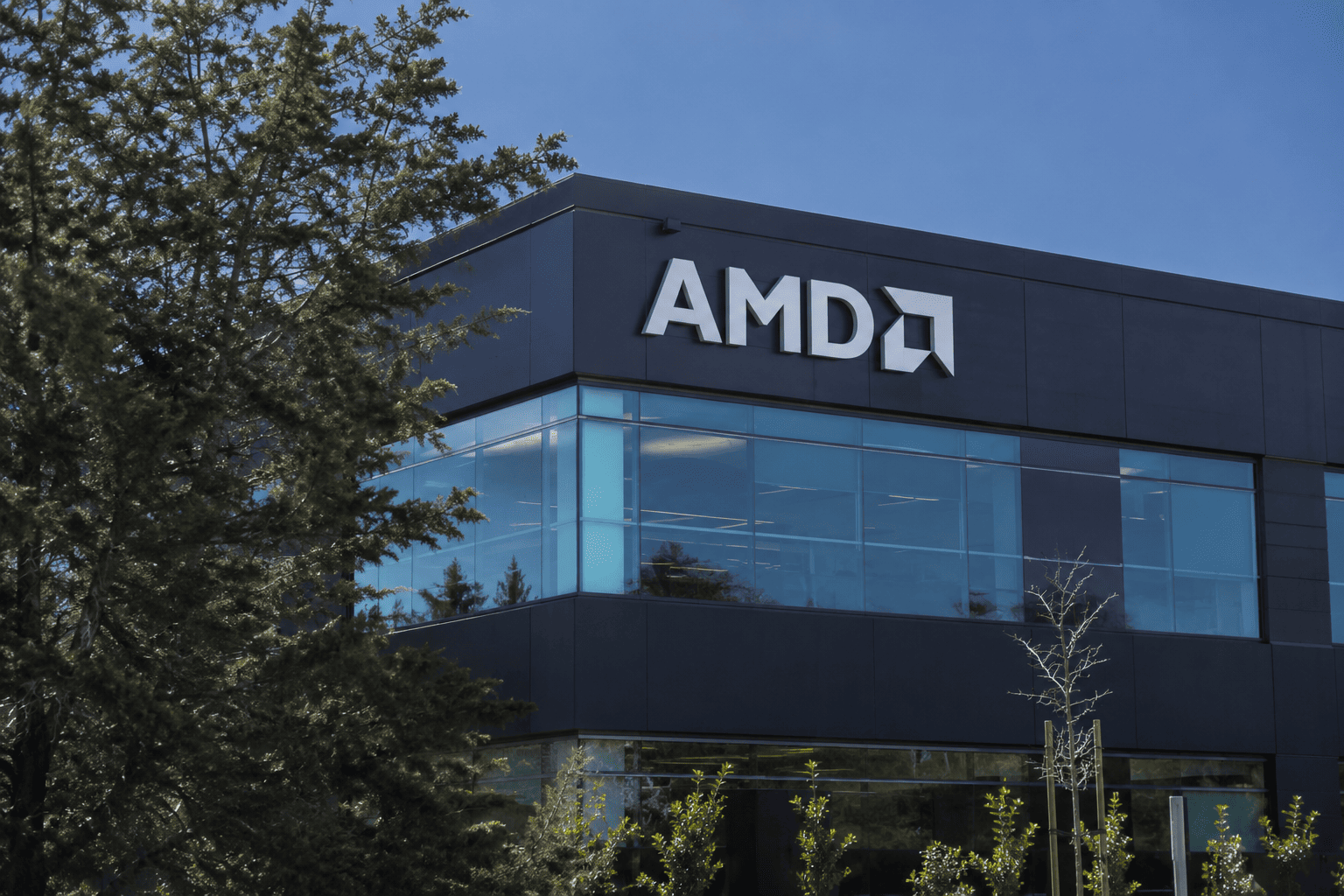
Advanced Micro Devices (AMD) saw its stock edge down roughly 2% on Friday, even as the company unveiled its latest acquisition aimed at bolstering its position in the rapidly expanding artificial intelligence market. The dip came as investors balanced the strategic purchase of AI inference specialist Taalas against near-term concerns over softening demand in AMD's client and gaming segments, as well as intensifying competition from Nvidia.
The announcement arrived while Nvidia shares continued to climb ahead of its Aug. 26 earnings report, extending a recent rally in the AI chip sector. AMD's move underscores its push to broaden its AI portfolio beyond accelerators and server processors, as inference workloads become an increasingly critical component of enterprise AI deployments.

Taalas acquisition strengthens AI inference strategy
AMD said it had agreed to acquire Taalas, a company specializing in AI inference chips, for an undisclosed amount. "AMD is building a full-stack AI platform that gives customers the flexibility to deploy the right compute solutions for every AI workload," said Vamsi Boppana, senior vice president of the Artificial Intelligence Group at AMD. The deal follows Nvidia's own expansion into inference hardware through its technology licensing agreement with Groq, highlighting how both chipmakers are racing to build end-to-end AI computing platforms.
William Blair analyst Sebastien Naji called the acquisition strategic, noting that AMD is trying to close the gap with its much larger GPU rival. "Taalas is more unique in its model-specific approach and remains less proven—Groq was about to ramp up its third generation chip prior to the acquisition," he wrote. Benchmark Research analyst Cody Acree said investors would now be looking for execution. "The near-term competitive gap [with Nvidia] does not disappear until AMD discloses a product, customer, software integration and shipment schedule," Acree wrote. He added that Taalas supplies a longer-term owned option that could improve control, economics, and customer-specific design flexibility, and that AMD is likely to support several specialized inference engines rather than force one architecture across every workload.
Strong AI growth offset by weaker client and gaming outlook
Despite reporting revenue growth of 50.1% year over year and earnings growth of 246%, AMD's latest quarterly results failed to generate a positive market reaction. Investors remained focused on management's cautious outlook for its Client and Gaming businesses. The company expects a softer PC market during the second half of 2026 as higher memory and component costs weigh on demand. Third-quarter guidance points to a sequential decline in Client and Gaming revenue, with the gaming segment expected to post another strong double-digit decline. Gaming revenue already fell 31% year over year during the second quarter due to weaker discrete GPU demand and lower semicustom console sales.
The results also highlighted continued competitive pressure from Nvidia, Broadcom, and Intel across AI accelerators, networking, and server processors. As Nvidia's recent share pullback showed, the AI chip trade remains volatile, and AMD's stock has been sensitive to any signs of weakness in its non-AI segments.
Data center business remains AMD's biggest growth engine
While consumer-focused segments remain under pressure, AMD's data center business continues to drive overall growth. The segment accounted for 58% of second-quarter revenue, with data center sales rising 107% year over year. Cloud and enterprise EPYC processor sales each grew more than 70%. The company said demand for its next-generation Venice processors is stronger than any previous EPYC launch and expects server revenue to increase more than 80% in the second half of 2026 and more than 70% in 2027.
AMD also identified its Helios rack-scale AI platform as its largest long-term growth opportunity, saying customer demand is exceeding initial expectations as production ramps through late 2026 and into 2027. The company highlighted expanding AI deployments with customers including Anthropic, Microsoft, OpenAI, and Meta, while maintaining a bullish long-term outlook for the AI computing market. As Nvidia's recent wins have shown, the competitive landscape is fierce, but AMD's data center momentum suggests it remains a key player in the AI infrastructure buildout.
Investors will now watch for further details on the Taalas integration and AMD's ability to translate its AI investments into sustained market share gains. The stock's modest decline on the acquisition news reflects a cautious tone, but the long-term growth story in data center AI remains intact.
This article is for informational purposes only and does not constitute financial advice.