SpaceX (SPCX) shares surrendered early gains on Thursday, even after the company secured a $1.6 billion contract from the U.S. Space Force. The stock rose as much as 2.5% in early trading to $115.14 before retreating to trade little changed around $112.56 by midday. The broader market was higher, with the S&P 500 gaining 1.4% and the Dow Jones Industrial Average rising about 1%, buoyed by strong results from Microsoft.
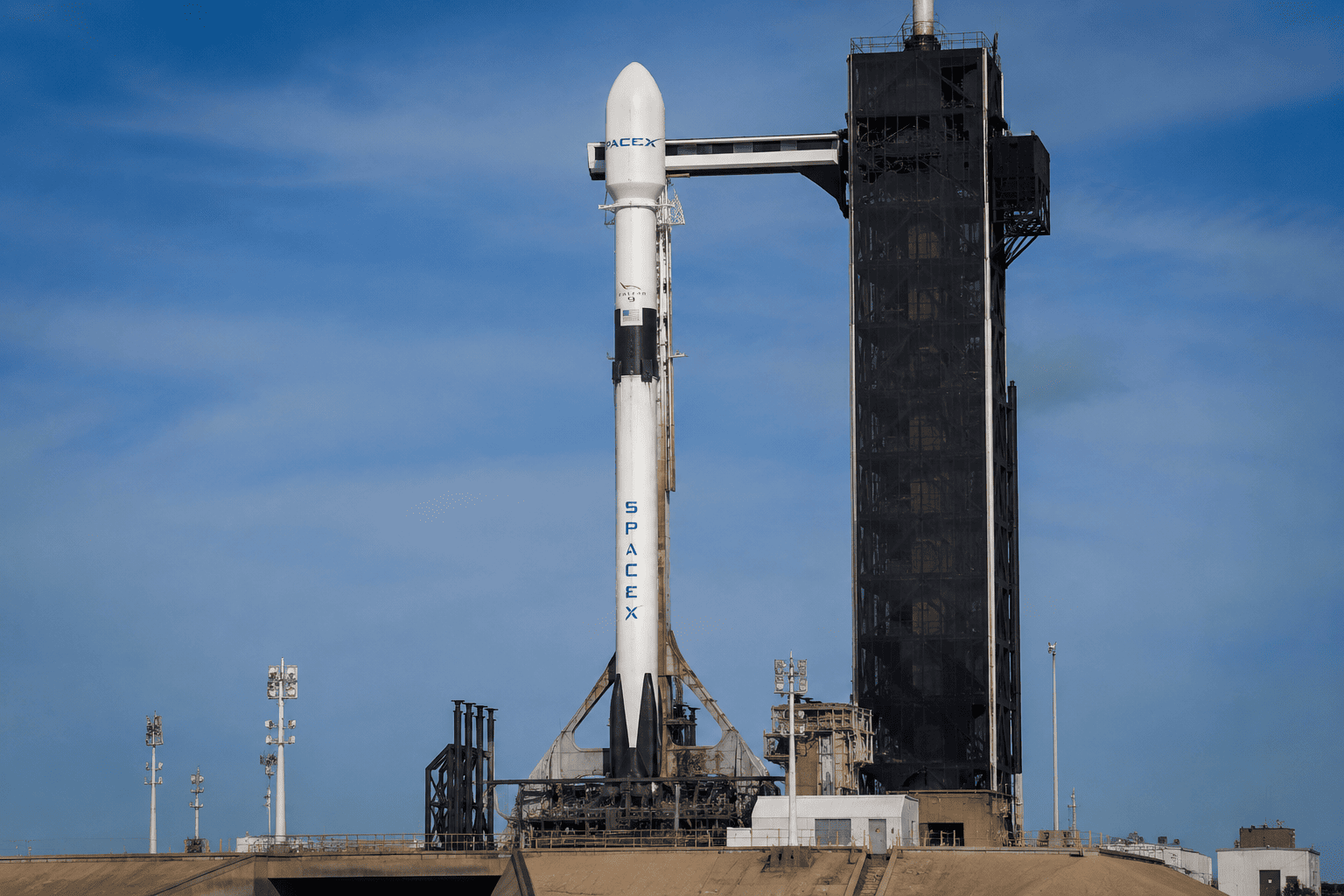
The Space Force contract covers 18 Falcon 9 launches, all scheduled for completion by the end of 2027. The award reinforces SpaceX's dominant position in the commercial launch market, with Falcon 9 accounting for roughly 70% of launches outside China this year. The launches fall within SpaceX's Space business, which generated $4.1 billion in revenue and $653 million in EBITDA during 2025 while placing 2,213 metric tons of payload into orbit. While the contract represents routine business for the company, investors welcomed the positive development after a difficult stretch for the stock.

Despite Thursday's early rebound, SpaceX shares remain about 17% below their $135 IPO price and roughly 44% below their record closing high of $201.80. After surging to an intraday high of $225.64 shortly after its June listing, the shares have retreated sharply as enthusiasm surrounding the IPO faded. The stock has declined more than 31% over the past month and briefly touched an intraday low of $107.01 earlier this week.
Investors have become increasingly cautious ahead of the company's first quarterly earnings report on August 4 and the expiration of its first insider lock-up period. Beginning August 6, eligible insiders will be able to sell up to 20% of their restricted holdings, representing approximately 911.5 million shares. Additional shares could become eligible for sale if post-IPO price conditions are met. The prospect of increased share supply has added to concerns over SpaceX's valuation, particularly after the stock traded at more than 40 times estimated 2026 sales. For more on the lock-up dynamics, see our earlier piece on SpaceX's lock-up expiry.
SpaceX's first earnings report as a public company is expected to provide investors with their first detailed look at the company's financial performance and investment priorities. The company reported a net loss of nearly $5 billion in 2025 on revenue of $18.7 billion. In the first quarter of 2026, revenue increased 15.4% year over year to $4.7 billion, while the company reported a net loss of about $4.3 billion and an operating loss of $1.94 billion as spending remained elevated. Adjusted EBITDA reached $1.1 billion, reflecting continued cash generation from the company's core operations despite heavy investment.
Starlink remained the company's largest earnings contributor, generating nearly $1.2 billion in earnings during 2025. Morningstar analyst Nicolas Owens expects Starlink subscriber growth of 93% in 2026 following rapid expansion over the previous two years. Investors are also closely monitoring SpaceX's AI ambitions, which have become the company's largest area of investment. The company spent $7.7 billion on AI initiatives during the first quarter, compared with $1.33 billion for its Connectivity business and $1.05 billion for its Space segment. While the spending underscores management's long-term AI strategy, investors remain focused on when those investments will begin generating meaningful returns.
The company ended the quarter with $15.9 billion in cash and cash equivalents and $29.1 billion in long-term debt, providing substantial financial resources while also highlighting the scale of its capital commitments. The earnings call is expected to be dominated by discussions on AI spending and Starlink growth. For context on how AI spending is affecting other tech giants, see our analysis of Microsoft and Alphabet's divergent paths.
With the stock down sharply from its peak and the lock-up expiry looming, the upcoming earnings report will be a critical test for SpaceX. Investors will be looking for signs that the company's heavy investment in AI and Starlink is beginning to pay off, and whether the current valuation offers a buying opportunity or further downside risk. The broader market's recent rebound, driven by Microsoft's earnings-fueled AI optimism, may provide some tailwinds, but SpaceX's unique challenges remain front and center.
This article is for informational purposes only and does not constitute financial advice.