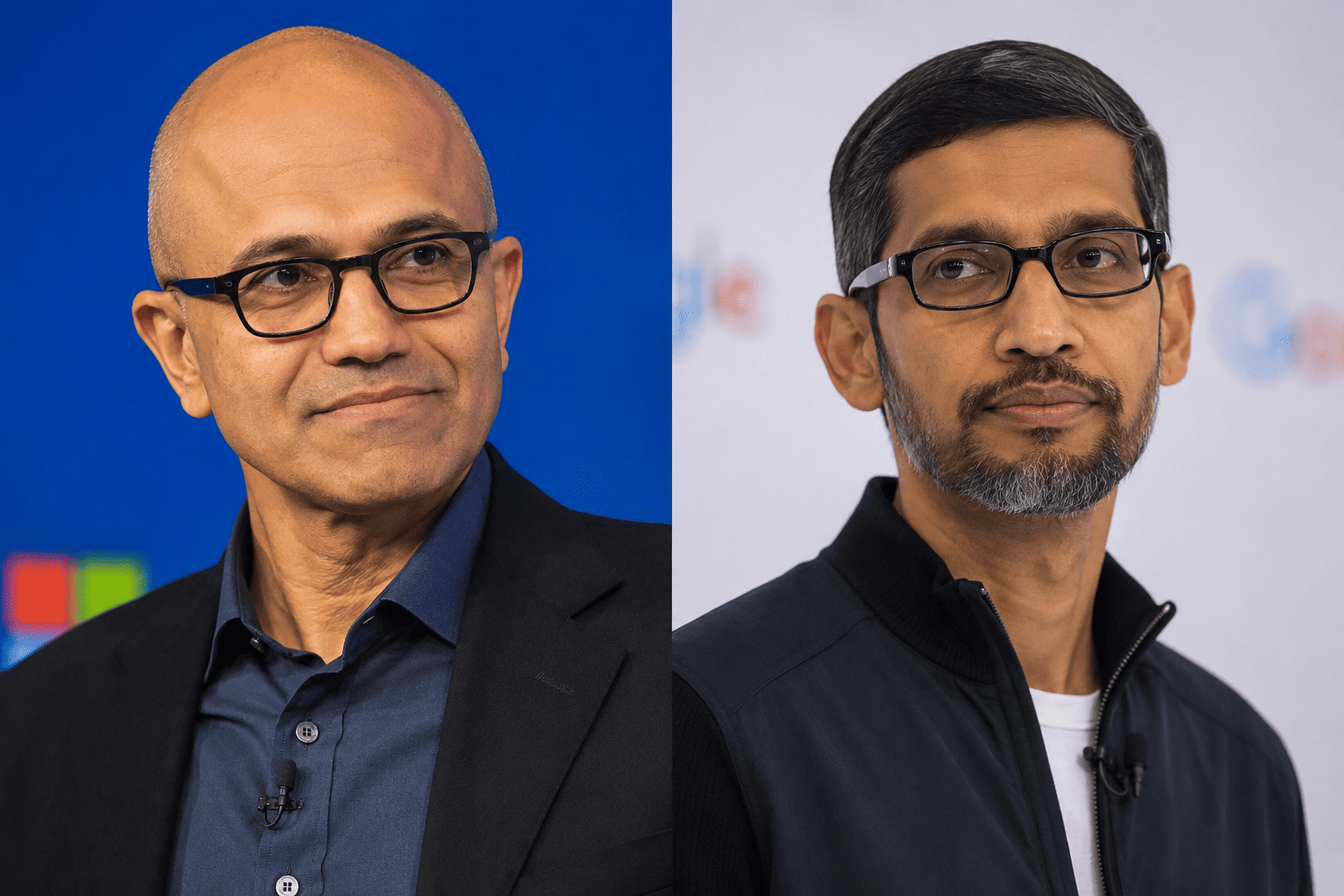
Both Microsoft and Alphabet delivered strong quarterly earnings driven by robust cloud growth, but the market reaction diverged sharply. Microsoft shares surged about 9% in premarket trading, while Alphabet fell 7% after its earnings release. The key difference lay not in cloud performance but in capital expenditure plans, free cash flow generation, and the perceived payoff from massive AI investments.
Alphabet's cloud growth overshadowed by spending plans
Alphabet's cloud revenue rose 82% year over year to $24.8 billion in the June quarter, comfortably beating analyst expectations of roughly 64% growth, according to LSEG data. However, the strong operational performance was eclipsed by a significant increase in spending plans. CFO Anat Ashkenazi told analysts that Alphabet now expects capital expenditures of $195 billion to $205 billion in 2026, up from previous guidance of $180 billion to $190 billion and above the $188 billion analysts had expected, per Visible Alpha. The higher spending reinforced investor concerns that AI infrastructure costs are rising faster than anticipated.

Alphabet also reported negative free cash flow of $5.9 billion during the quarter, compared with nearly $5.3 billion generated in the same period last year. Ashkenazi acknowledged that free cash flow is likely to remain under pressure as the company continues expanding AI infrastructure. Bloomberg Intelligence analyst Mandeep Singh questioned whether investors would remain comfortable if spending keeps rising, noting that at $300 billion in capex, free cash flow positivity would be impossible.
Microsoft's capex and cash flow reassure markets
Microsoft entered earnings season facing similar questions about AI spending. But the software giant largely reassured the market. Azure revenue increased 43% in the fiscal fourth quarter, beating analyst expectations of about 40%, according to Visible Alpha, and generated $39.3 billion in revenue. CEO Satya Nadella disclosed that Azure annual revenue surpassed $100 billion for the first time, and Microsoft 365 Copilot reached over 30 million paid seats, up from 20 million in the previous quarter and above the 26.9 million analysts expected.
Crucially, Microsoft did not increase its AI spending outlook. The company maintained its investment plans, forecasting first-quarter fiscal 2027 capital expenditures of $50 billion, below analyst estimates of $56 billion. It also projected calendar-year 2026 capital expenditures of $175 billion, below its own earlier estimate of $190 billion. Although Microsoft spent $41 billion in the April-June quarter, up more than 70% from a year earlier, the market was relieved that management was not signaling another acceleration in spending.
Microsoft's free cash flow also provided reassurance. The company generated $19.6 billion in free cash flow during the fiscal fourth quarter, exceeding analyst expectations of $13.4 billion, even though it declined 23% from a year earlier. Management further strengthened confidence by stating that the company expects to remain free cash flow positive during fiscal 2027, contrasting with a Scotiabank forecast that had predicted Microsoft could slip into negative free cash flow next year.
Accounting change helps reported capex
Microsoft also disclosed an accounting change that helped reduce reported annual capital expenditure. The company will now amortize long-term data centre leases over 25 years instead of 15 years, extending the amortization period and lowering the annual expense recognized in financial statements. While the change does not reduce actual investment, it improves certain financial metrics closely followed by investors.
For investors, Microsoft's quarter offered evidence that its enormous AI investments are beginning to generate tangible financial returns. Cloud growth accelerated, Azure crossed the $100 billion annual revenue milestone, and the cloud contracted backlog rose to $678 billion from $627 billion in the previous quarter. The company's ability to maintain steady capex and positive free cash flow while delivering strong cloud growth appears to have calmed investor jitters, contrasting sharply with Alphabet's experience.
This article is for informational purposes only and does not constitute financial advice.