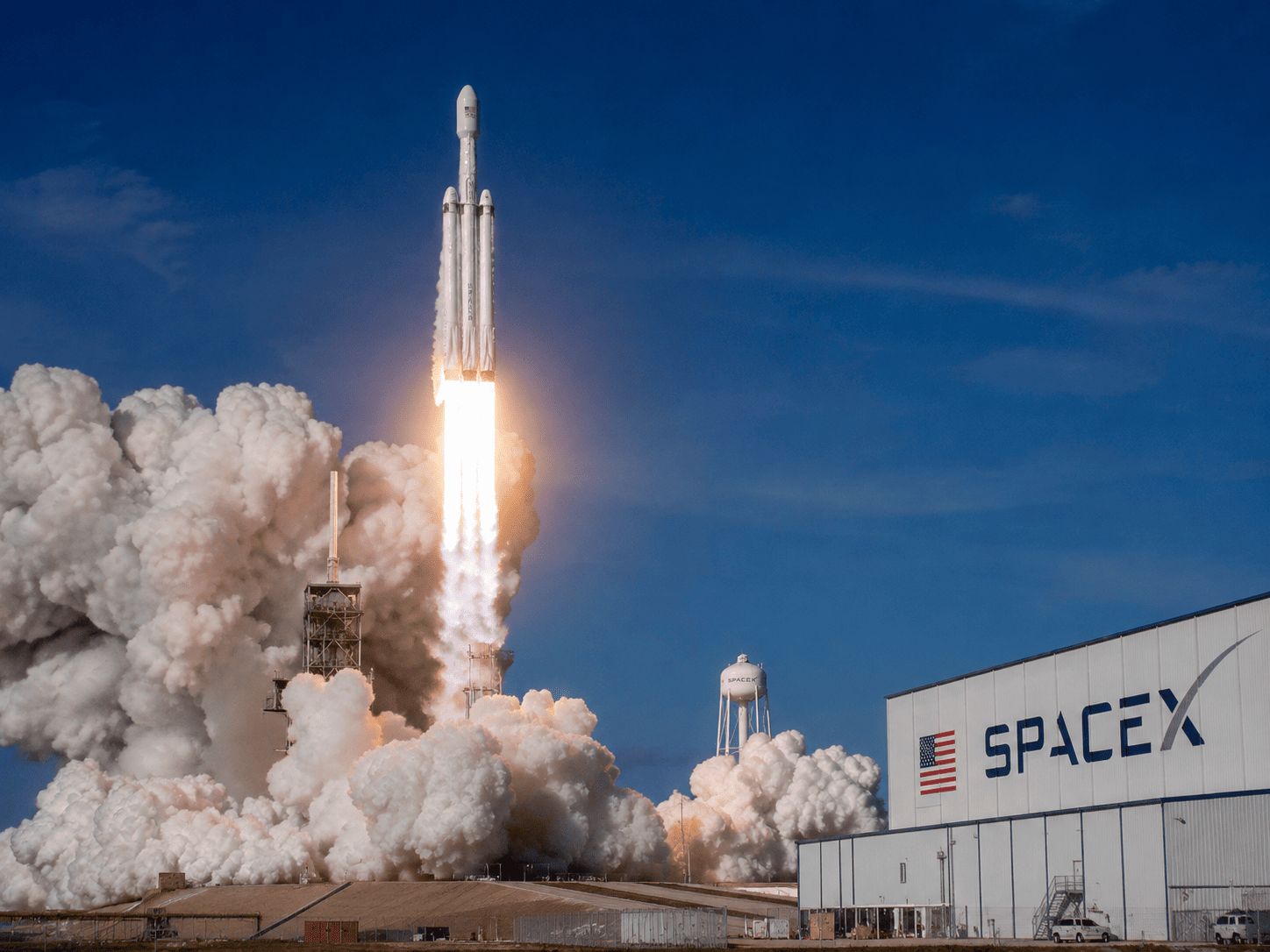
SpaceX (SPCX) is set to report its first quarterly earnings as a public company on Tuesday, and options markets are bracing for an unusually large move. Traders have priced in a roughly 15% swing in the stock, which would translate to a change in market value of about $225 billion, according to Reuters. The implied volatility is far above what is typical for a company of SpaceX's size, reflecting deep uncertainty about its financial outlook and valuation.
Options pricing signals downside bias
The options market suggests traders are leaning toward further declines. SpaceX shares have already fallen 43% from their closing peak of $201.80, reached shortly after the company's record-breaking debut on June 12. Despite the drop, the company still holds a market capitalization near $1.5 trillion. The combination of a sharp post-listing selloff, limited trading history, and questions about whether revenue growth can justify the lofty valuation has pushed options premiums to levels rarely seen for blue-chip stocks. For comparison, options traders had priced in only a 6.6% move for Microsoft ahead of its latest earnings report.

Earnings expectations and lock-up overhang
Analysts expect SpaceX to report a quarterly loss before interest and taxes of approximately $1.6 billion on revenue approaching $7 billion. The earnings release will also mark the start of a critical period: the lock-up agreement expires on August 6, allowing about 911.5 million shares held by insiders, employees, and early investors to become eligible for sale. This potential supply overhang could add further pressure on the stock if early shareholders decide to cash out.
Investor caution extends beyond options. Leveraged exchange-traded funds tracking SpaceX show that while bullish funds hold about $401.1 million in assets, nearly $296.8 million has flowed into inverse leveraged funds that profit when the stock declines, according to VettaFi. That narrow gap between bullish and bearish positioning is unusual for stocks with leveraged ETF products, highlighting growing skepticism.
Short sellers pile in
Short interest has reached near-record levels. According to Peter Hillerberg, co-founder of Ortex Technologies, roughly 63% of SpaceX's free float is currently on loan to short sellers. "There is almost no stock left to borrow," Hillerberg said. Based on the July 31 closing price of $108.37, Ortex estimates short sellers are sitting on approximately $18.4 billion in mark-to-market profits. The high short interest reflects a widespread belief that the stock's valuation remains stretched.
Hedging costs have also risen sharply as options premiums have climbed ahead of the earnings release. Tuesday's report will not only give Wall Street its first detailed look at SpaceX's financials as a public company but could also determine whether the recent slide in its shares deepens or reverses. Investors are also watching broader market signals, such as Palantir's earnings reigniting the AI rally, which could influence sentiment toward high-growth tech names.
Analysts at Jefferies have noted that governance concerns may not be the primary risk for SpaceX, as the real risk lies in valuation and execution. The stock's recent wobble ahead of earnings and the lock-up expiry has been well documented, with SpaceX stock wobbling as both events approach. The outcome of Tuesday's report could set the tone for the company's near-term trajectory.
This article is for informational purposes only and does not constitute financial advice.