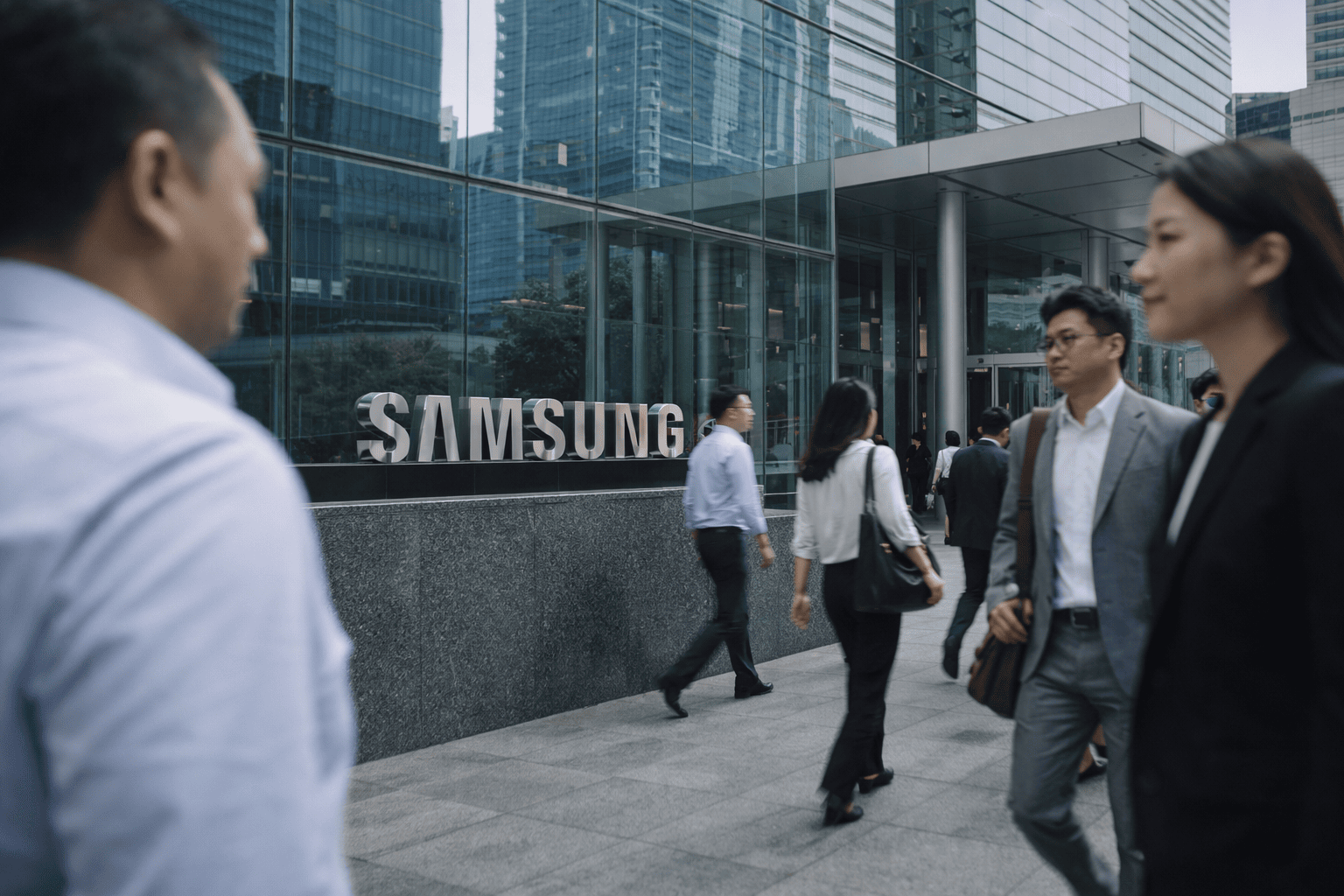
Samsung Electronics shares plunged as much as 8% on Monday, even after the company unveiled the largest shareholder-return program in South Korean corporate history. The market's reaction underscores a growing gap between headline numbers and investor expectations in the memory-chip sector.
Record payout, but expectations had soared
Samsung said it expects to return between 90 trillion and 110 trillion Korean won ($65 billion to $80 billion) to shareholders in 2026, roughly five times its previous record of 20.3 trillion won set in 2020. The plan includes a 30 trillion won cash dividend for the third quarter, with the remainder of the pool to be allocated after 2026 results are confirmed, likely in late January 2027. Options include additional dividends, share buybacks, and cancellations.

However, the announcement came after weeks of rising anticipation, fueled by rival SK Hynix's aggressive buyback and cancellation plan. Morgan Stanley called the program a "significant step-up" in absolute returns but noted it was "largely expected and slightly below" buy-side forecasts, which had exceeded 110 trillion won. In Korea, some analysts had projected returns of 130 trillion to 140 trillion won or more.
SK Hynix's playbook sets the bar
SK Hynix last week unveiled a 40 trillion won share buyback with full cancellation, and pledged to return at least 50% of cumulative free cash flow through 2027, rather than treating that as a ceiling. Its shares surged more than 15% over two days. Cancelling repurchased shares reduces the share count, boosting earnings per share and increasing each remaining investor's ownership stake.
Samsung, by contrast, has only fixed the dividend component for 2026. The separate 15 trillion won buyback approved last week is earmarked for employee compensation, not investor returns. This left investors without the buyback surprise many had hoped for, as noted by Seoul Economic Daily, which highlighted that SK Hynix's cancellation plan offers a more direct boost to per-share value.
January decision becomes the real catalyst
Monday's drop does not necessarily signal a rejection of Samsung's earnings story. The company is generating substantial cash as AI-driven demand for memory chips lifts profits, allowing it to honor its commitment to return 50% of cumulative free cash flow generated from 2024 through 2026. The board's decision in late January on how to use the remaining pool will be closely watched.
Some analysts believe stronger capital returns can support Korean equity valuations over time. Samsung Securities senior researcher Kim Jong-min told Edaily that Korea's market is increasingly judged on sustainable shareholder returns and return on equity, rather than just cyclical earnings. Yuanta Securities analyst Lee Jae-won similarly argued that repeated buybacks could improve capital efficiency and justify higher price-to-book valuations.
The broader context includes a wave of capital return announcements from Korean chipmakers. As Samsung and SK Hynix's combined buyback wave could lift DRAM ETFs, investors are recalibrating their expectations. The market's reaction to Samsung's plan also echoes concerns about margin debt risks in the AI trade, as seen in U.S. markets.
For now, Samsung's stock remains under pressure, but the January board meeting could provide a second chance to meet investor demands. Until then, the market's verdict is clear: record numbers alone are not enough when expectations have already moved higher.
This article is for informational purposes only and does not constitute financial advice.