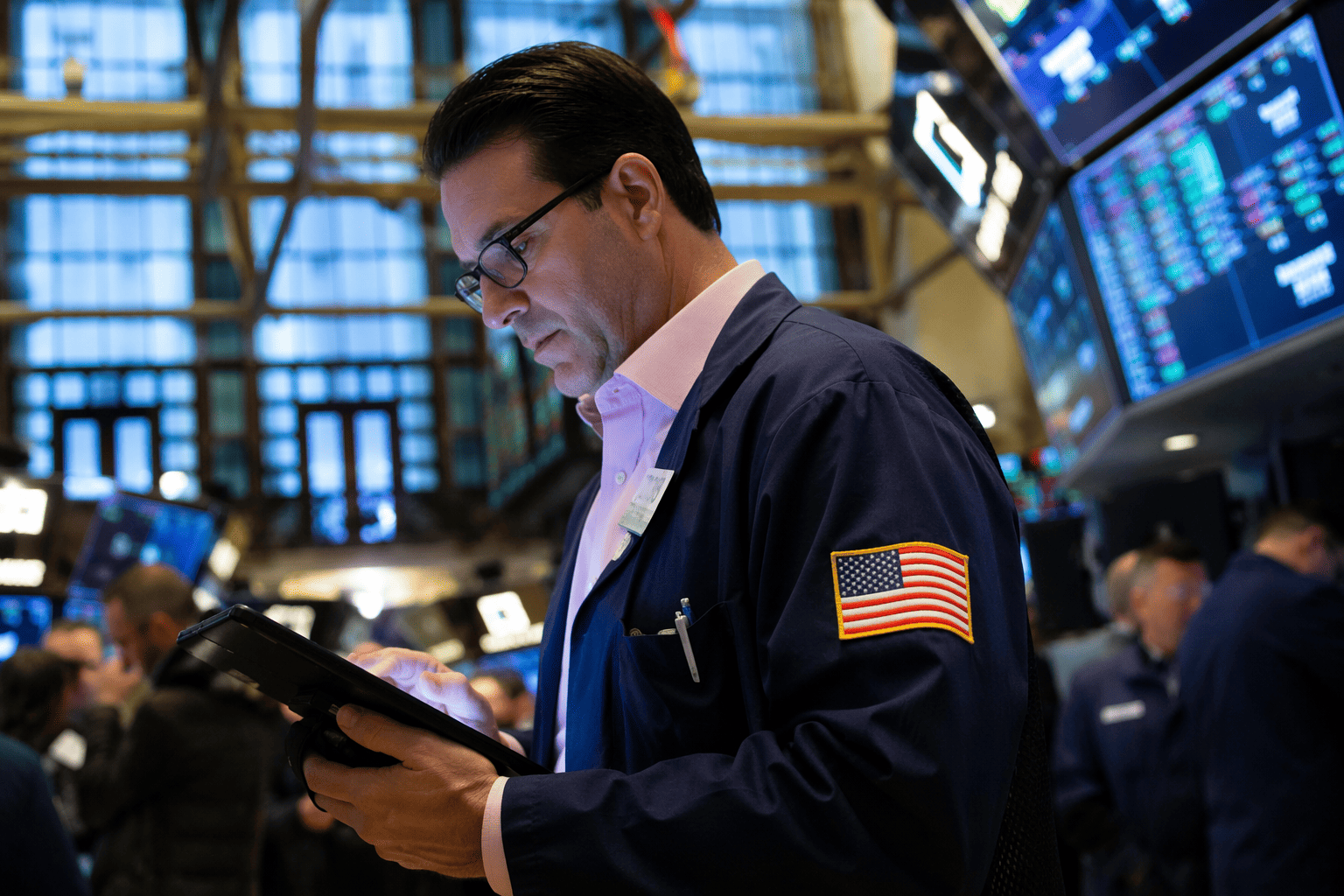
Equity Rally Accelerates as Earnings Season Begins
US stock markets have extended their recent advance, with the S&P 500 and Nasdaq Composite closing at record highs. The rally has been supported by a perceived de-escalation in Middle East tensions, allowing investor attention to pivot toward the unfolding first-quarter corporate earnings season. The S&P 500 achieved its first record close since late January, while the Nasdaq reached its highest level since late October.
Earnings Expectations Provide Fundamental Support
Market participants are anticipating robust quarterly results to justify current valuations. According to LSEG IBES estimates, aggregate earnings for S&P 500 companies are projected to increase by approximately 14% year-over-year for the first quarter. A significant wave of reports is imminent, with nearly 20% of index constituents scheduled to release results in the coming week. This includes major technology firms and industrial giants, setting the tone for market sentiment in the near term.
The technology sector has been a primary driver of the market's recovery. After an initial decline during the period of heightened geopolitical risk, megacap technology stocks have led the rebound. The Nasdaq Composite's performance underscores this strength, having posted gains for twelve consecutive sessions—its longest winning streak since 2009.
Speed of Recovery Surprises Analysts
The velocity of the market's rebound has drawn commentary from analysts. The S&P 500 has recovered sharply from its March lows, climbing 11% since March 30 to surpass the 7,000 level. Historical analysis from Bespoke Investment Group indicates the index had never before returned to a record high within just 11 trading sessions following a decline of 5% to 10%. Deutsche Bank's head of macro and thematic research, Jim Reid, described the pace of the ascent as "astonishing."
Persistent Risks: Inflation and Energy Prices
Despite the equity rally, underlying economic risks remain. Oil prices continue to trade at elevated levels, with US crude hovering around $94 per barrel, a significant increase from pre-conflict prices. Market observers, such as Michael Mullaney of Boston Partners, warn that sustained high energy costs could translate into broader inflationary pressures. This, in turn, might lead to higher Treasury yields, which could eventually act as a headwind for equity valuations.
Consumer-facing data will be closely watched, as rising fuel prices have pushed the national average for gasoline above $4 per gallon. Upcoming retail sales figures for March will provide insight into whether this is impacting consumer spending patterns. The inflationary backdrop has also shifted market expectations for monetary policy, with investors now largely discounting the possibility of interest rate cuts by the Federal Reserve this year.
Key Events on the Horizon
The week ahead is packed with catalysts. Tesla is set to report, marking the first of the so-called "Magnificent Seven" technology stocks to release quarterly figures. Other notable reports will come from Boeing, Intel, and Procter & Gamble. In addition to earnings, markets will monitor congressional testimony from a Federal Reserve nominee and key economic indicators for further direction.
For broader context on market movements, readers may explore related analysis on S&P 500 ETFs reaching all-time highs and the global equity rally driven by earnings and geopolitical calm.
This article is for informational purposes only and does not constitute financial advice.