Quantinuum (QNT) shares declined approximately 2.69% on Monday, trading near $73.54, even as a wave of analyst initiations following the expiration of the company's post-IPO quiet period painted an overwhelmingly bullish picture. The divergence between price action and analyst sentiment underscores the market's cautious digestion of the quantum computing firm's long-term prospects.
The quiet period, which had restricted IPO underwriters from publishing research, lifted on Monday, allowing firms to release their first formal ratings and price targets. Despite the positive coverage, the stock's decline suggests investors may be weighing near-term valuation concerns against the technology's transformative potential.

Analysts Highlight Technology Leadership
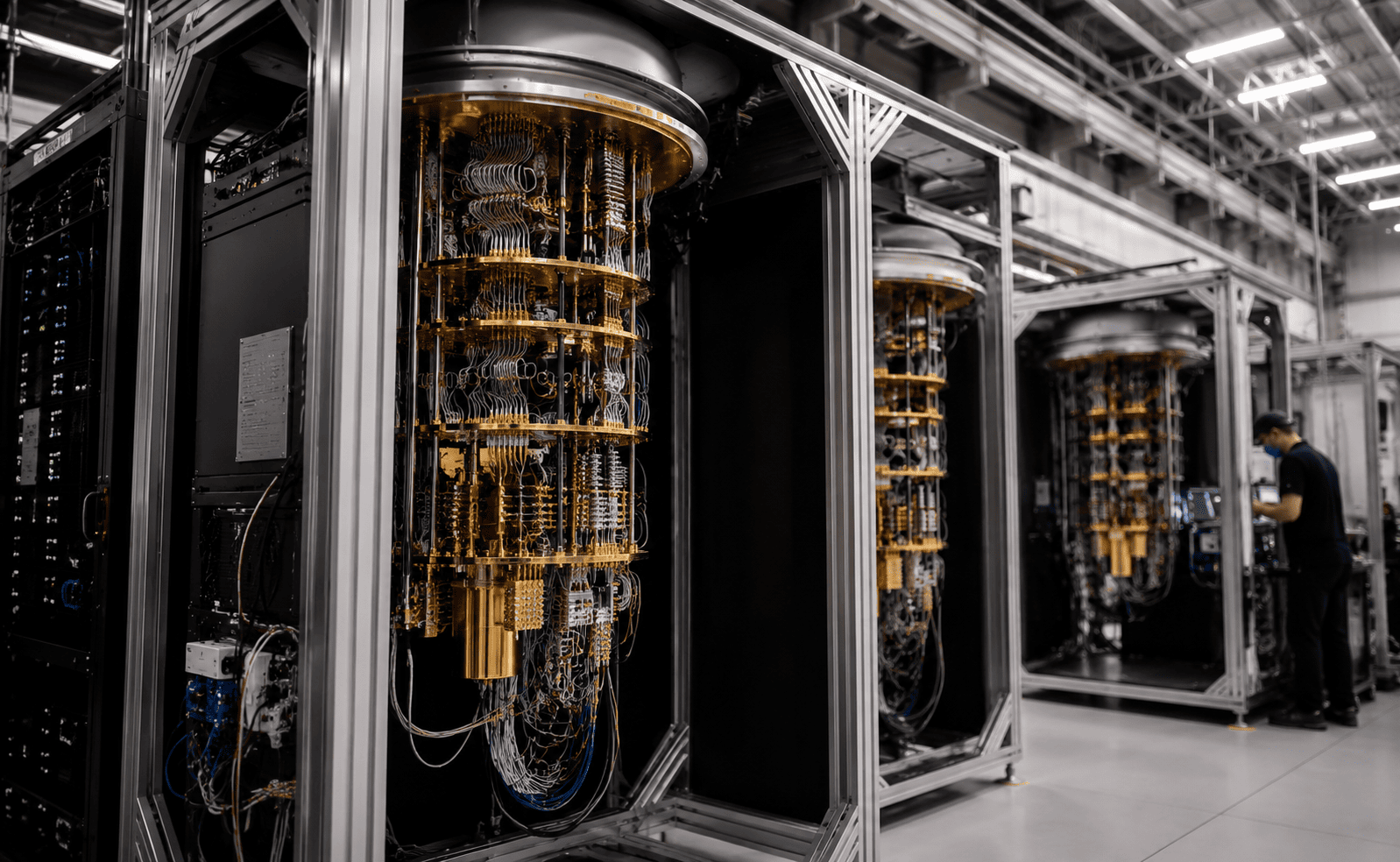
Cantor Fitzgerald analyst Troy Jensen initiated coverage with an Overweight rating, arguing that Quantinuum's trapped-ion quantum computing architecture could position it as a commercial leader if the approach gains industry-wide adoption. Trapped-ion systems suspend ions in a vacuum and manipulate them with lasers, offering higher operational accuracy compared to alternative methods.
Quantinuum's latest Helios system uses Barium-137 isotopes for its qubits, replacing the industry-standard ytterbium. This shift enables the use of stable visible and infrared lasers instead of ultraviolet light, which is more error-prone. Jensen noted that Quantinuum envisions a hybrid compute world where CPUs, GPUs, and quantum processors work together, with quantum computing as the foundational layer. The company has developed a full-stack platform integrating hardware, software, and applications.
Rosenblatt Securities analyst John McPeake assigned a Buy rating and a $155 price target, well above current trading levels. McPeake stated that Quantinuum has set industry benchmarks in quantum computing, citing the Helios platform's 99.92% two-qubit gate fidelity.
Strong Backing and Commercial Pipeline
JP Morgan initiated coverage with a positive outlook, emphasizing Quantinuum's financial strength post-IPO and its roots in Honeywell. The company was formed in 2021 through the merger of Honeywell International's quantum division and Cambridge Quantum, a University of Cambridge spinout founded in 2014. Analyst Harlan Sur highlighted the team's decade-plus experience in trapped-ion systems and noted that Quantinuum has introduced three generations of quantum computers over six years, with plans to scale to larger systems by decade's end.
Sur also pointed to building commercial momentum, supported by a customer pipeline spanning financial services, telecommunications, and automotive markets. Last month, Quantinuum reached a tentative agreement with the Commerce Department, exchanging a minority equity stake for federal funding.
For context on broader market trends, see our analysis of Physical AI: Wall Street's Next Frontier as Robotics Market Eyes $200B by 2035.
Growth Opportunity Tempered by Execution Risks
Not all analysts adopted an unqualified bullish stance. Morgan Stanley initiated coverage with an Equal Weight rating and a $78 price target, acknowledging technological progress while cautioning that commercialization risks remain. The firm wrote that Quantinuum's differentiated technology and consistent execution make it one to watch, but a neutral rating best reflects the balance between long-term opportunity and execution risk. Morgan Stanley also noted that the company's trapped-ion architecture demonstrates a credible path to fault tolerance.
Mizuho initiated coverage with an Outperform rating and a $90 price target, forecasting significant industry expansion. The firm estimates the quantum computing market will grow from approximately $1.1 billion in 2025 to $15 billion by 2030 and $205 billion by 2035.
Investors may also find parallels in other high-growth tech stories, such as SpaceX Stock Returns to $150 IPO Price: Wall Street Bullish but Caution Persists.
While the analyst consensus leans bullish, the stock's decline suggests the market is pricing in execution risks and the long timeline to commercial viability. As quantum computing evolves, Quantinuum's trapped-ion approach and full-stack strategy could prove decisive, but near-term volatility remains likely.
For a look at other stocks forming bullish patterns, see ITW Stock Forms Bullish Inverted Head-and-Shoulders Pattern Amid Earnings Anticipation.
This article is for informational purposes only and does not constitute financial advice.

