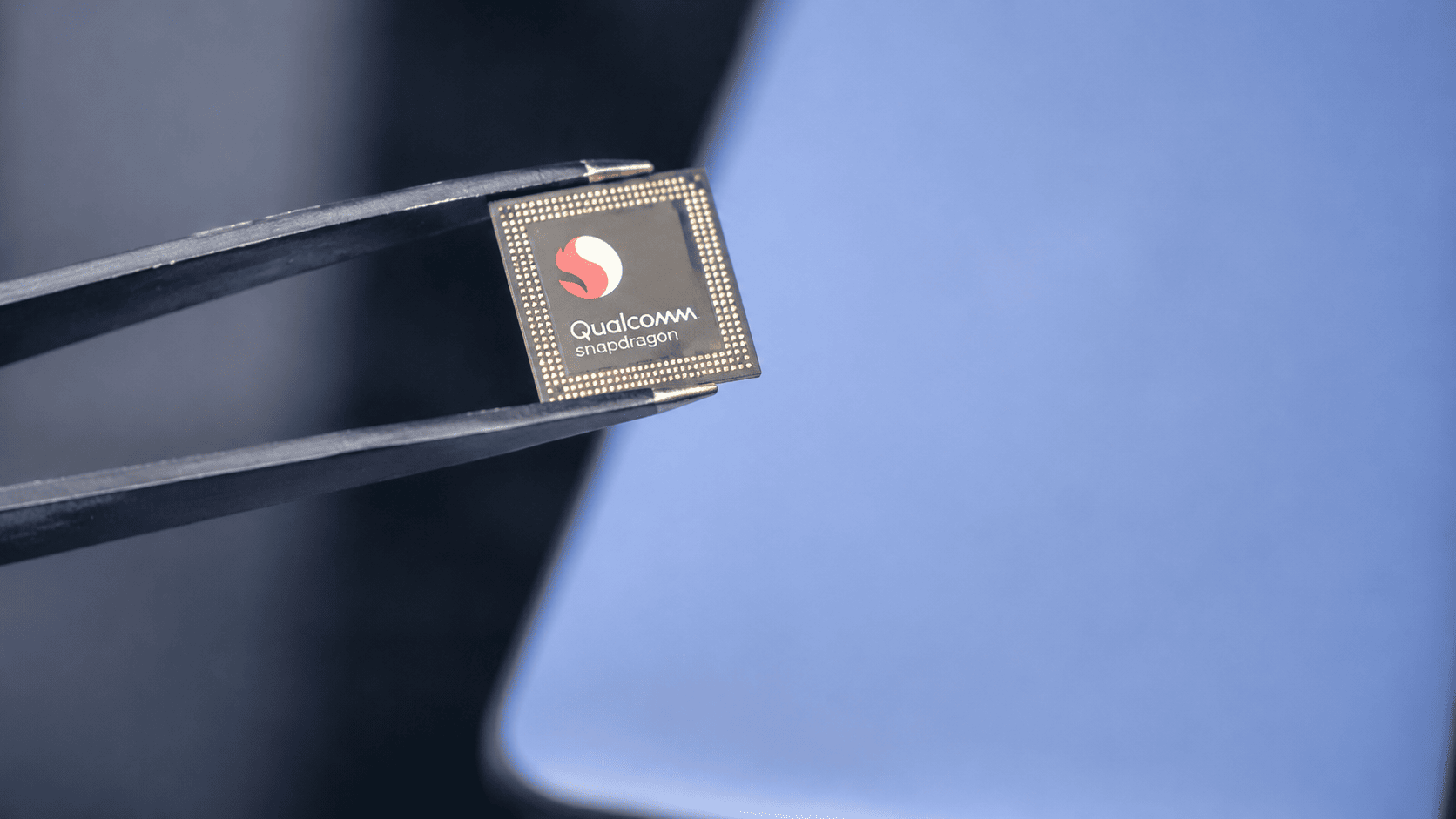
Qualcomm (QCOM) shares edged lower in extended trading Wednesday after the chipmaker reported fiscal third-quarter results that missed profit expectations, weighed down by a sharp rise in memory component costs and broader supply chain pressures. The stock has now fallen roughly 40% from its June high, reflecting persistent headwinds in its core smartphone market.
Profit Miss on Memory Crunch
For the quarter ended June 30, Qualcomm earned $2.21 per share on an adjusted basis, falling short of the $2.23 consensus estimate. Net income dropped 25% year-over-year to $2 billion. Revenue, however, came in at $9.95 billion, topping the $9.67 billion analysts had forecast.

The bottom-line miss was primarily driven by escalating input costs across wafer fabrication, packaging, assembly, and especially memory components. Management highlighted that the supply crunch has severely impacted the handset segment, where chip sales declined 20% annually to $5.1 billion. CEO Cristiano Amon noted that elevated memory prices have altered consumer behavior, with budget and mid-tier devices facing affordability bottlenecks and even premium Android buyers opting for lower-tier configurations or prior-year models.
This structural shift in buying patterns, combined with higher supply chain overhead, squeezed gross margins in the quarter and triggered the after-hours sell-off.
Guidance Disappoints
Investors also reacted to a weaker-than-expected outlook for the current quarter. Qualcomm projected adjusted earnings per share in the range of $2.05 to $2.25, well below the $2.36 consensus compiled by LSEG. Revenue guidance of $9.7 billion to $10.5 billion brackets the $10.02 billion Wall Street estimate, signaling stable demand but ongoing cost inflation.
To offset these pressures, Amon announced comprehensive price increases across Qualcomm's chip product line, effective September 1. He characterized the higher supply costs as a temporary disruption and expressed confidence that raising prices and streamlining supply chain operations will restore margin expansion in the next fiscal year.
Diversification Gains Momentum
Despite near-term supply chain friction, Qualcomm's strategic expansion beyond smartphones continues to gain traction. Non-handset divisions delivered standout results, led by the automotive business with $1.59 billion in sales, anchored by a fresh digital cockpit supply partnership with BMW. The company is targeting $10 billion in automotive revenue by 2029.
The Internet of Things segment grew 9% year-over-year to $1.83 billion, while the licensing division (QTL) generated $1.28 billion, topping StreetAccount estimates. With non-smartphone business expected to represent 60% of total revenue next year, the finalized acquisition of Modular and an upcoming AI software platform signal further diversification. For context, Micron's recent resilience highlights the broader AI-driven memory demand, though Qualcomm's near-term challenges remain distinct.
Wall Street currently rates Qualcomm at Hold, reflecting caution amid the memory crunch and uncertain recovery in smartphone demand. Investors may also want to monitor options market signals that suggest elevated volatility ahead.
This article is for informational purposes only and does not constitute financial advice.