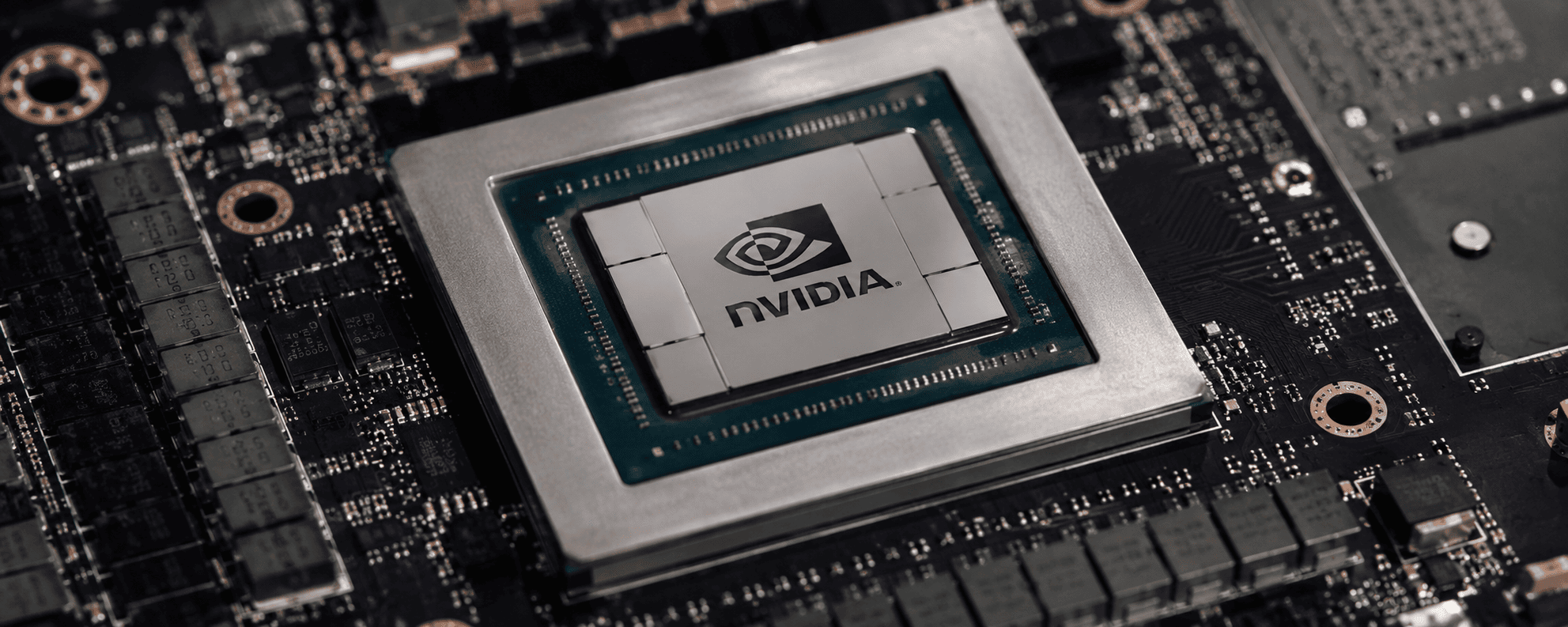
The artificial intelligence sector is witnessing a self-reinforcing cycle that is reshaping the compute landscape. As AI models become more sophisticated, the demand for training compute has skyrocketed, while the adoption of agentic AI—systems that can plan and execute tasks—has fueled a parallel surge in inference demand. This has made compute capacity, rather than model design, the primary bottleneck constraining industry growth.
Market signals already reflect this pressure: GPU prices have climbed at least 25% year-to-date. In response, Piper Sandler analysts, led by David O’Connor, have released a research report evaluating compute and semiconductor stocks under this shifting market structure. Their top picks remain industry heavyweights Nvidia (NVDA) and Advanced Micro Devices (AMD), both rated Overweight.

Nvidia: The Undisputed Leader
Piper Sandler has set a $300 price target on Nvidia, implying roughly 34% upside from current levels. O’Connor highlights Nvidia’s commanding 80% market share in AI compute and its rapid product innovation as key differentiators. Despite recent underperformance relative to peers, the analyst views this as a temporary mispricing rather than a red flag.
The firm identifies large-scale, gigawatt enterprise compute deals as the primary near-term catalyst for Nvidia. Currently, NVDA trades at about 14x forward earnings, near the low end of the 14x–22x range for the broader compute group, suggesting it remains inexpensive relative to its growth trajectory. Nvidia’s management has guided for $108 billion in sales for the current quarter, with an impressive 74% gross margin.
AMD: Closing the Gap
AMD has secured a $600 price objective, the highest in Piper Sandler’s semiconductor coverage, representing about 15% implied upside. The bull case centers on agentic AI accelerating demand for CPU server chips. As AI systems increasingly handle multi-step tasks, the added overhead falls on general-purpose processors—a segment where AMD is gaining share from Intel.
AMD is also making inroads in inference share against Nvidia through its Helios GPU line. While the company has secured major anchor customers like OpenAI, Meta, and Anthropic, O’Connor notes that AMD needs to broaden its core customer base before it can realistically land its own gigawatt-scale enterprise compute deals. AMD has guided for revenue of about $13 billion in the current quarter, representing 41% year-over-year growth.
The broader compute demand story is also influencing other markets. For instance, AI power demand is boosting energy stocks, and retail traders are gaining exposure to GPU compute through new derivatives products.
Piper Sandler’s analysis underscores that compute capacity is now the critical constraint in AI scaling. With GPU prices rising and enterprise deals growing, both Nvidia and AMD are positioned to benefit, though Nvidia’s dominance and AMD’s strategic gains offer distinct investment theses.
This article is for informational purposes only and does not constitute financial advice.

