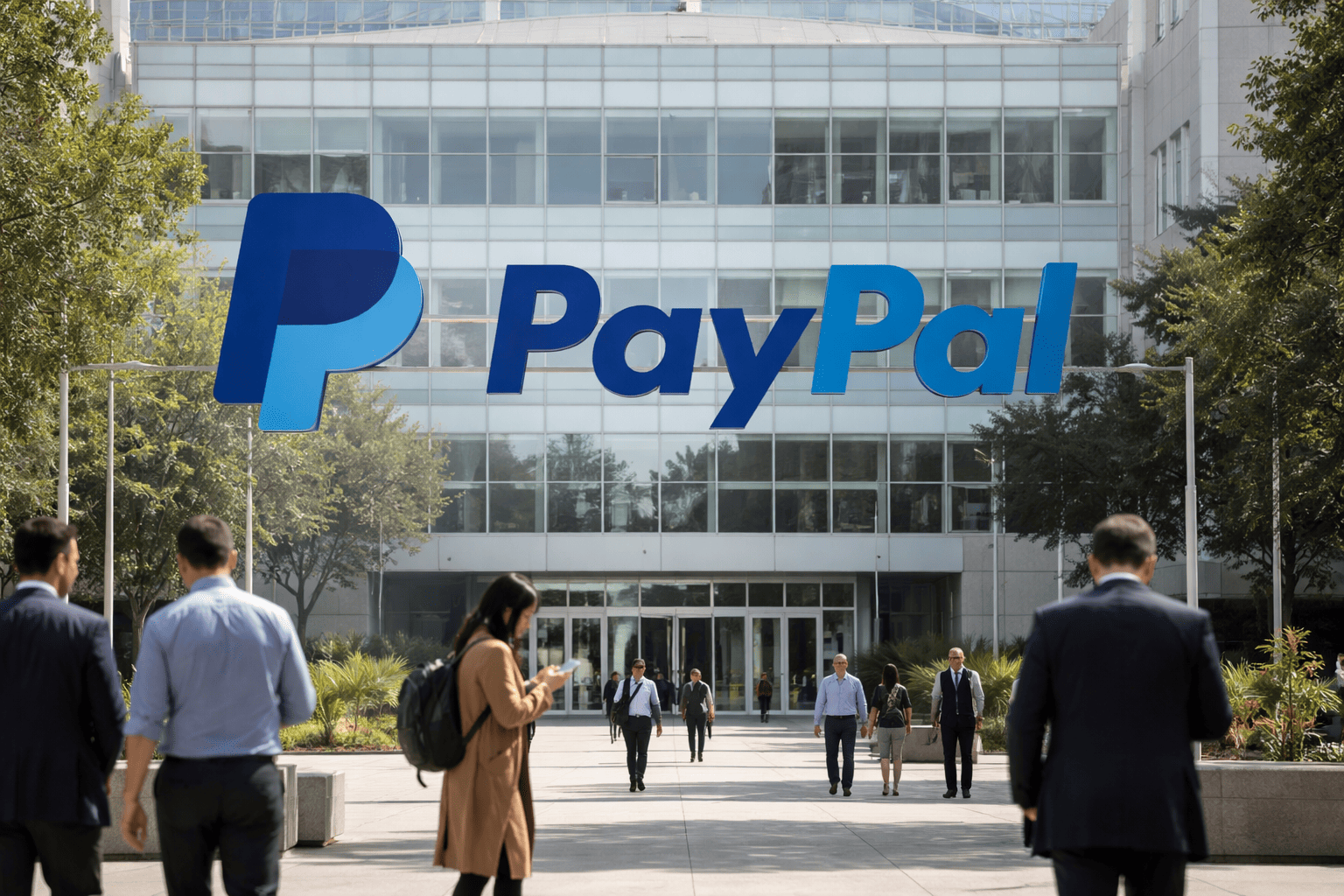
PayPal Holdings Inc. (NASDAQ: PYPL) shares have traded in a tight range in recent sessions, with the market focused on two key catalysts: the company's formal response to a $53 billion acquisition bid from Stripe and Advent International, and its second-quarter earnings report due shortly.
PYPL was last seen around $56, well above its 2024 low of $40 but still reflecting the uncertainty surrounding the unsolicited offer. The bid values PayPal at roughly $53 billion, a premium to its current market capitalization of about $49 billion, suggesting the board may push for a higher price.

Strategic Options for PayPal
According to media reports, PayPal's board has already informally rejected the offer, citing valuation concerns. The company is expected to provide a detailed response during its earnings call. Several paths are open to management: accept the bid, negotiate a higher price, seek a white knight buyer, or reject the offer outright and pursue a standalone turnaround.
History offers precedents for such situations. In a notable example, Netflix's intervention in Paramount's acquisition of Warner Bros. Discovery forced Paramount to raise its bid significantly. A similar scenario could emerge if another financial or strategic buyer steps in for PayPal.
If PayPal rejects the offer, Stripe and Advent could take the bid directly to shareholders, potentially triggering a proxy fight. The outcome will hinge on investor confidence in management's ability to revive growth.
Valuation and Competitive Pressures
PayPal's current valuation metrics underscore why it has become an attractive target. The stock trades at a forward price-to-earnings ratio of 10.5, well below its five-year average of 18.7 and the S&P 500's average of 21. This discount reflects persistent headwinds in the payments industry.
The company faces intensifying competition from tech giants such as Apple, Google, Amazon, and its suitor Stripe. Growth initiatives have yielded mixed results. PayPal's stablecoin, PayPal USD (PYUSD), has accumulated only $2.4 billion in assets under management, a fraction of the broader stablecoin market's $300 billion. Similarly, its Fastlane checkout simplification tool has not meaningfully boosted payment volumes.
Cost pressures are also evident. PayPal cut 20% of its workforce in the first quarter as part of a restructuring effort. Analysts expect second-quarter earnings per share to decline to $1.28 from $1.40 a year earlier, even as revenue edges up 2.2% year-over-year to $8.47 billion.
Earnings Expectations
For the third quarter, consensus estimates point to revenue of $8.48 billion, representing growth of just 2.54%. Full-year 2024 revenue is projected at $33.84 billion, up 3.48% from 2023. The sluggish top-line expansion highlights the structural challenges PayPal faces in a maturing digital payments market.
Investors will scrutinize the earnings call for any updates on the Stripe-Advent bid, as well as management's outlook for the remainder of the year. The broader market context includes ongoing valuation shifts driven by the AI boom, which has reshaped investor priorities across sectors.
PayPal's situation also reflects wider trends in the payments industry, where consolidation and pressure to demonstrate AI monetization are reshaping competitive dynamics. The company's ability to navigate these forces will determine whether it remains independent or becomes part of a larger entity.
This article is for informational purposes only and does not constitute financial advice.