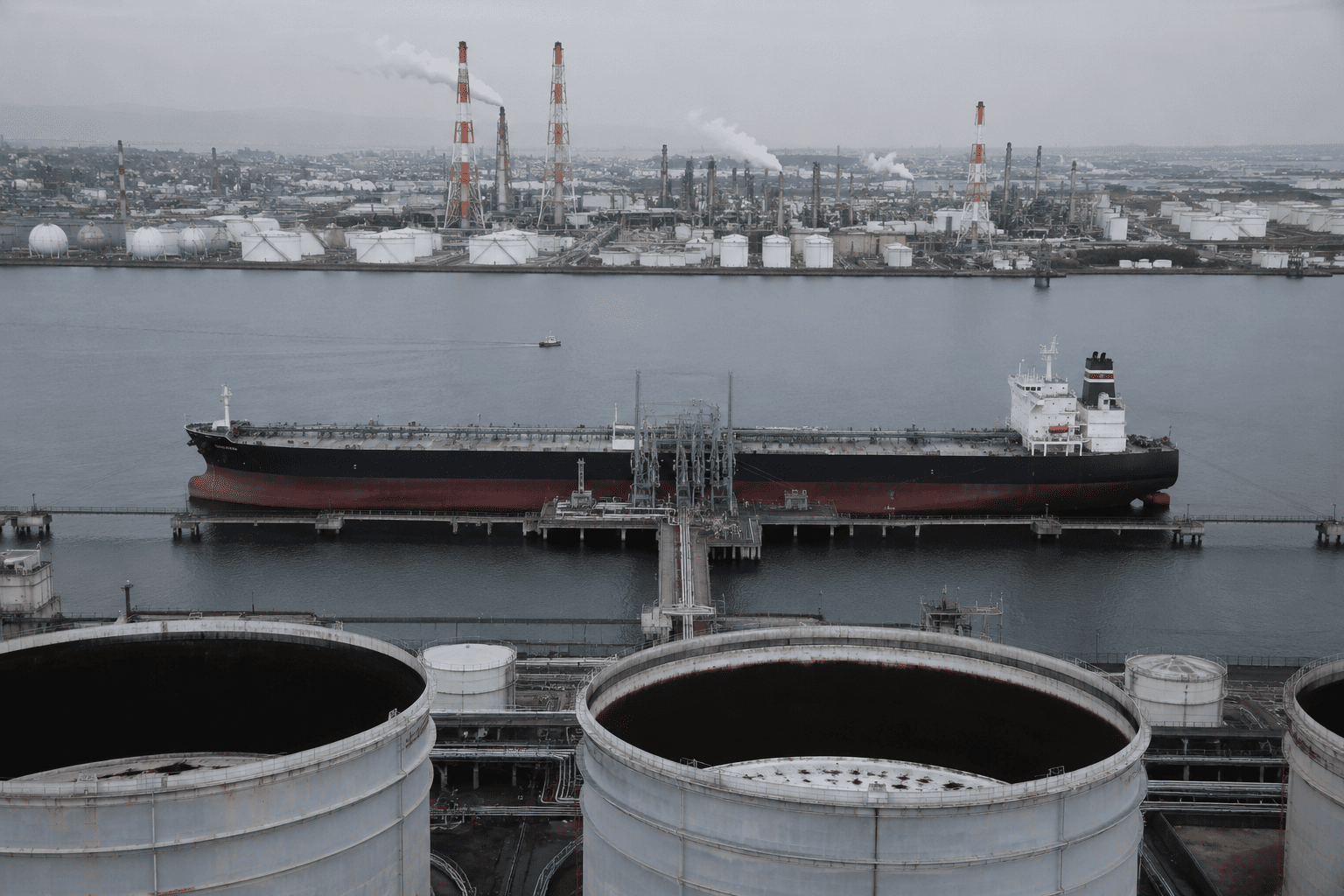
Oil prices climbed on Monday as market participants reassessed whether last week's sharp sell-off had outpaced diplomatic developments concerning the Strait of Hormuz. Brent crude rose approximately 1% to $84.46 per barrel in early trading, while West Texas Intermediate advanced to $78.79, recovering a portion of the more than 7% losses recorded last week.
The rebound followed Iran's announcement that a shipping arrangement with Oman was nearing completion, while simultaneously making a broader reopening of the strait contingent on sweeping concessions from Washington. These conditions include sanctions relief, the release of frozen Iranian assets, compensation for war damage, an end to US military threats, and the removal of the naval blockade.
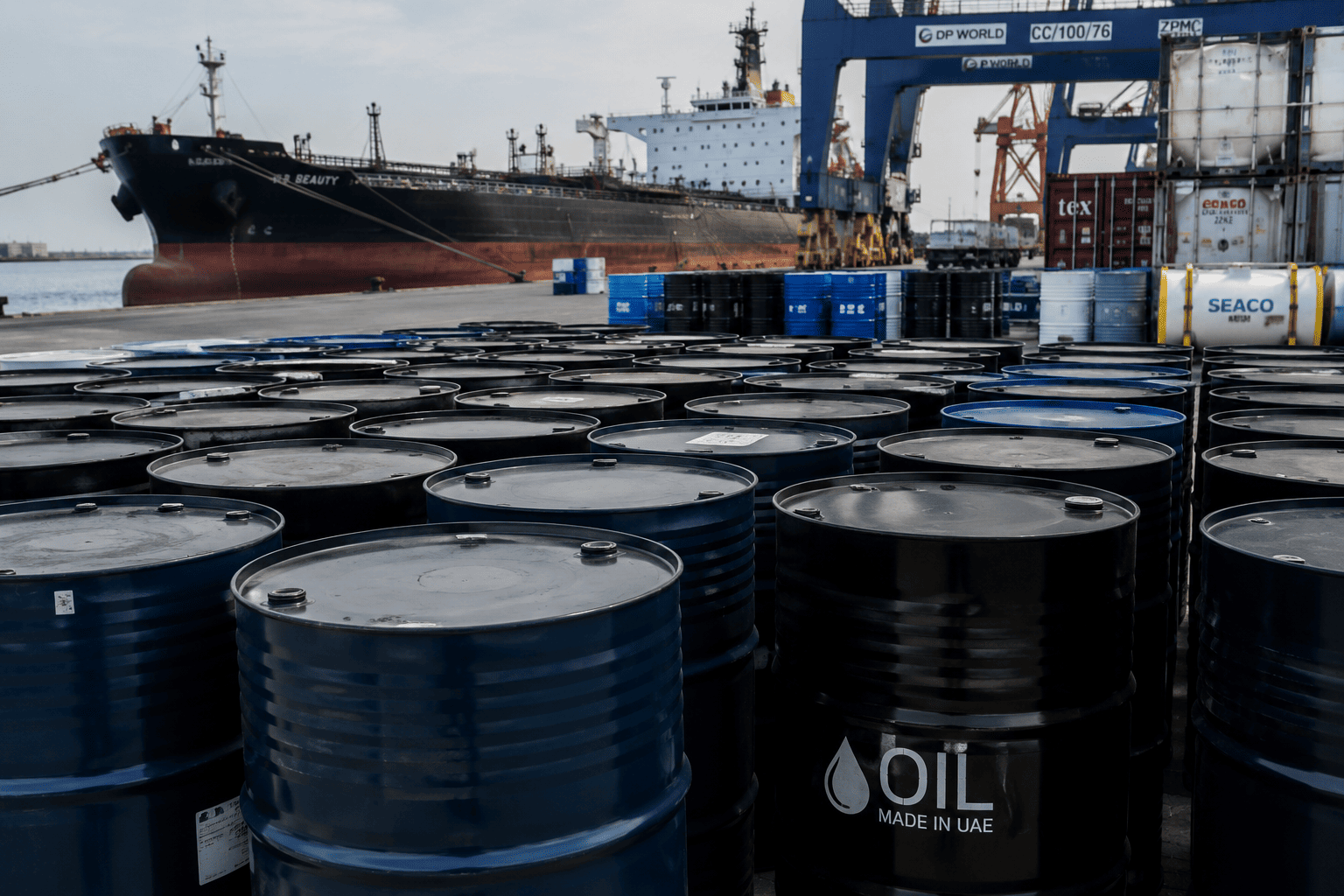
Market pricing ahead of tanker return
The magnitude of last week's decline illustrates how quickly traders embraced the prospect of de-escalation. Brent fell 5.3% on August 4 to settle at $79.36, while WTI dropped 5.7% to $75.77 after US Treasury Secretary Scott Bessent suggested that Washington could be close to an agreement with Iran that would help reopen Hormuz.
Robert Yawger of Mizuho noted in a report cited by The Wall Street Journal that negotiations were centered on reopening the strait and resuming Gulf crude flows. He anticipated an agreement despite unresolved issues surrounding the broader conflict. However, a deal on shipping lanes does not equate to a full return to pre-crisis oil flows. Iran has since raised the political cost for reopening the waterway, while attacks on commercial shipping continue to keep security risks elevated.
JPMorgan warns of thinning buffer
The supply picture becomes increasingly precarious the longer disruption persists. JPMorgan analysts, led by commodities strategist Natasha Kaneva, observed that markets appear reluctant to repeatedly reprice geopolitical risk, with investors instead assuming some form of near-term resolution. Yet the bank cautioned that global buffers are finite.
With Chinese imports depressed, JPMorgan estimates that each additional month of conflict and weaker-than-expected Hormuz flows could add roughly $7-$8 per barrel to Brent's fair value. If the disruption lasts three months, the bank projects the monthly average price could reach about $114. Standard Chartered echoes this fragility, with energy research head Emily Ashford noting that crude prices are likely to remain driven by escalation and de-escalation headlines. Renewed vessel attacks and the fragility of the ceasefire have interrupted the market's return toward normal conditions, she said.
Bull trap today does not negate bearish 2027 outlook
Monday's rebound does not necessarily signal the start of another sustained rally. Citi raised its third-quarter Brent forecast to $80 per barrel from $75 on August 7, citing that the US-Iran conflict and supply disruption are lasting longer than previously expected. However, the bank maintained its fourth-quarter forecast at $70 and its 2027 average at $65, suggesting prices could still fall materially once supply normalizes.
JPMorgan also remains bearish beyond the immediate crisis, with its base case putting Brent at an average of $80 in the fourth quarter before renewed oversupply pushes the 2027 average toward $63. Goldman Sachs expects Brent to remain broadly between $80 and $90 until either a credible US-Iran agreement emerges or the conflict escalates materially.
For investors tracking the broader market, the oil price swings have contributed to volatility in equities, as seen in recent market moves and the market digest. The ongoing situation underscores the delicate balance between geopolitical risk and supply fundamentals.
This article is for informational purposes only and does not constitute financial advice.