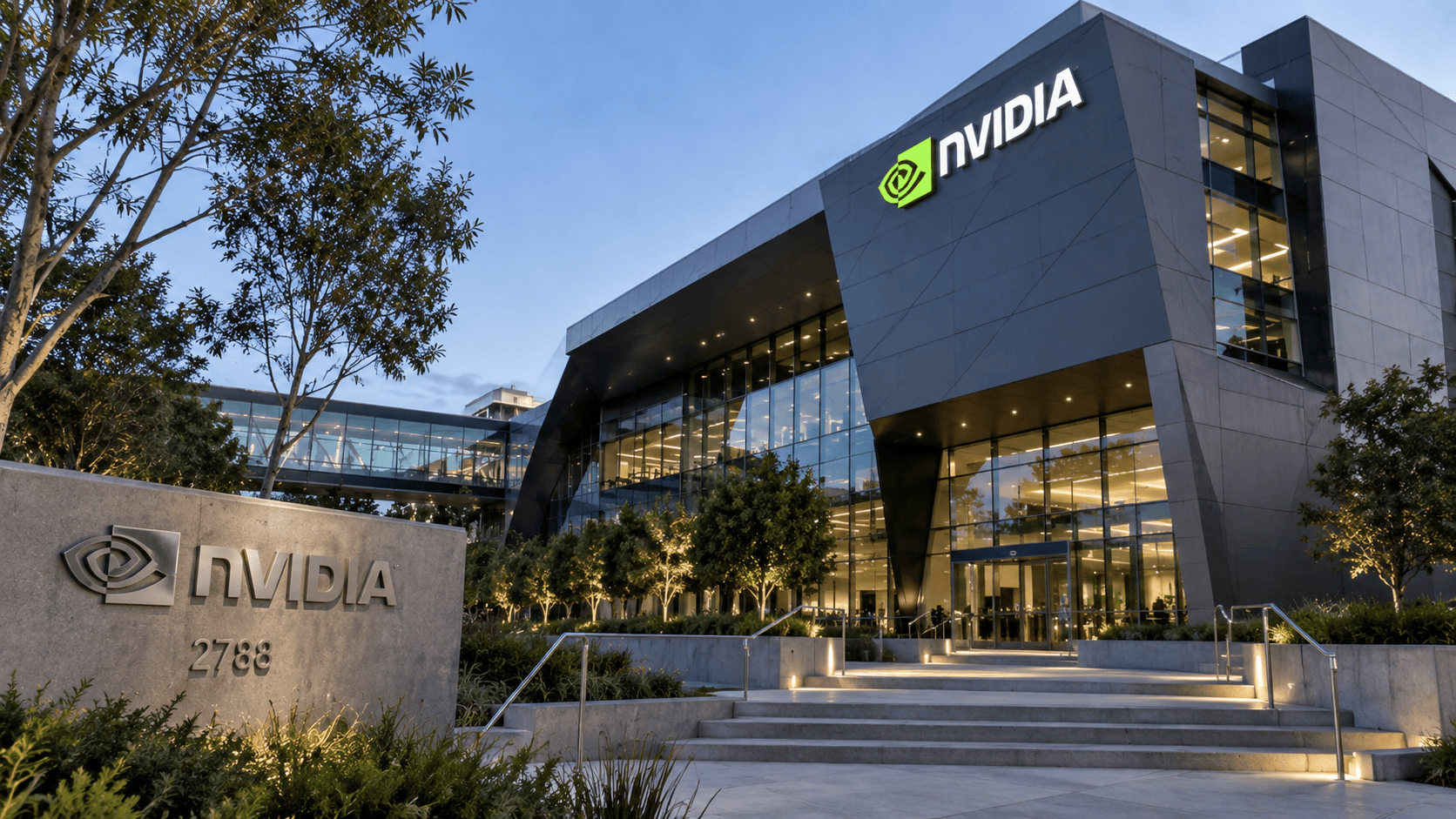
Nvidia (NASDAQ: NVDA) shares slipped nearly 3% on Monday, as concerns over the pace of artificial intelligence development triggered a broad selloff in chipmakers and AI-related equities. The decline followed public statements from prominent AI executives calling for a more measured approach to advancing model capabilities.
The broader market also weakened, with the S&P 500 falling 0.33%, the Nasdaq Composite declining 0.38%, and the Dow Jones Industrial Average losing 0.12%. The pullback has left investors questioning whether to buy the dip, wait for clarity, or reduce exposure to the chipmaker.

AI leaders urge caution
Anthropic CEO Dario Amodei published an essay on X on Saturday urging AI companies to slow the rate of model capability advancement, citing concerns about potential misuse. OpenAI CEO Sam Altman and xAI's Elon Musk expressed agreement with Amodei's proposal. Altman also stated that OpenAI would not pursue an IPO this year, citing safety concerns.
These comments have prompted investors to reassess the rapid expansion of AI development and the substantial capital spending that has fueled demand for advanced computing infrastructure. A slower pace of AI development could potentially reduce the need for heavy investment in the technology, posing a risk to chipmakers like Nvidia, whose business has thrived on AI infrastructure expansion.
Bernstein sees buying opportunity
Despite the recent pressure, Bernstein analysts led by Stacy Rasgon reiterated their Outperform ratings on Nvidia and Broadcom, recommending that investors buy weakness in both stocks. The analysts argued that a slowdown in the pace of AI development does not necessarily translate into a slowdown in spending. They noted that Amodei's call was not for a halt to AI training but rather a shift from an extremely fast pace to a somewhat slower one—still representing significant growth for the industry.
Bernstein also pointed to rising demand from AI inference and agentic applications. The firm highlighted that there is already insufficient computing capacity to meet demand for existing AI models, suggesting infrastructure requirements could remain substantial despite concerns over model development pace.
Anthropic's spending underscores demand
Anthropic's own spending provides context for the debate. According to The Information, the company agreed to 14.8 gigawatts of computing capacity involving approximately $517 billion in commitments over the 11 months through August. The Financial Times also reported that Anthropic expects a second consecutive quarter of adjusted operating profit, with inference gross margins exceeding 80% before distribution costs.
Nvidia's broader AI strategy
Nvidia has been working to reduce its dependence on a small number of major customers by supporting a wider AI ecosystem. The company has invested in startups and backed open-source AI models, which users can download and modify. Earlier this month, Nvidia agreed to acquire open-source AI development platform Hugging Face in a $12.9 billion deal, according to reports.
Additionally, some of Nvidia's customers may continue their AI ambitions regardless of calls for slower development. Musk, for example, has said SpaceX is highly confident it will launch Nvidia-powered AI servers in space next year. SpaceX has previously indicated plans to use Nvidia hardware for orbital data centres, potentially addressing land and power constraints facing conventional facilities. However, the economic viability of orbital data centres remains subject to skepticism.
For investors, the key question is whether the recent dip represents a buying opportunity or a warning sign. Bernstein's stance suggests that the underlying demand for Nvidia's products remains robust, even as the industry debates the pace of AI advancement. Related coverage includes memory stocks tumbling on AI safety concerns and Piper Sandler's top AI compute picks.
This article is for informational purposes only and does not constitute financial advice.

