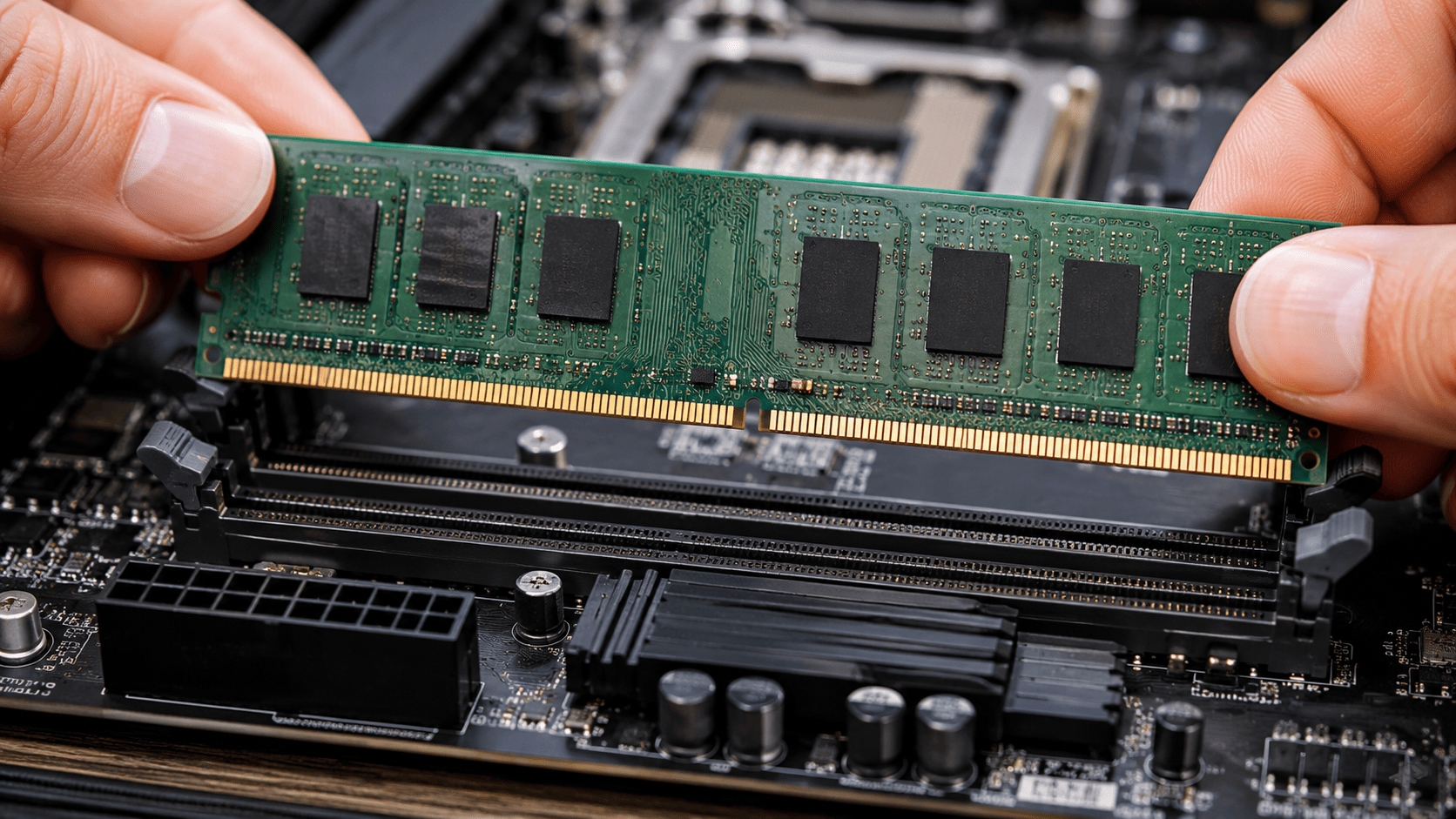
Memory chipmakers are bearing the brunt of Monday's AI-driven selloff, as investors reassess the sustainability of the infrastructure boom that had turned these stocks into some of the market's biggest winners. Micron and SanDisk each dropped more than 5% in premarket trading, while SK Hynix plunged 7.4%, reflecting a sudden shift in sentiment.
The declines followed weekend comments from Anthropic CEO Dario Amodei and other AI leaders urging a slowdown in frontier-model development over safety concerns. While no major hyperscaler has announced cuts to AI capital expenditure, investors are pricing in the risk that increased safety scrutiny could lead to slower spending growth.

Memory as a leveraged AI bet
Memory has become one of the most leveraged trades in the AI ecosystem. High-bandwidth memory (HBM) feeds accelerators, conventional DRAM supports servers, and enterprise NAND provides storage for large inference workloads. This demand has transformed memory from a cyclical commodity business into a critical bottleneck for AI infrastructure.
According to Susquehanna analyst Mehdi Hosseini, memory now accounts for roughly 50% to 55% of semiconductor-industry revenue, up from a historical range of 20% to 30%. The industry is approaching $1.5 trillion in annual revenue, largely driven by AI data-center investment. That concentration explains why memory stocks are among the first to be repriced when investors question the spending trajectory.
Supply remains tight despite demand worries
The bearish case, however, runs into an uncomfortable reality: memory supply is still severely constrained. KB Securities estimates that finished memory inventories at Samsung Electronics and SK Hynix have fallen below 10 days of supply. Research head Kim Dong-won warned that sellable volumes could become "absolutely insufficient" as demand continues to outpace supply.
KB forecasts that DRAM and NAND bit-demand growth will exceed supply growth by more than 10 percentage points in 2027, driven by HBM4, server DDR5, and enterprise SSD adoption. Bernstein has reiterated Buy ratings on Micron and SanDisk, predicting conventional DRAM and NAND contract prices could rise nearly 20% quarter-on-quarter in the third quarter.
SanDisk's NAND exposure adds to sensitivity
SanDisk is particularly sensitive to NAND demand, which has become increasingly tied to AI data centers. At Goldman Sachs' technology conference last week, management said data-center demand now accounts for more than half of the NAND market, calling it a watershed moment for the industry. This exposure makes SanDisk vulnerable to any perceived slowdown in AI infrastructure spending.
Recent chart patterns for SanDisk have already flashed bearish signals, and Monday's decline adds to a broader correction. Meanwhile, notable investors have been adjusting positions, with Druckenmiller exiting Intel and Micron, though he has built stakes in Amazon and Tesla.
Two realities for memory investors
Memory stocks are caught between two conflicting realities. On one hand, AI safety concerns have introduced a genuine risk to future infrastructure spending. On the other, current supplies remain tight, prices are still rising, and inventories are unusually low. The market's reaction may be pricing a slowdown that has not yet materialized.
Barclays strategist Emmanuel Cau told the Financial Times that the fundamental question is whether increased AI safety means slower and lower capex spending. For now, no major player has signaled a reduction, but the market is clearly nervous.
Investors will be watching upcoming earnings and industry data for signs of whether the selloff is a temporary blip or the start of a deeper correction. The forecast for memory prices to surge 60% remains on the table, but the path is becoming more uncertain.
This article is for informational purposes only and does not constitute financial advice.

