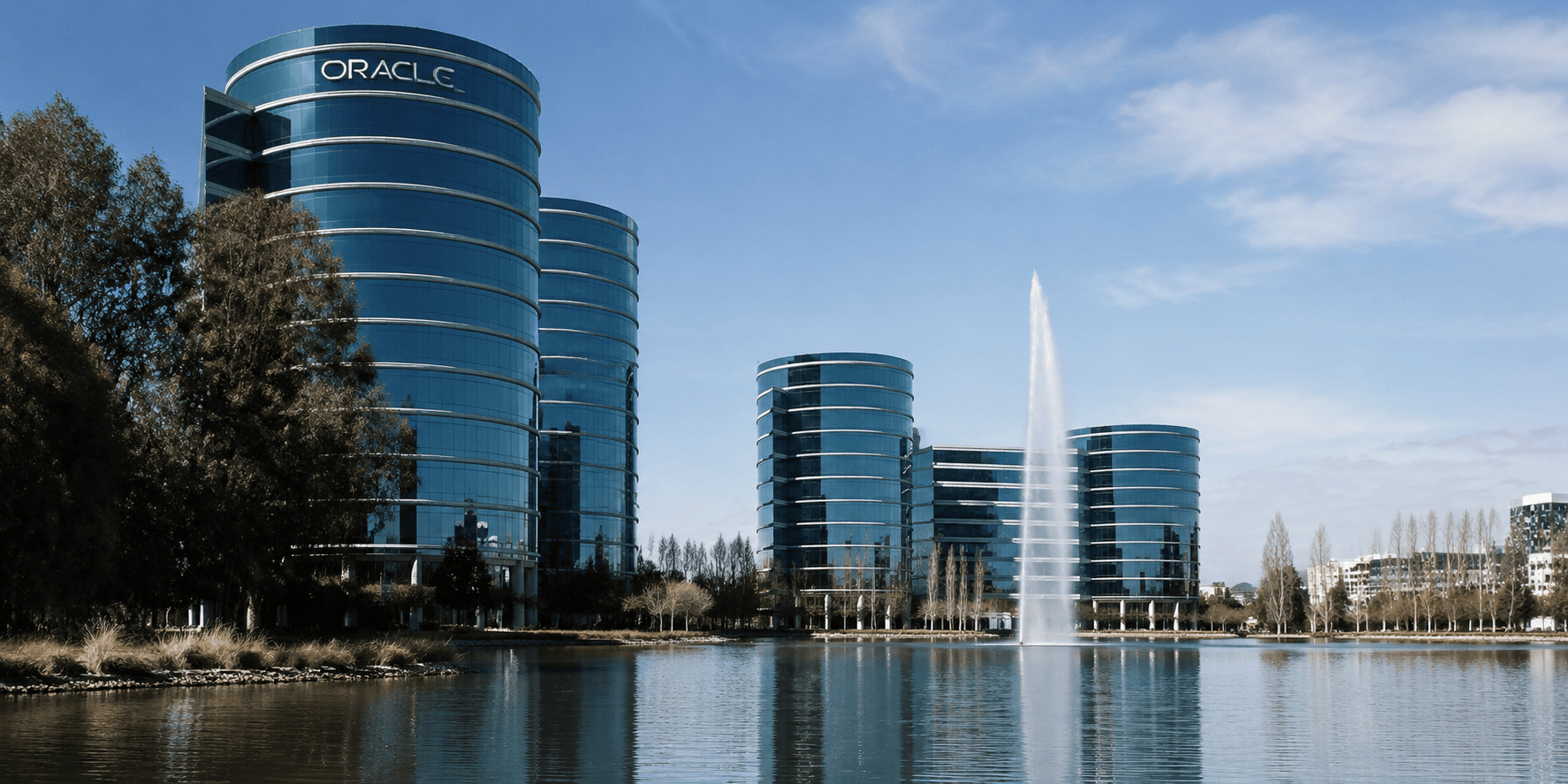
Nvidia's (NVDA) ambitious $500 billion investment initiative with private equity heavyweights like Apollo, BlackRock, and Blackstone is reshaping the AI infrastructure landscape. By pooling third-party capital to fund data center hardware, Nvidia is turning compute capacity into a more liquid, investable asset class. While this move is a boon for nimble neocloud providers such as Nebius, it casts a long shadow over legacy players like Oracle (ORCL), whose stock has already tumbled roughly 40% from its year-to-date peak.
Neutralizing Oracle's Balance-Sheet Moat
Historically, Oracle leveraged its massive corporate balance sheet and superior credit access to outspend smaller rivals on high-performance Nvidia GPUs. However, Nvidia's $500 billion off-balance-sheet financing pool effectively erases that advantage. Specialized neoclouds can now bypass traditional capital constraints, securing long-term institutional backing to build massive AI clusters without taking on crippling debt. This newfound access to top-tier hardware allows them to price compute capacity aggressively, directly undercutting Oracle's cloud infrastructure margins and stealing enterprise market share.

Rising Credit Risk for Oracle
Nvidia's strategy of treating chips as collateral also amplifies financial risk for heavy corporate spenders. Oracle's aggressive cloud expansion through substantial capital expenditures has already raised concerns among bond markets. Credit default swap (CDS) spreads for ORCL have widened to about 200 basis points, far above the 53 basis point average for investment-grade technology firms. This reflects growing skepticism about debt-financed AI infrastructure buildouts. As Nvidia enables third-party funds to flood the market with cheap compute supply, Oracle faces the dual threat of slowing cloud revenue growth and elevated interest expenses on its mounting debt.
Structural Margin Squeeze Ahead
Nvidia's $500 billion plan prioritizes semiconductor volume over cloud provider profitability. By ensuring financial partners fund the hardware pipeline, Nvidia secures steady buyers for its next-generation chips, regardless of whether enterprise software monetization keeps pace. For Oracle, this creates a long-term structural margin squeeze: hardware depreciation remains steep, chip generations cycle quickly, and an abundance of Wall Street-backed neocloud capacity limits pricing power. Unless Oracle can significantly differentiate its enterprise software layer, Nvidia's capital push leaves it vulnerable to valuation compression in an increasingly crowded cloud marketplace.
Market Context and Outlook
The announcement comes at a time when investor sentiment toward Oracle has already soured. The stock's 40% decline from its high underscores broader concerns about its AI strategy and debt load. While Wall Street currently rates Oracle as a Strong Buy with a mean price target of $241, the structural shifts introduced by Nvidia's financing plan warrant caution. As Nvidia's financing plan eases circularity fears for its own stock, the implications for Oracle are decidedly less favorable. The sustainability of the AI capex boom remains a key question, but for Oracle, the immediate challenge is adapting to a landscape where capital is no longer a barrier for competitors.
Investors should monitor Oracle's ability to innovate in its software offerings and manage its debt profile. The recent moves by prominent investors like Michael Burry, who exited Oracle positions, add another layer of scrutiny. As Nvidia's plan unfolds, Oracle's cloud business will face intensifying competition from well-funded neoclouds, potentially eroding its market position and financial flexibility.
This article is for informational purposes only and does not constitute financial advice.

