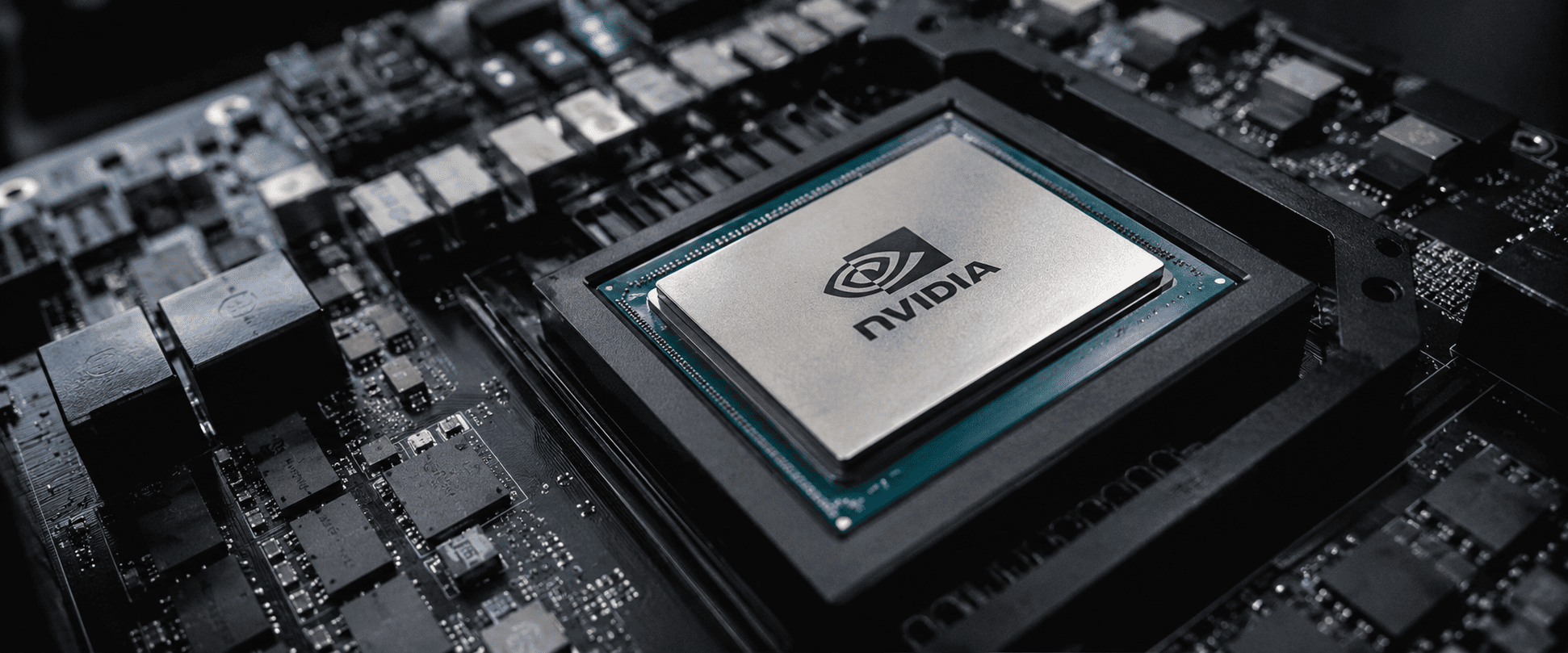
As Nvidia prepares to report quarterly results on Wednesday, options markets are pricing in a potential $280 billion swing in the chipmaker's market value, according to Reuters. The implied move of 5.4% in either direction on Thursday is notable but smaller than the 6.5% priced in ahead of May's earnings and below the company's historical average post-earnings move of 7.4% over the past 12 quarters, data from Option Research & Technology Services shows.
"That shows some complacency for Nvidia, and it means it's getting more predictable," said Matt Amberson, founder of ORATS. The market's relatively restrained expectations suggest investors are no longer anticipating the dramatic earnings surprises that characterized the early stages of the AI boom. Chris Murphy, co-head of derivatives strategy at Susquehanna, noted that actual post-earnings moves have frequently fallen short of what options markets had anticipated over the past two years. "I think the beginning of the AI era when Nvidia was surprising everybody with the huge earnings beats and 10, 15, 20 percent moves, that's kind of over," he said.

Nvidia's earnings are among the most closely watched events in global markets because the company sits at the center of the AI infrastructure buildout. Its graphics processors power many of the data centers being built by major cloud providers, making its revenue outlook an important indicator of how aggressively companies are continuing to invest in AI. However, investors have become accustomed to Nvidia delivering strong results, making increasingly large earnings beats harder to achieve.
Nvidia shares have fallen for seven consecutive trading sessions, though they remain up 11.7% this year. The S&P 500 has gained 11.8%, while the Philadelphia Semiconductor Index has surged 61%. The recent pullback comes amid broader concerns about technology valuations and rising bond yields. The 30-year Treasury yield recently reached a 19-year high, prompting the Treasury Department to announce measures aimed at easing pressure in the bond market. Reports that Treasury Secretary Scott Bessent could potentially use funds from the Treasury General Account to help finance bond buybacks helped push the 30-year yield slightly lower on Monday, although it remained above 5%.
Higher long-term yields can weigh on technology stocks because they increase the discount rate applied to future earnings and make fixed-income assets more attractive. Investors are also looking ahead to Federal Reserve Chair Kevin Warsh's planned speech at Jackson Hole later this week for clues about the interest-rate outlook. That makes Nvidia's guidance particularly important. Investors will be watching revenue forecasts, margins, AI chip demand, and whether major cloud providers continue to increase capital spending on AI infrastructure.
Nvidia is also facing increased scrutiny over its expanding role in financing the AI ecosystem. The company has been involved in a growing number of arrangements that go beyond simply selling chips, including investments, guarantees, and financing agreements involving AI companies and data-center operators. Nvidia has reportedly agreed to provide a guarantee of up to $105 billion to help OpenAI lease a large data center in Ohio being developed by SoftBank-owned SB Energy. A potential $30 billion financing arrangement involving Perplexity has also added to concerns about the increasingly interconnected nature of Nvidia's investments and customers. IG.com said the market is beginning to price in some of these structural risks. Nvidia's credit default swap spreads have reportedly climbed to record levels near 85 basis points, suggesting investors are demanding more protection against potential credit deterioration.
Still, the financing strategy could also strengthen Nvidia's position in the AI ecosystem by helping customers secure the infrastructure needed to deploy its technology. Analysts remain bullish on Nvidia despite the recent decline and growing concerns surrounding the AI trade. Cantor Fitzgerald analyst C.J. Muse urged investors to take an aggressive stance on the stock. "It is time to close your eyes" and bet big on Nvidia's stock, Muse wrote in a Monday note to clients. He believes the shares could move sharply once momentum returns. "When this stock starts moving, we think it is going to move very, very fast," he said. His bullish case is based partly on Nvidia's potential earnings growth, highlighting estimates of $17 in earnings per share for calendar 2027 and $25 for 2028. At those levels, he argues Nvidia is trading at roughly 14 times projected 2027 earnings and 10 times projected 2028 earnings. Muse has a $350 price target, implying significant upside from current levels.
Rosenblatt Securities has also retained a Buy rating, expecting Nvidia's revenue and earnings to exceed consensus expectations. Benchmark has likewise reiterated a Buy rating with a $335 price target, expecting Nvidia to report revenue of about $92 billion and earnings of $2.10 per share. As the market braces for the earnings release, the broader tech sector remains under pressure, as seen in recent chip stock slides and tech-led market moves. The outcome will likely set the tone for AI-related equities in the near term.
This article is for informational purposes only and does not constitute financial advice.