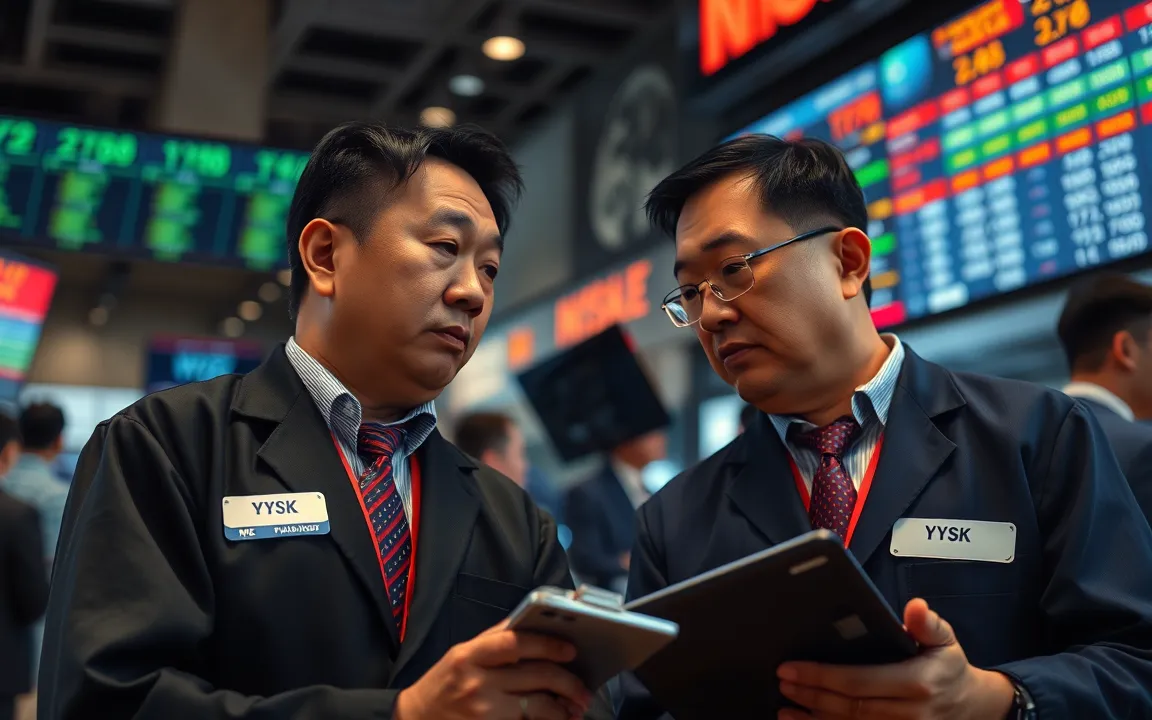
Japan's Nikkei 225 rebounded on Wednesday, recovering from a one-month low as investors returned to semiconductor and artificial intelligence shares, though the rally lost steam after an early surge. The benchmark index climbed as much as 2.1% to 65,404.63 before paring gains to around 1% at 64,718.98 by midday in Tokyo. Tuesday's close at 64,075.42 marked the index's lowest level in over a month.
The bounce was driven by a recovery in AI-related stocks, with Kioxia Holdings jumping 5.1%, Advantest gaining 4.8%, and SoftBank Group advancing 3.5%. Lasertec rose 3.2%, and Taiyo Yuden added 2.7%. Banking shares also contributed, with Mitsubishi UFJ Financial Group up 1.6% and Sumitomo Mitsui Financial Group adding 1.4%. The broader Topix index gained about 1.1% by the midday break.

The rebound followed Tuesday's 6% slump in SoftBank and stronger guidance from US AI-server maker Super Micro Computer, which forecast quarterly revenue of $18.5 billion to $19.5 billion, offering fresh evidence that infrastructure demand remains robust. Commerzbank Research analysts linked the improved risk appetite to corporate earnings and some relief in energy markets. However, lingering concerns about AI financing suggest investors may be buying oversold shares rather than rebuilding longer-term positions.
Export growth misses forecasts as trade deficit widens
Japan's September exports rose 16.7% from a year earlier, extending a 13-month growth streak but slowing from August's 19.3% gain and falling short of the 20.1% expected by economists. Shipments to the US increased 22.9%, while exports to China grew 8.6%, supported partly by demand for semiconductor equipment. Imports climbed 18.9%, leaving a trade deficit of ¥536.6 billion ($3.39 billion), nearly three times the ¥181 billion shortfall forecast, according to Japan's Ministry of Finance.
The deficit narrowed from August's ¥1.1 trillion, but delayed crude deliveries amid Middle East shipping disruptions reduced September imports, and October arrivals could push the energy import bill higher again. The figures highlight Japan's dependence on overseas AI investment, with strong chip demand lifting exports, though slower-than-expected growth raises questions about whether customers can sustain current spending.
Oil prices and Bank of Japan policy in focus
Brent crude hovered near $110 a barrel as Middle East shipping disruptions continued, while the yen traded around 158.33 per dollar, supporting exporters' overseas earnings but increasing the local-currency cost of imported fuel. The Bank of Japan raised its policy rate to 1.25% in September and meets again on October 30. Economists largely expect a pause, though further tightening remains possible before year-end.
Mitsubishi UFJ Morgan Stanley Securities strategists noted improving sentiment towards Japanese government bonds following record demand at a 20-year auction. Elsewhere in the region, South Korea's KOSPI rebounded about 3.7%, Hong Kong's Hang Seng gained 1.1%, and Shanghai's Composite edged 0.1% higher as regional investors returned to technology shares.
This article is for informational purposes only and does not constitute financial advice.