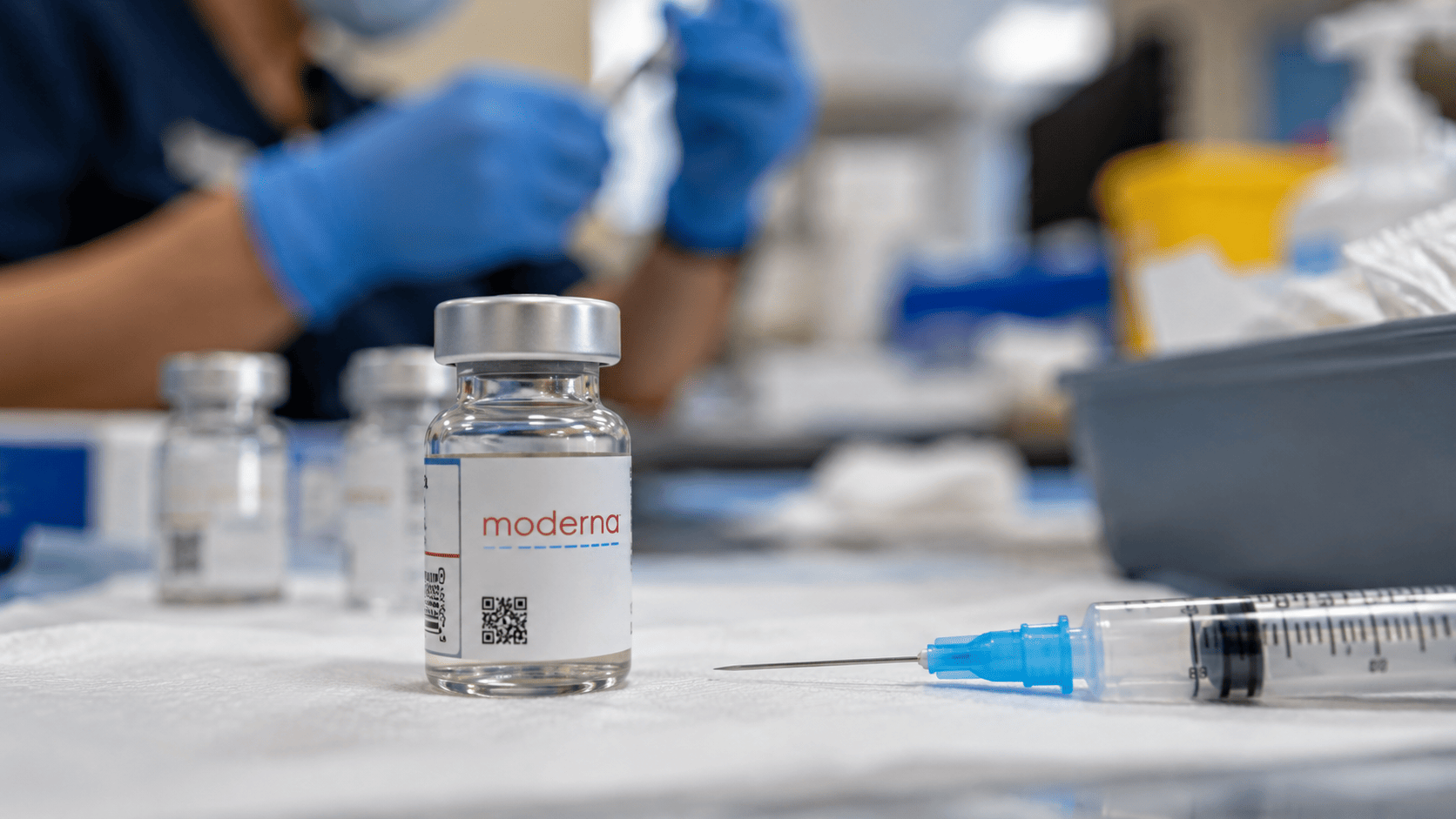
Moderna's leaked Phase 3 trial results for its personalized cancer vaccine appeared encouraging, yet the biotech's shares faced selling pressure late Thursday and remained weak Friday morning before recovering later in the session. The stock slipped below its 20-day moving average this week, signaling that bears have regained near-term control.
Despite the recent pullback, Moderna remains a standout performer for 2026, trading at more than six times its price at the start of the year. The question now is whether the latest data justifies that lofty valuation.
What the Data Showed
The leaked results indicated that intismeran autogene, Moderna's experimental cancer vaccine, combined with Merck's Keytruda reduced the risk of melanoma recurrence or death by 42% compared with Keytruda alone. It also lowered the risk of distant metastasis or death by 38%. These are clinically meaningful improvements, and no new safety signals were reported.
However, the market had already rewarded the study's success following the initial announcement in August. The detailed findings, therefore, needed to exceed already-elevated expectations to drive further gains.
Analyst Skepticism and Trial Nuances
Bloomberg reported that analysts questioned whether the melanoma results justified confidence in a broader cancer franchise. For MRNA shares, demonstrating that one treatment works supports its development, but supporting a premium valuation requires a credible path to commercial revenue across a larger market.
Another pressure point was the apparent gap with earlier research. A smaller study showed a 49% reduction in recurrence or death and a 59% reduction in distant metastasis or death, compared with 42% and 38%, respectively, in the larger trial. However, different patient populations and follow-up periods mean these are not direct comparisons.
The latest findings also contain nuance that headline percentages miss. The companies said the treatment groups performed similarly during the first six months, with a prespecified analysis showing stronger benefits afterward. Overall survival data remain immature, making sweeping conclusions premature. The study supports a reduction in recurrence, but it has not yet established an overall survival benefit.
Next Hurdles for Moderna
Moderna's next challenge is turning clinical progress into an economically attractive product. The company is preparing to seek US approval and anticipates a potential launch in 2027. Because the therapy is tailored to each patient's tumor, investors will need to assess manufacturing capacity, delivery times, reimbursement, and the cost of supplying treatment.
Strong efficacy alone cannot establish the margins or sales volumes the business will ultimately generate. Friday's decline raises a practical valuation question: how much future success does MRNA stock already assume at about 50x sales?
Regulatory progress, launch economics, and evidence from additional cancer trials could help answer that. Until then, a positive melanoma study can strengthen Moderna's scientific credentials while still leaving shareholders vulnerable to falling expectations.
This article is for informational purposes only and does not constitute financial advice.