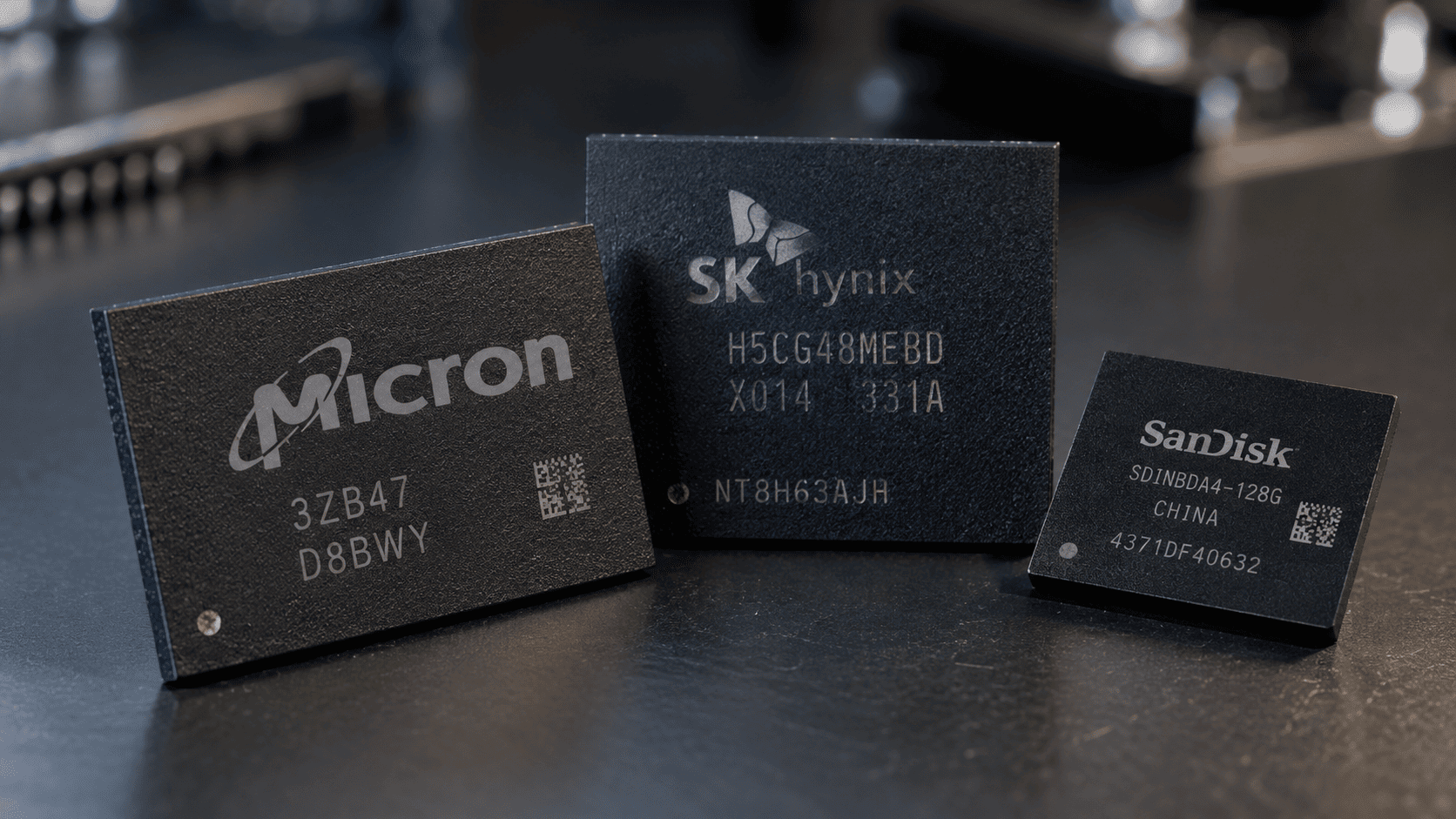
Shares of Micron, SK Hynix, and SanDisk advanced on Friday, joining a broader recovery in semiconductor stocks after a sharp technology-led selloff the previous day. The rebound came as investors digested the implications of SK Hynix's decision to abandon the planned U.S. initial public offering of its Solidigm subsidiary, a move that could reshape the NAND flash memory market.
Micron gained more than 3%, SK Hynix rose over 4%, and SanDisk added 1.4% in early trading. The Philadelphia Semiconductor Index (SOX) climbed more than 1%, recovering from Thursday's 6.7% drop, its steepest one-day decline since June 23. That selloff was triggered by concerns over rising borrowing costs and heavy corporate debt issuance, which raised questions about the sustainability of artificial intelligence and other technology investments.
Solidigm IPO cancellation eases supply concerns
The scrapped Solidigm IPO had been expected to raise as much as $15 billion and value the business at roughly $150 billion. For SK Hynix, the cancellation is seen as shareholder-friendly because it retains full exposure to Solidigm's growth potential. It also shifts attention to the company's third-quarter earnings, due later this month, where management is widely expected to announce enhanced shareholder return commitments.
For Micron and SanDisk, the implications extend beyond sentiment. According to LYNX Equity Strategies, the IPO would have provided Solidigm with capital to finance additional NAND manufacturing capacity in the United States. That expansion could have increased global supply in three or more years, potentially pressuring NAND prices and competing suppliers. In an October 23 note, the analyst team led by KC Rajkumar said the scrapped IPO removes a potential source of funding for future capacity expansion.
"The overhang of new capacity addition to the global supply of NAND flash has been eliminated," LYNX wrote. The firm noted that slower capacity growth could support industry pricing and valuations, which would ordinarily be a material positive for Micron and SanDisk. However, it cautioned that broader market conditions could limit the impact on share prices.
Analysts divided over semiconductor weakness
Market strategists offered differing assessments of the recent decline in semiconductor shares. Chris Verrone, chief market strategist at Strategas, told CNBC that the weakness appeared technical rather than fundamental, suggesting any further pullback could be short-lived. "Fundamentally, we're seeing great strength, but technically, there's some pressure on these semiconductors, and if the pressure continues, it could take the market on a little leg lower, which I think will be quick and a great buying opportunity," he said.
However, John Mowrey, chief investment officer at NFJ Investment Group, took a more cautious view of memory stocks and the South Korean market, which is heavily exposed to the sector. The divergence highlights the uncertainty surrounding the near-term trajectory of chip stocks.
Micron outlook remains positive for some analysts
DA Davidson maintained a positive outlook on Micron after attending a webcast focused on the company's upcoming innovations and competitive position in the memory market. Managing director and technology research head Gil Luria said the company's technological advantages were not fully reflected in its valuation. "We see Micron as having a leadership position in memory technology, with far wider moats than are implied by the current valuation," Luria said in a note on Wednesday.
The firm reiterated its Buy rating and $3,000 price target. "Memory is integral to the AI product," Luria wrote, adding that greater memory content and bandwidth could allow AI systems to operate at a higher level. DA Davidson also highlighted Micron's presence across three key memory technologies: dynamic random-access memory (DRAM), NAND, and high-bandwidth memory (HBM).
While the near-term outlook remains clouded by macroeconomic factors, the Solidigm IPO cancellation and continued AI-driven demand for memory chips provide a supportive backdrop for the sector. Investors will be watching upcoming earnings reports and any further signals on AI spending to gauge the durability of the recovery.
This article is for informational purposes only and does not constitute financial advice.