The Federal Reserve is widely expected to leave interest rates unchanged at its October 27-28 meeting, but the decision may offer little clarity on what comes next. With inflation running above target, oil prices elevated, and hiring showing signs of weakness, policymakers face competing reasons to tighten further or wait.
Futures-based estimates from CME FedWatch put the chance of a hold at 88%, against 12% for a quarter-point increase. The October meeting follows September's rate hike, which came amid renewed inflation pressures. A UBS note published October 19 also identified an unchanged October rate as its base case, followed by measured further tightening, and noted that markets were pricing a more aggressive tightening path than it expected.
Warsh's communication strategy leaves markets guessing
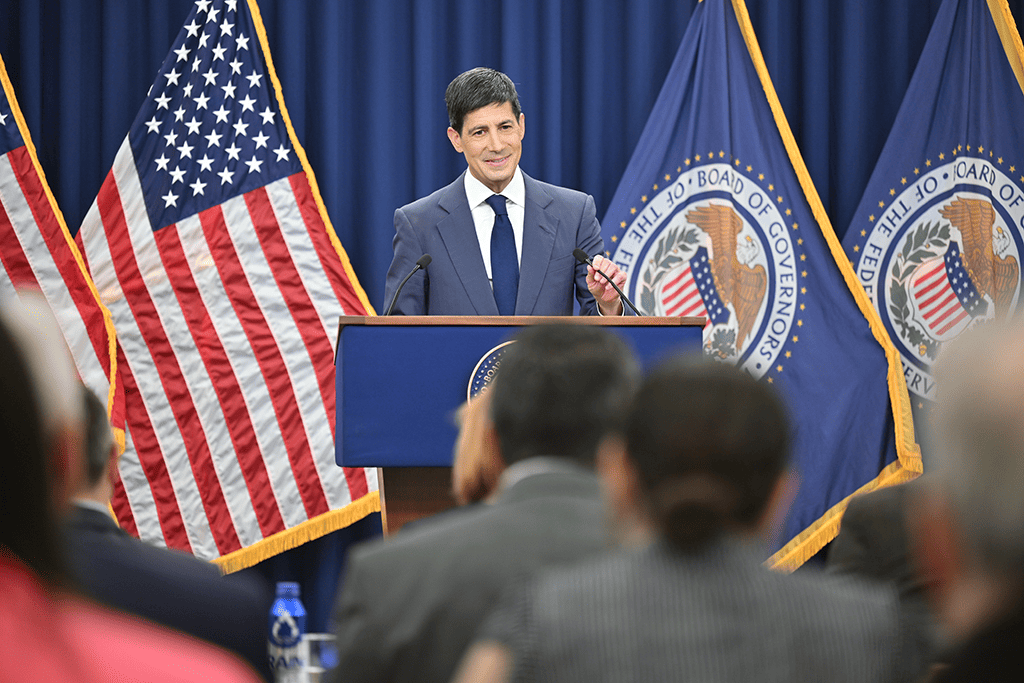
Investors will be looking to Chair Kevin Warsh for clues about conditions that could prompt another increase in December, and whether the central bank is giving enough weight to employment risks. Warsh has made clear that he does not intend to provide the kind of forward guidance used by previous Fed chairs. Speaking in Bangkok on October 16, he said: “I don’t prejudge meetings. I don’t believe in saying now what I might do at the meetings that we have in the balance of this year.”
That approach is likely to make the statement, voting record, and press conference particularly important. The October meeting will not include a new Summary of Economic Projections, leaving investors without an updated set of interest-rate projections. Tracy Shuchart, Senior Economist at NinjaTrader, expects limited guidance from Warsh. “He has been consistent since he took the chair that the Fed is out of the forward guidance business, he doesn’t prejudge meetings, and he still won’t submit a dot,” she told Invezz. “Expect the same on the 28th. Anyone waiting for him to tee up December is going to be disappointed.”
Patrick Boyle, a visiting professor of finance and former hedge fund manager, said the wording of the statement could take on greater significance in the absence of forward guidance. He suggested investors watch how the Fed characterizes the labour market. A shift in its language from describing conditions as “solid” to saying they have “softened” could indicate that policymakers view the weak September employment report as more than temporary noise. The voting record could also provide clues. Boyle noted that September’s decision was unanimous and said a dissent in either direction would offer insight into the committee’s debate over December.
JoAnne Bianco, Senior Investment Strategist at BondBloxx, similarly said markets should focus less on the immediate decision and more on whether the Fed leaves the door open to additional tightening. “The more important question is whether Chair Kevin Warsh characterizes inflation as a temporary setback or evidence that policy needs to become more restrictive,” she told Invezz.
Oil prices raise questions about the source of inflation
The expected decision to hold rates comes against a difficult inflation backdrop. US consumer prices rose 0.6% in September from a month earlier, lifting the annual headline inflation rate to 3.7% from 3.4%. Core CPI, which excludes food and energy, rose 0.3% monthly and 2.6% annually, up from 2.4% in August. Bureau of Labor Statistics data also showed that gasoline prices rose 9.1% in September. Producer prices added to the concerns. The UBS note said September’s 1.3% monthly increase was the largest in four and a half years, exceeding the 0.5% consensus forecast. Although energy accounted for much of the increase, UBS noted that prices rose across a broader range of goods and services.
Brent crude was trading near $113 a barrel on Friday, October 23, after a surge linked to renewed concerns about Middle East supply disruptions. The challenge for the Fed is that higher interest rates cannot directly resolve a disruption to oil supplies. Raising borrowing costs may instead weaken demand and economic activity, even as households and businesses face higher energy bills. Shuchart said the Fed has repeatedly treated oil price shocks as transitory and indicated that monetary policy should look through them. But she argued that September’s inflation report made that approach harder to sustain. “The problem is the September CPI didn’t look transitory,” she said, pointing to the rise in core inflation and the possibility that energy costs were feeding into transportation services, airfares, freight and goods prices. “The Fed is tightening into a supply shock with a hiring stall underneath it,” Shuchart said.
Rebecca Homkes, an Economist and Lecturer at London Business School, also highlighted the difficulty of using interest rates to address an energy shock. “Interest rates are a crude tool for a complicated world, and an incredibly blunt one against the supply shocks driving price levels up,” she said. But Homkes argued that the policy context makes it harder for the Fed to assume that an oil-related increase in prices will be temporary. She referred to the Trump administration’s policy environment, saying that rather than simply looking through an energy shock, policymakers may have to anticipate further disruptions. “With the Trump administration, it’s more ‘look for it:’ another shock will come soon,” Homkes told Invezz.
Robert R. Johnson, Professor of Finance at Creighton University, made a related but distinct argument. He said that describing the inflation problem as an oil-driven shock assumes the pressure is transitory, while the war with Iran and the Trump administration’s tariff policy could continue contributing to higher prices. Johnson told Invezz that both the tariff policy and the war were “unforced errors” by the administration.
This article is for informational purposes only and does not constitute financial advice.