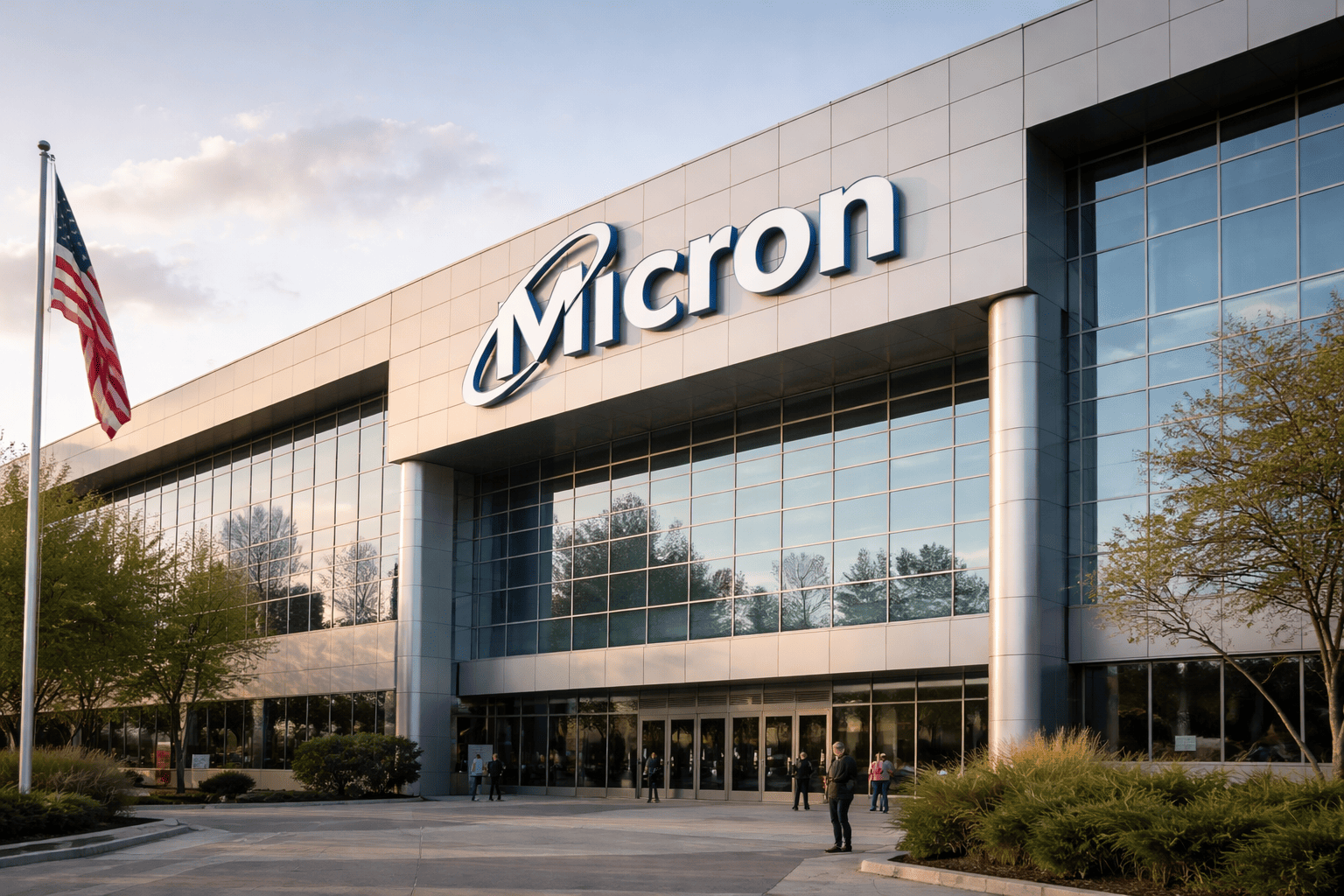
Micron Technology (NASDAQ: MU) saw its stock climb approximately 2% on Wednesday following the announcement of a $10 billion investment to build an advanced artificial intelligence research laboratory in Boise, Idaho. The move underscores the memory chipmaker's commitment to expanding its U.S. footprint amid surging demand for AI infrastructure.
The new facility, dubbed Micron Research Labs, is slated to begin construction in 2027 and will house hundreds of researchers. It will focus on advancing memory technologies, developing compute systems, and supporting future microchip manufacturing. CEO Sanjay Mehrotra noted that this investment adds to the $250 billion the company has already committed to U.S. manufacturing and R&D.

Micron's announcement comes as AI-driven demand for memory chips continues to accelerate, benefiting not only Micron but also rivals like SK Hynix. The broader semiconductor sector has been buoyed by robust spending on data centers and AI accelerators, with memory stocks surging on similar tailwinds.
Technical Picture
At the time of writing, Micron shares were trading around $955, roughly 6.9% above their 20-day simple moving average of $892.98 and 0.8% below the 50-day average of $962.71. The Relative Strength Index stood at 53.48, indicating neutral momentum. The stock remains significantly above its 200-day moving average of $567.34, reflecting a strong longer-term uptrend. However, the 20-day moving average sitting below the 50-day average is often viewed as a bearish technical signal.
Capital Returns Lag Rivals
While Micron is ramping up investment in research and manufacturing, its share buyback program has been more restrained compared to peers. SK Hynix recently announced a 40 trillion won (about $29 billion) buyback over three months, while Japan's Kioxia completed a roughly $5 billion repurchase earlier this month. Samsung Electronics is also expected to unveil a shareholder return program exceeding 100 trillion won, according to South Korean media reports.
Micron's ability to return capital has been limited by conditions tied to its 2024 CHIPS Act funding. Those restrictions, which cap buybacks and special dividends, are scheduled to expire on December 9, potentially giving Micron greater flexibility. The company has indicated it intends to increase capital returns once the restrictions lapse.
Analyst Outlook
UBS analyst Timothy Arcuri estimates that Micron could generate approximately $380 billion in cumulative free cash flow across 2027 and 2028. He expects the company to deploy the "vast majority" of that cash toward share repurchases. With a market capitalization of roughly $1.06 trillion as of Wednesday's close, such buybacks could provide meaningful support to the stock.
Investors have been closely watching Micron's capital allocation strategy, especially as the company's cash flow grows. The expiration of buyback restrictions could mark a pivotal moment for shareholder returns, potentially aligning Micron more closely with its memory-chip rivals. For more on the sector's momentum, see Cramer's take on memory stocks and New Street's $3T AI memory opportunity.
As the AI memory cycle continues, Micron's dual focus on R&D and future buybacks could position it well for both growth and shareholder value. The upcoming expiration of restrictions will be a key catalyst to watch.
This article is for informational purposes only and does not constitute financial advice.

