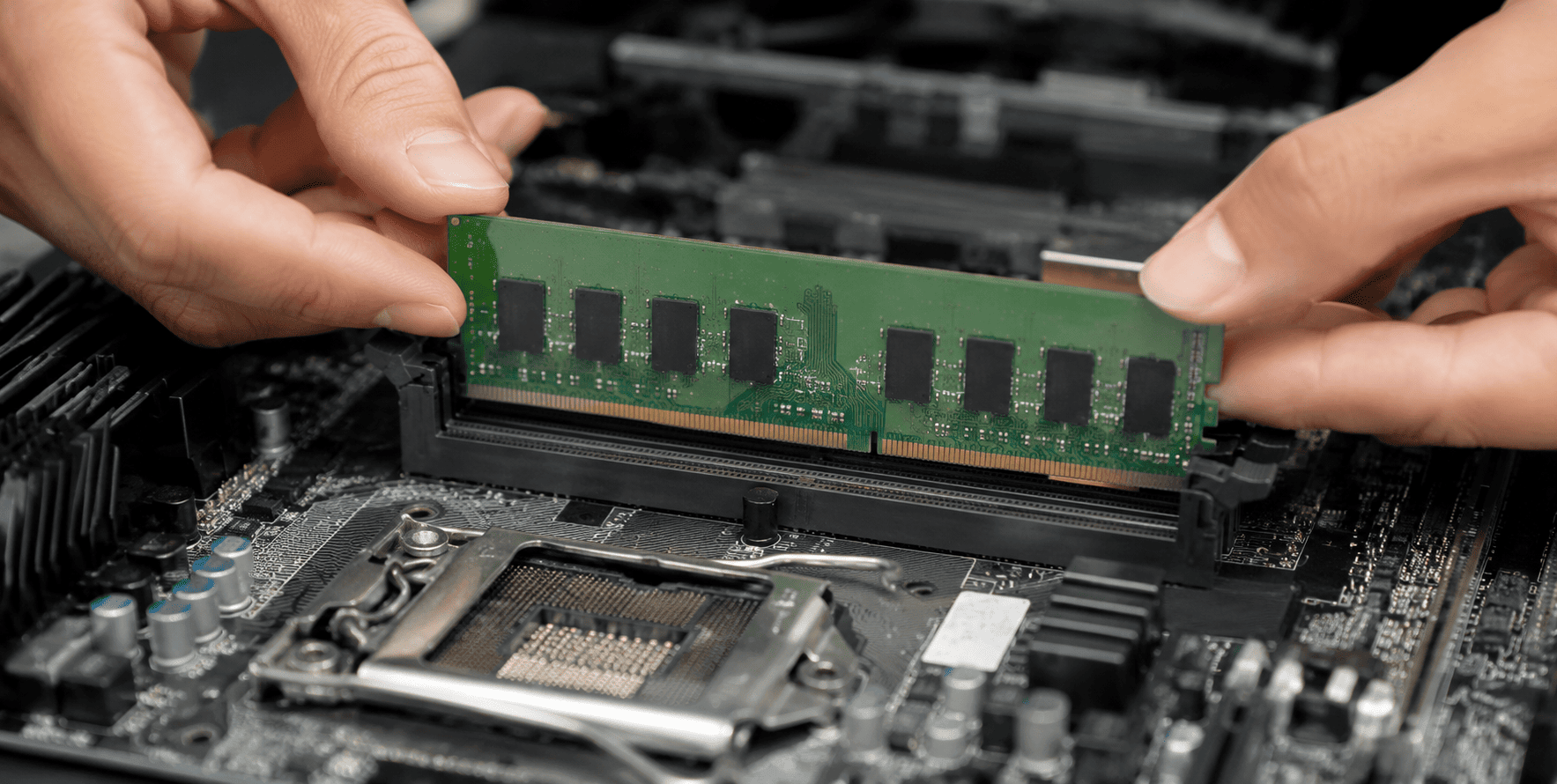
For decades, the memory chip sector has been Wall Street's classic boom-and-bust trade. Producers chase demand spikes with aggressive expansion, supply floods the market, and prices collapse. Now, the artificial intelligence (AI) buildout is testing that old playbook, as hyperscale data centers absorb every available gigabyte of DRAM and NAND storage.
Famed investor Jim Cramer is making a structural case for memory stocks that have already staged extraordinary rallies, arguing that investors haven't missed the trade. He points to supply bottlenecks, already flagged by tech executives as a core constraint on data-center expansion, colliding with a new discipline among chipmakers themselves. Together, those forces make the following four memory stocks attractive to buy into recent strength.

SanDisk (SNDK)
SanDisk stock has already recorded over 7x year-to-date gains, yet it still has $15.5 billion left on its share buyback authorization. That's a lot of cash going back to shareholders instead of into uncommitted new factories. Historically, triple-digit surges in memory stocks marked a peak, not a starting point, as management teams rushed to build speculative capacity that eventually flooded the market.
But this time is different, said Cramer in a recent segment of Mad Money. Manufacturing ramp-up in 2026 is tied to multiyear agreements rather than optimistic guesswork. Sure, a sharp pullback in cloud spending could still revive old cyclical pressures, but for now, the absence of speculative inventory in the channel suggests SNDK buybacks are backed by durable pricing, not a rally running out of room.
Seagate (STX)
A massive $5 billion buyback program authorized last year is still being worked through by Nasdaq-listed Seagate Technology, even as its shares have more than tripled year-to-date. That combination—an aggressive repurchase plan alongside a red-hot stock—isn't what past memory cycles looked like. Rather than expanding manufacturing lines to chase short-term price spikes, the company has tied incremental output directly to locked-in, multiyear customer commitments.
In Cramer's assessment, that restraint changes the math: it prevents the kind of oversupply that has wrecked recoveries before. Storage suppliers are prioritizing earnings per share over volume. As long as hyperscalers keep spending at their current pace, STX's approach to cash offers “real” protection against swings that have defined this business for decades.
Micron (MU)
Cramer's “Investing Club” has recently initiated a position in Micron stock, which has already soared over 250% this year. Importantly, the former hedge fund manager believes MU could roughly double again if AI hardware demand and long-term supply contracts hold, and there is no unexpected slowdown in data-center spending. The bullish call rests on one key assumption: memory stays a “genuine” bottleneck for advanced computing clusters. If it does, the biggest suppliers keep real pricing power.
Much like its peers, Micron is also anchoring factory utilization to multiyear commitments rather than short-term signals, limiting margin compression that plagued chipmakers during past downcycles. The risk is real; a stall in hyperscale spending will change the calculus fast. But absent that, MU's discipline should turn today's pricing into years of cash generation, not a one-time spike.
Western Digital (WDC)
Western Digital's board has just added to its buyback plan as well. Shares have more than tripled year-to-date, and the company authorized another $4 billion in repurchases earlier this year. Again, pairing bigger cash returns with expanding margins marks a real break from prior cycles—when windfall profits got plowed into speculative new plants. Sending cash to shareholders instead of chasing market share fits a sector-wide pattern: discipline over expansion.
For WDC shares as well, an abrupt slowdown in data-center buildouts remains a latent risk for the storage supply chain. And Cramer doesn't dismiss it; he just doesn't see it as immediate. With enterprise demand locked in and spending held in check across the industry, Western Digital looks positioned to hold its valuation without the oversupply traps that have caught this sector before.
Investors looking for broader context on Cramer's recent calls might also check his views on Bitcoin's quantum risk or his margin dip rule for tech stocks. For those interested in the semiconductor space, Cramer has also weighed in on Intel's foundry progress and the bet on Intel over AMD.
This article is for informational purposes only and does not constitute financial advice.