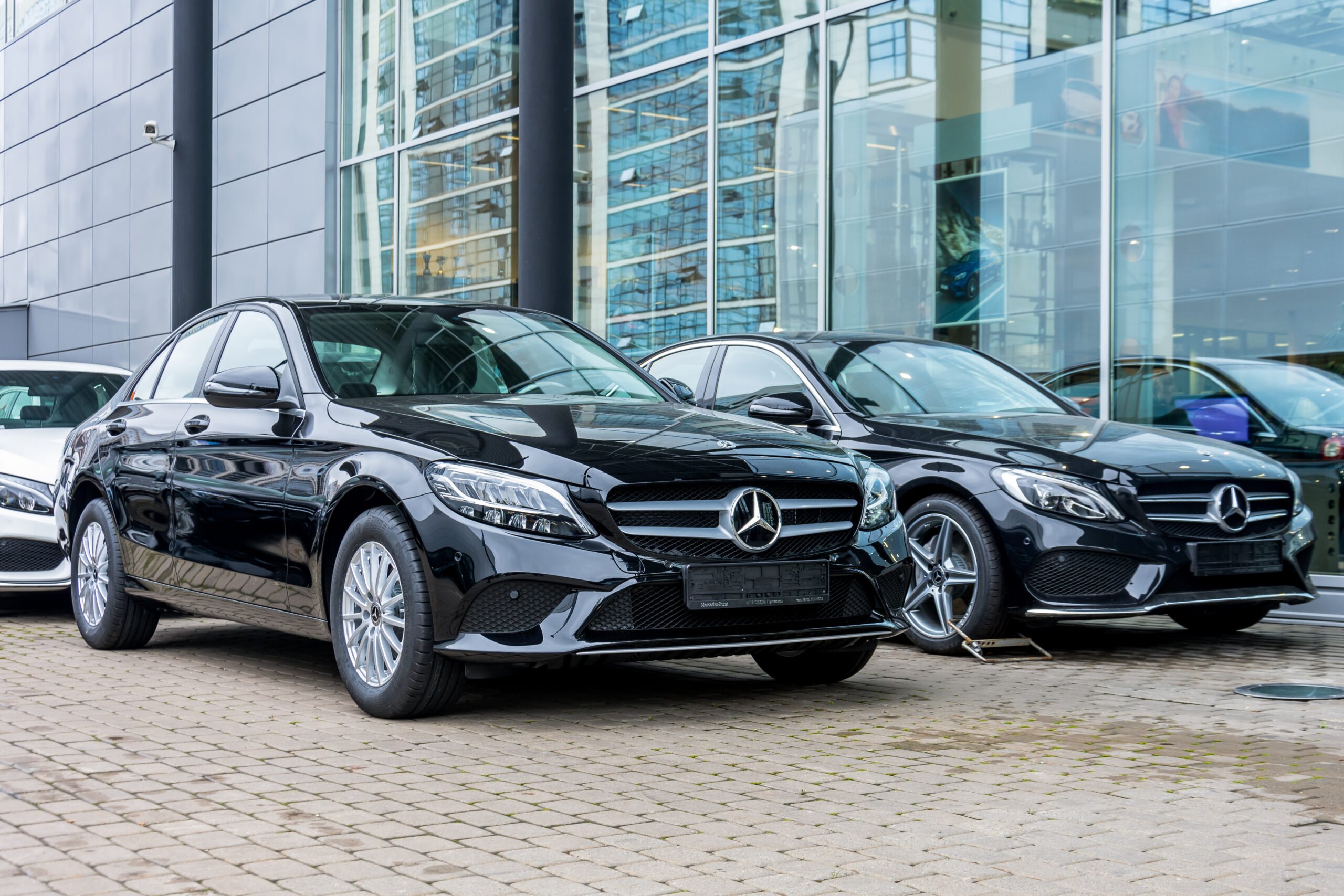
Mercedes-Benz Group AG has revised its 2026 sales outlook downward, pointing to a sharp decline in demand from the Chinese market. The German automaker now expects unit sales for its Cars division to be slightly below the prior year's level, a reversal from earlier expectations.
China sales drop 28%
In the first half of 2026, Mercedes-Benz Cars sold 837,195 vehicles globally, down 7% from 899,974 units in the same period last year. The decline was most severe in China, where sales fell 28% to 210,245 vehicles. The company attributed the drop to intense competition, weak consumer demand, and the effects of model changes. This weakness in China was a key factor behind the lowered full-year forecast.

The broader challenges in China's auto market have also weighed on other automakers. For instance, Volkswagen recently cut its 2026 sales outlook after a disappointing second quarter, highlighting the widespread pressure on foreign brands in the region.
Revenue and profit under pressure
Mercedes-Benz also adjusted its full-year revenue forecast, now expecting revenue to be slightly below the prior year's level. For the first half, revenue fell 4% to €63.66 billion, while net profit declined 6% to €2.52 billion. Earnings before interest and taxes (EBIT) came in at €3.45 billion for the six-month period.
The company cited negative exchange rate effects, unfavorable net pricing, and weaker vehicle sales in China as headwinds. However, second-quarter results showed some improvement, with EBIT rising 22% to €1.55 billion and net profit increasing 13% to €1.09 billion. These figures included €752 million in impairments on Chinese equity-method investments and a €92 million risk provision related to a financing commitment to smart.
Electrified vehicle share target raised
Despite the sales downgrade, Mercedes-Benz raised its forecast for the share of electrified vehicles—including hybrids and fully electric models—in 2026. The company now expects electrified vehicles to account for 23% to 25% of total sales, up from the previous range of 21% to 23%. Management cited positive momentum from the ramp-up of electrified models in the second half of the year.
This shift comes as automakers globally navigate the transition to electric mobility. Meanwhile, bitcoin held near $65,000 amid mixed market signals, underscoring the varied pressures on different asset classes.
Financial services and cash flow
Mercedes-Benz Financial Services raised its outlook for adjusted return on equity to a range of 12% to 14%, up from prior guidance, primarily due to a higher portfolio margin. However, industrial free cash flow fell 30% to €2.96 billion in the first half, compared with €4.22 billion a year earlier. Net liquidity of the industrial business declined by €1.7 billion to €30.4 billion since the end of 2025, driven by dividend payments and share buybacks, partially offset by positive free cash flow.
Chinese investments weigh
Gains and losses on equity-method investments swung to a loss of €263 million in the first half, versus a gain of €570 million a year earlier. The company said this was mainly due to negative earnings contributions from Chinese at-equity investments. The income tax rate also rose to 30.9% from 29.7%, largely because of the non-deductible impairment of these investments.
The revised outlook highlights the persistent challenges in China's auto market, which have also affected other sectors. For example, SK Hynix and Samsung plunged over 10% amid AI financing doubts and intensifying chip rivalry with China, reflecting broader investor concerns about the region's economic trajectory.
Mercedes-Benz continues to expect growth in electrified vehicle sales as it ramps up production in the second half of 2026, but the near-term outlook remains cautious given the headwinds from its largest market.
This article is for informational purposes only and does not constitute financial advice.