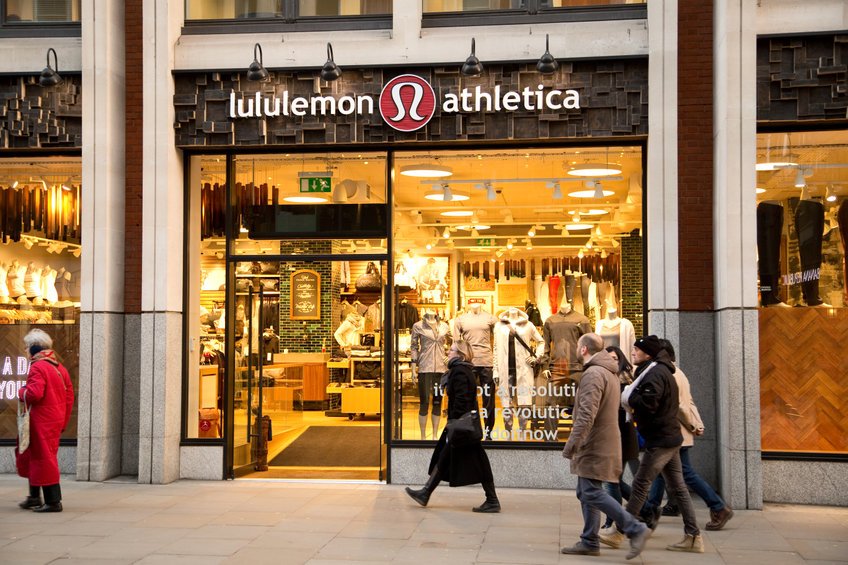
Lululemon's latest earnings report sent shares tumbling as much as 20% in after-hours trading, marking one of the steepest single-day declines in the company's recent history. The athletic apparel giant reported fiscal Q2 revenue of $2.42 billion, a 4% year-over-year decline, and comparable sales dropped 9%. Management also slashed its full-year revenue outlook to $10.35 billion–$10.5 billion, implying a 5%–7% contraction.
The most alarming signal came from the product mix. Leggings sales fell roughly 20% as consumers increasingly gravitate toward looser silhouettes. This shift raises a critical question: has Lululemon lost its product authority in the premium activewear space it once dominated?

Financial health vs. growth problem
Despite the weak top-line numbers, Lululemon remains financially robust. Morningstar senior equity analyst David Swartz noted the company has "no real financial problems," emphasizing that the issue lies squarely with sales growth. Shoppers appear fatigued by repetitive colors, leggings, and styles, while competitors like Alo Yoga, Vuori, Skims, and traditional athletic brands offer more variety.
The regional breakdown underscores the challenge. Americas revenue fell 8%, while international growth slowed to just 4%, offering less cushion than investors had expected. This suggests the problem is operational and brand-specific rather than purely macroeconomic.
Wall Street's growing skepticism
Analysts are increasingly worried that Lululemon's troubles may be structural. Truist's Joseph Civello downgraded the stock to Sell in July, warning that headwinds could be "more structural" than the market assumes. Goldman Sachs' Brooke Roach lowered her price target to $111 from $122, citing weaker card spending, declining traffic, elevated promotions, and moderating growth in China.
Bernstein's Aneesha Sherman has framed the debate starkly: is this a product issue that can be fixed within a year, or a brand problem that could depress sales and valuation for years? The market's reaction suggests investors are leaning toward the latter.
New CEO inherits a tougher turnaround
Heidi O'Neill takes over as CEO on September 8, bringing a long Nike career that includes senior roles in product and women's apparel. Swartz believes her product-development background is well-suited to Lululemon's current needs, as the company requires merchandise innovation rather than financial restructuring.
Management is already recalibrating expectations. Store openings for the year have been trimmed to about 35 from 40, and the annual revenue forecast has been cut sharply from the $11 billion–$11.15 billion range issued just a few months ago.
Glimmers of hope
Not all is bleak. Newer away-from-body products, including wide-leg styles, are gaining traction, and management is increasing replenishment of best-selling items. These early successes could signal a path to recovery, but the turnaround must prove it can restore traffic and full-price demand across the broader assortment.
For investors, the key question is whether Lululemon can adapt to shifting fashion trends while defending its premium pricing. The next few quarters will be critical in determining whether this is a temporary stumble or a lasting decline.
This article is for informational purposes only and does not constitute financial advice.