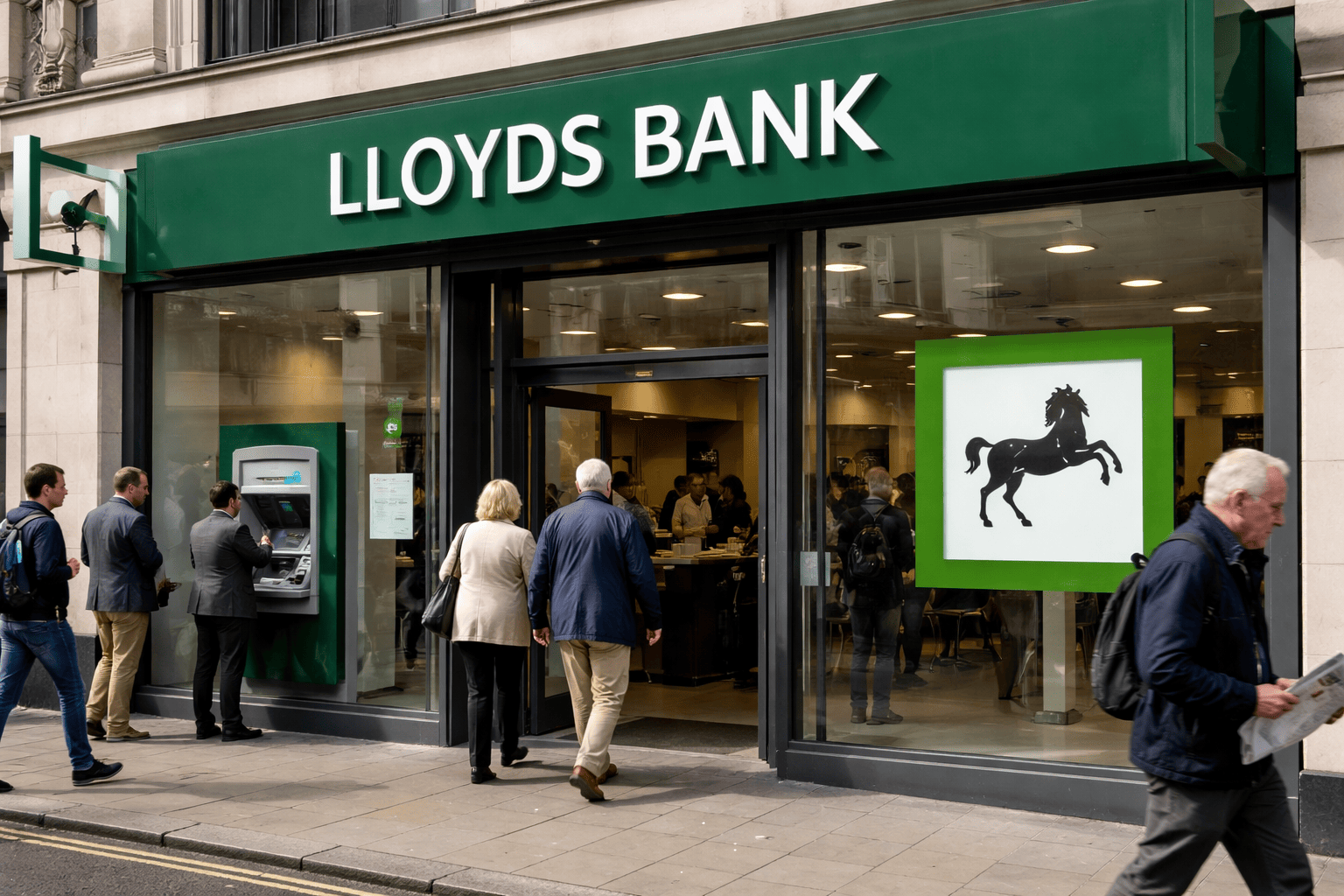
Lloyds Banking Group shares remained largely flat on Wednesday, September 11, as investors balanced a stronger-than-expected UK GDP report against a sharp rise in government bond yields. The stock is currently trading around 110p, about 6.13% below its 2024 high of 116p.
UK economy shows resilience
Data released earlier today showed the UK economy expanded by 0.4% in July, beating the consensus forecast of 0.3%. On a three-month basis, GDP also rose 0.4%, again exceeding expectations. Additional figures revealed a narrowing trade deficit and faster-than-anticipated growth in industrial and manufacturing production.

These numbers are particularly relevant for Lloyds, the UK's largest domestic lender with over 26 million customers. A stronger economy typically supports loan demand and credit quality, which are key drivers of the bank's profitability.
Bond yields surge, pressuring equities
Despite the positive GDP data, the bond market is sending a cautionary signal. The 10-year UK gilt yield climbed to 5.34%, its highest level since 2007, while the 5-year yield reached 4.88%, a level not seen since 2008. Rising yields increase the discount rate applied to future earnings, which can weigh on equity valuations, particularly for rate-sensitive sectors like banking.
Market expectations now point to an 80% probability that the Bank of England will raise interest rates again this year, according to Polymarket. Persistent inflation and a resilient economy have led traders to price in a more hawkish central bank stance.
Lloyds benefits from higher rates
Lloyds generates the bulk of its revenue from lending to individuals and businesses, so an environment of higher-for-longer rates is generally supportive for its net interest income. In the first half of the year, the bank reported a pre-tax profit of £4.3 billion, up from £3.5 billion in the same period last year. Net interest income rose 9% year-on-year to £7.3 billion, aided by structural hedges and volume growth.
The company has also launched its "Accelerate 2030" strategy, which aims to drive revenue growth, improve cross-group connectivity, and enhance productivity. Management expects the plan to generate £2 billion in cost savings by the end of the decade.
Shareholder returns and technical outlook
Strong earnings and the new strategy have supported increased dividends and share buybacks. Lloyds has reduced its outstanding share count from over 70.14 billion in 2022 to 58.16 billion currently, a sign of its commitment to returning capital to shareholders.
However, technical analysis suggests the stock may be vulnerable to a pullback. The weekly chart shows a rising wedge pattern, formed by two ascending and converging trendlines. This pattern often precedes a bearish breakout, especially as the lines converge. Additionally, the Relative Strength Index (RSI) and the Percentage Price Oscillator (PPO) have been diverging bearishly from price, indicating weakening momentum.
If the wedge resolves to the downside, the stock could decline to the 100p level, a key psychological support. Investors should monitor whether the price can hold above the lower trendline or if a break below signals a deeper correction.
For more on banking sector trends, see our coverage of Lloyds' bearish chart pattern and insider selling. Also, check out Adobe's stock slide despite a Q3 beat for another example of market reactions to mixed signals.
This article is for informational purposes only and does not constitute financial advice.

