South Korea's benchmark Kospi index edged lower on Monday, retreating to 6,650 as market participants braced for earnings reports from the country's two largest semiconductor makers, Samsung Electronics and SK Hynix. The pullback comes despite a broader risk-on tone in global markets and a notable de-escalation in US-Iran tensions over the weekend.
The index has now fallen sharply from its year-to-date peak of 9,387, raising questions about whether the current weakness represents a buying opportunity or the start of a deeper correction. For investors eyeing the dip, the upcoming earnings releases will be critical in assessing the trajectory of South Korea's export-driven economy and the sustainability of the artificial intelligence boom that has fueled chip demand.
Samsung slips despite $200 billion Broadcom deal
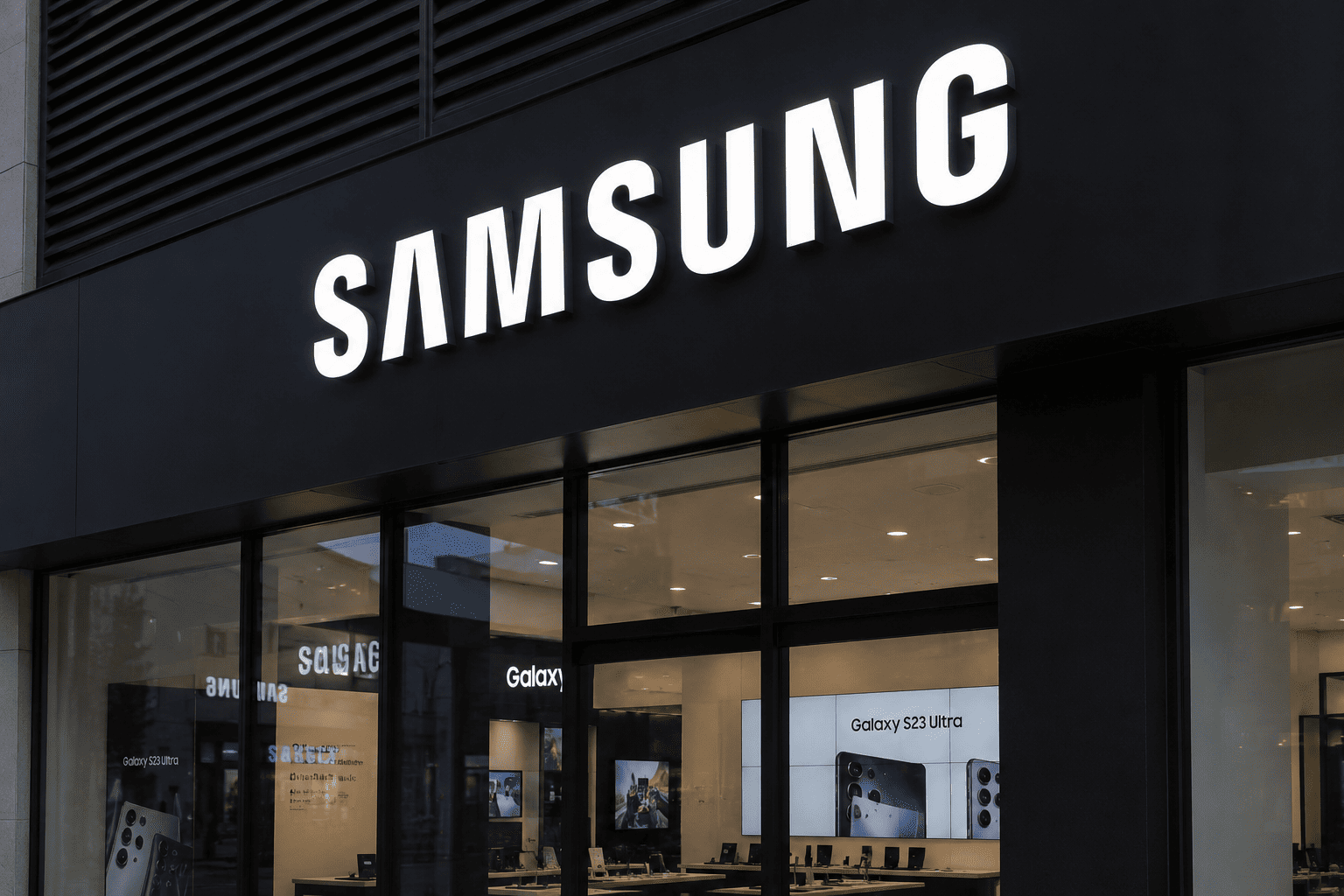
Samsung Electronics, the Kospi's heavyweight, declined 0.4% on Monday even after announcing a landmark $200 billion, multi-year agreement with Broadcom. Under the deal, Samsung will supply high-bandwidth memory (HBM) and foundry services to the US tech giant, which has become a key player in the AI chip ecosystem through partnerships with OpenAI and Meta Platforms.
The stock's muted reaction suggests investors are looking past the headline numbers and focusing on the company's detailed financial statement due later this week. Samsung's preliminary results showed operating profit surged to KRW 89.4 trillion ($58.4 billion) in the second quarter, with revenue climbing to KRW 171 trillion. However, concerns about the pace of data center spending and potential oversupply in the memory market have weighed on sentiment.
SK Hynix earnings in focus after US listing
SK Hynix, the other major Kospi constituent, will also report quarterly results this week — its first since raising over $25 billion in its US initial public offering. Analysts expect the company to post strong revenue growth, driven by robust demand for memory chips used in AI servers and data centers. Like its peers, SK Hynix has been operating at full capacity to meet surging orders.
The key question for investors is whether the memory industry's historical boom-and-bust cycle will reassert itself. While current demand remains elevated, some market participants worry that a slowdown in AI-related capital expenditure could trigger a correction. For context, similar concerns have weighed on other tech giants; Alphabet and Tesla earnings recently jolted markets as investors scrutinized AI spending levels.
Geopolitical tailwind from Middle East
The Kospi's decline occurred despite a favorable geopolitical development: a temporary pause in hostilities between the US and Iran over the weekend. Reports indicated that the Trump administration was cautioned about dwindling weapon stockpiles, while the Chairman of the Joint Chiefs of Staff noted that further attacks along the Strait of Hormuz would have minimal impact.
As a result, crude oil prices fell on Monday, with Brent dropping to $92 per barrel and West Texas Intermediate sliding to $84. Lower oil prices are a net positive for South Korea, which imports virtually all of its petroleum needs. This macro tailwind could support the broader economy, but it has not been enough to reverse the index's near-term bearish momentum.
Technical outlook points to further downside
From a technical perspective, the Kospi index appears vulnerable to additional losses. It has already fallen to the 38.2% Fibonacci retracement level on the weekly chart and slipped below the 14-week exponential moving average, signaling that sellers are in control. The price action is also forming a bearish pennant pattern — characterized by a sharp decline followed by a consolidation triangle — which typically resolves lower.
Some analysts see parallels with the distribution and markdown phases of the Wyckoff theory, suggesting that institutional investors may be reducing exposure. The next major support level lies at the psychological 6,000 mark. For dip buyers, the risk is that the index could test that level before finding a floor, especially if earnings disappoint or AI spending fears intensify.
Investors should also keep an eye on broader market dynamics. For instance, Tesla recently dipped below $1 trillion in market cap after a Q2 earnings miss, highlighting the fragility of high-growth tech valuations. Similarly, SanDisk stock is down 33% from its year-to-date peak, with analysts divided on the outlook ahead of its August earnings.
In summary, the Kospi's retreat ahead of key earnings presents a classic dilemma: is this a buying opportunity or a warning sign? The answer will depend on whether Samsung and SK Hynix can reassure investors that AI-driven demand remains on a sustainable growth path, or whether the memory sector's cyclical nature is about to reassert itself.
This article is for informational purposes only and does not constitute financial advice.