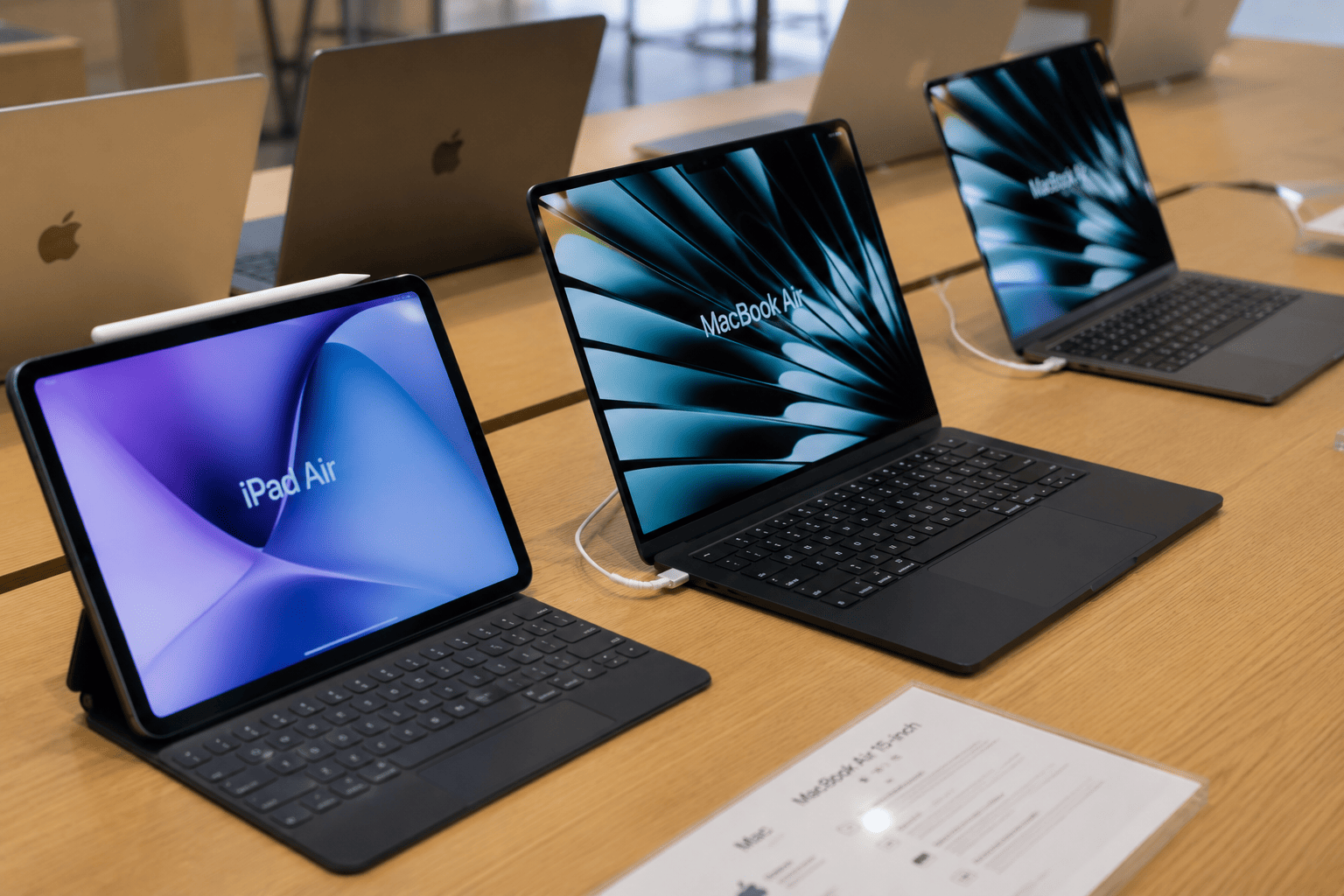
JPMorgan has raised its price target on Apple (AAPL) to $345 from $325, reiterating a Buy rating and arguing that recent price increases across Mac and iPad models—and any potential iPhone hikes—are unlikely to materially dampen consumer demand. The new target implies roughly 11% upside from Tuesday's close.
Analyst Samik Chatterjee noted that Apple's pricing history across major product categories shows only a limited correlation between higher prices and shipment volumes. Mac computers appear most insulated from pricing changes, supported by a wider range of price points and growing demand driven by artificial intelligence-enabled features. While entry-level iPhone and iPad segments are more sensitive to price increases, JPMorgan believes any weakness would create only "modest revenue headwinds" when weighed against continued demand for premium devices.

Apple raised prices on several Mac and iPad models by $100 to $300 last month, citing soaring memory chip costs. The company did not increase iPhone prices. The stock initially dipped on the news but has since recovered strongly, gaining more than 10% over the past five trading sessions.
Wall Street Optimism Builds
JPMorgan's bullish outlook follows renewed optimism from other analysts. Bank of America's Wamsi Mohan maintained a Buy rating and $380 price target last week, citing stronger-than-expected App Store revenue growth and continued expansion of Apple's high-margin services business. Mohan expects services revenue to grow 14% year over year in Apple's fiscal third quarter and believes investments in edge AI and a redesigned Siri architecture could create meaningful monetization opportunities over time.
Positive analyst commentary has helped improve sentiment around Apple shares after a relatively subdued start to the year. For more on analyst moves, see our coverage of JPMorgan: Tesla-SpaceX Merger 'Strategically Coherent' but Not a Buy Signal.
Apple Explores Alternative Memory Chip Suppliers
To address memory cost pressures, Apple has begun testing DRAM chips produced by China's state-backed ChangXin Memory Technologies (CXMT) for devices sold within China, according to a Financial Times report. The company is also lobbying the US government for permission to expand use of the supplier's products. CXMT has become the world's fourth-largest DRAM producer, though analysts do not expect it to flood the market immediately. Much of CXMT's production is already committed to customers, but the industry remains wary that China's state-backed investment strategy could eventually mirror what occurred in solar panels and electric vehicles, where rapid capacity expansion drove down prices and pressured international competitors. For context on the broader memory market, see DRAM ETF Plunges 22.75% from Peak as Meta Cloud Plans and Apple Sourcing Shift Weigh.
Foldable iPhone Could Reshape Premium Strategy
Apple is simultaneously preparing what could become its broadest iPhone lineup in years. According to supply-chain reports cited by Nikkei Asia, the company plans to launch at least five new iPhone models between the second half of 2026 and early 2027, including its first foldable smartphone. Apple has reportedly increased planned production of the foldable device to around 10 million units from earlier estimates of 7–8 million units. The handset is expected to carry a price tag of roughly $2,500.
Selling 10 million foldable iPhones at that price would generate approximately $25 billion in annual revenue, according to The Motley Fool, though most of that benefit is expected in fiscal 2027. The publication noted that Apple's strategy extends beyond a single blockbuster device: "Put those pieces together, and the foldable looks less like a blockbuster and more like a halo. It probably won't add much to any single quarter's revenue on its own. What it can do, however, is reset the ceiling on iPhone prices, pulling some upgraders into a pricier tier. In a maturing smartphone market, defending the high end while broadening the lineup to reach more price points could be a serious lever."
Apple's broader ecosystem and services growth remain key drivers. For more on Apple's chip partnerships, see Broadcom-Apple Deal Extended to 2031; Strategy Sells $216M in Bitcoin.
This article is for informational purposes only and does not constitute financial advice.