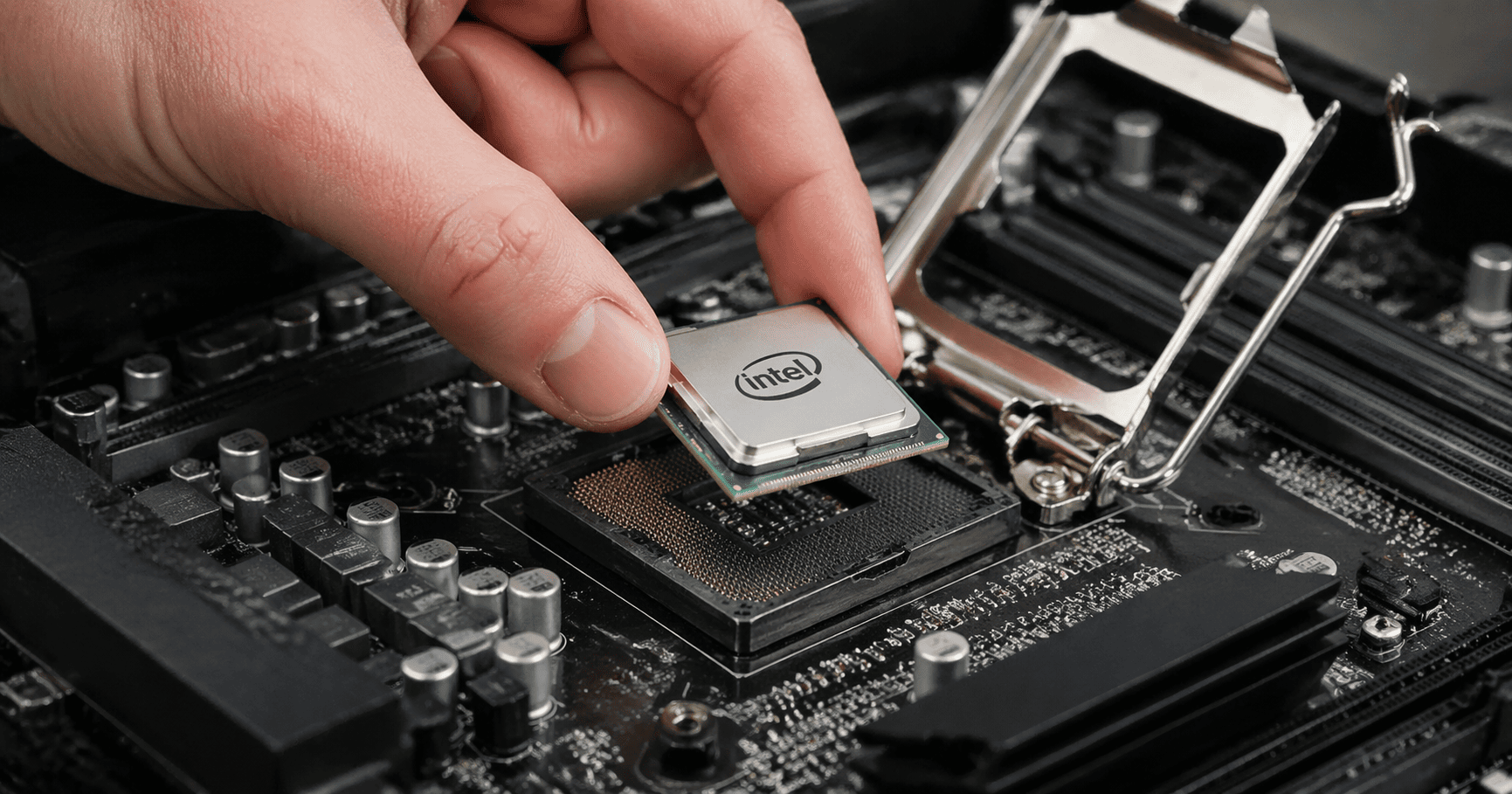
Intel's (INTC) second-quarter earnings, released last week, provided a clear preview of the forces shaping the semiconductor sector heading into mid-2026. The chip giant posted a 25% year-over-year revenue jump to $16.13 billion, driven by a 59% surge in its Data Center and AI segment to $6.3 billion. CEO Lip-Bu Tan highlighted severe supply constraints across wafers, memory, and advanced packaging, with demand outstripping production capacity.
This backdrop sets the stage for Advanced Micro Devices (AMD), which reports its own fiscal Q2 results after market close on August 4. AMD has guided for roughly $11.2 billion in revenue, implying about 46% year-over-year growth. The company recently showcased its Instinct MI400-series accelerators and Helios rack-scale systems at its Advancing AI 2026 event, alongside a new compute partnership with Anthropic. If Intel's commentary on unmet server and AI-chip demand is any guide, AMD's data-center segment should reflect similar strength.

However, Intel's earnings also carry a cautionary note. Despite the beat, Intel shares initially popped nearly 13% in after-hours trading but reversed to close lower by Friday, falling below $100. The culprit: Intel raised its 2026 capital spending forecast above $20 billion, with further increases flagged for 2027. Analysts largely held their ratings steady, signaling skepticism about how quickly that spending will translate into returns.
AMD faces a similar scrutiny. Its build-out of Helios infrastructure and MI400-series production capacity is capital-intensive. With AMD stock trading at a premium—up more than 100% year-to-date—investors will likely apply the same lens: solid growth numbers may not be enough if spending guidance overshadows them, as it did for Intel.
Yet the comparison between Intel and AMD has limits. Intel's beat came against a lower bar; Wall Street held a mostly Hold-rated consensus heading into the print, reflecting lingering doubts about its turnaround. AMD, by contrast, has beaten estimates in nearly all recent quarters, meaning expectations are already elevated. Its data-center business also skews toward GPUs and AI accelerators rather than Intel's CPU-heavy mix, a distinction that matters given how investors are pricing AI infrastructure exposure.
The broader market context also matters. Recent earnings from Alphabet and Tesla showed that AI spending surges are testing investor patience, with stocks dipping despite strong results. Similarly, Tesla's Q2 miss underscored how high expectations can amplify negative reactions. For AMD, the real test on August 4 won't just be whether it beats—it will be whether the market rewards it differently than it rewarded Intel.
Investors should also watch for signals from the broader memory and DRAM sector, as DRAM ETF holdings report earnings this week, providing additional context on supply-demand dynamics. Meanwhile, earnings, Fed policy, and geopolitical tensions remain key drivers for the S&P 500 and Nasdaq, adding layers of uncertainty to AMD's post-earnings trajectory.
In summary, Intel's Q2 offers a dual signal for AMD: strong demand fundamentals are likely to drive a beat, but capital spending concerns and elevated expectations could trigger a post-earnings dip. AMD's ability to navigate this tension will determine whether its stock follows Intel's path or charts a different course.
This article is for informational purposes only and does not constitute financial advice.