Intel Corporation (NASDAQ:INTC) saw its shares dip in Thursday's pre-market session as concerns over Nvidia's leadership cast a shadow over a strategic partnership that has grown significantly in value. Nvidia's initial $5 billion investment in Intel, made in December 2025, is now worth approximately $13.42 billion based on Intel's Wednesday closing price of $62.50.
A $13 Billion Question
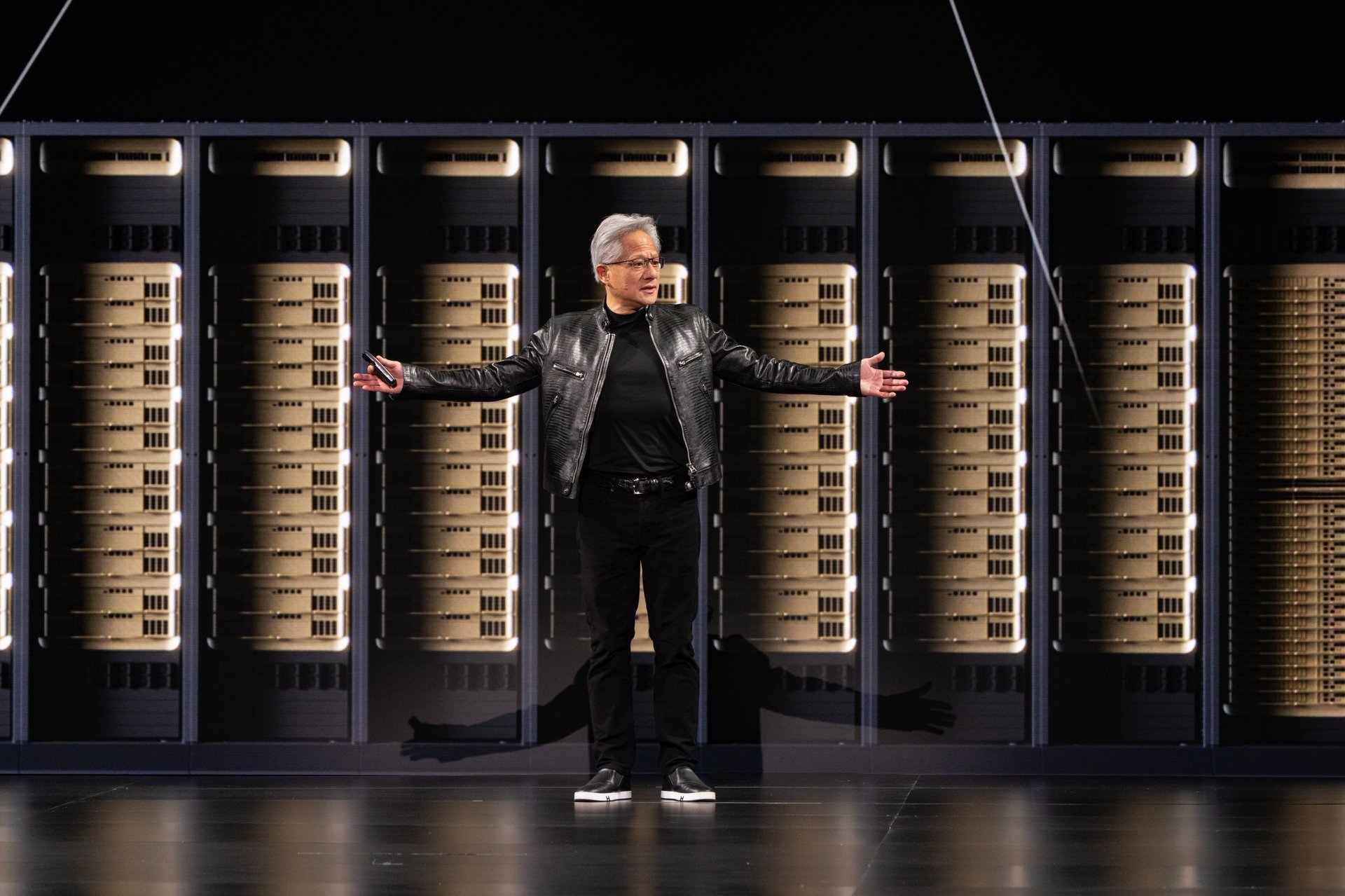
Nvidia acquired 214.78 million Intel shares at $23.28 each on December 26, 2025, following the announcement of a joint product strategy. The paper gain of about $8.42 billion reflects market appreciation, not additional cash investment or realized profits. Intel's stock rose 7.52% on Wednesday before retreating in extended trading after reports emerged that Nvidia's board was considering the future of CEO Jensen Huang. Any departure remains unconfirmed.

According to Barron's, an immediate sale of the stake appears unnecessary. The bigger concern is whether new leadership would slow down investments or technology agreements. Shay Boloor, chief market strategist at Futurum Equities, told Reuters, "I don't see the next 12 to 18 months of revenue suddenly disappearing if Jensen were to leave," but added that Huang's longer-term strategic vision would be harder to replace.
Why the Partnership Matters
The collaboration involves custom Intel x86 central processors linked to Nvidia's AI platforms through NVLink technology, which helps coordinate AI accelerators in data centers. The companies also plan PC processors that integrate Nvidia RTX graphics chiplets with Intel CPUs, giving Intel a competitive edge against AMD in premium computers. These products require close engineering coordination, and a shift in Nvidia's priorities could complicate launches even if existing agreements remain in force.
Charu Chanana, chief investment strategist at Saxo Bank, wrote Thursday that "the bigger risk is that uncertainty starts delaying orders, product launches or infrastructure investment altogether." Notably, Nvidia has not committed to shifting GPU production to Intel's foundries. Angelo Zino of CFRA noted that the expanded collaboration concerns products, not a guaranteed foundry contract, meaning Intel has a commercial opportunity but no certainty about future manufacturing revenue from Nvidia.
Intel's Turnaround Prospects
Intel's financial results offer some optimism independent of Nvidia. Third-quarter revenue rose 21% to $16.5 billion, with Data Center and AI sales jumping 78% to $7.3 billion. However, the fourth-quarter revenue forecast of $15 billion to $16 billion disappointed investors. Weak PC demand, manufacturing constraints, and a roughly $1.9 billion operating loss at Intel Foundry remain significant challenges.
Morningstar analyst Brian Colello wrote on November 6, before the latest Nvidia reports, "We remain encouraged with Intel’s server CPU business and agentic AI demand," but warned that manufacturing shortages could constrain near-term growth. He reduced his fair value estimate to $85 from $105. Intel must convert server processor demand into sustainable margins while funding manufacturing improvements. Nvidia's support is valuable, but the company's future cannot rest on one executive relationship.
Nvidia's earnings on November 17 may offer clues about the partnership's direction.
This article is for informational purposes only and does not constitute financial advice.