India's private coaching market, estimated at $7.2 billion in 2025, is on track to more than double to $17.8 billion by 2034, according to IMARC Group. But behind the glossy advertisements celebrating exam toppers, a crisis of confidence is brewing. This summer, thousands of students took to the streets in cities like New Delhi, protesting paper leaks, delayed recruitment, and repeated irregularities in the country's high-stakes entrance exams. The demonstrations, which at times turned violent, forced the resignation of Education Minister Dharmendra Pradhan and prompted the government to announce reforms aimed at restoring trust.
The business of dreams
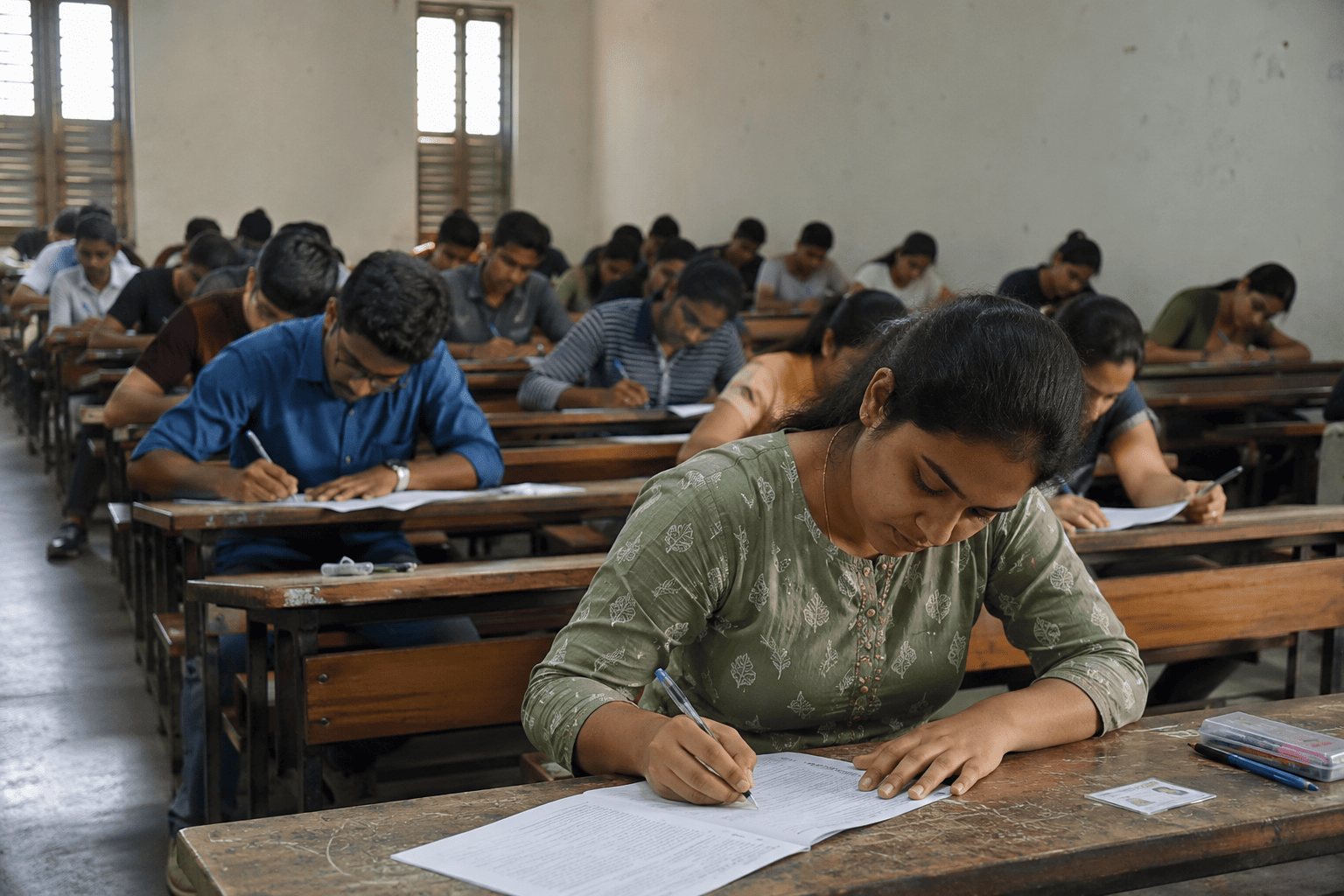
The coaching industry thrives because access to India's most coveted colleges and government jobs is funneled through a handful of fiercely competitive exams. For example, NEET is the sole gateway to undergraduate medical education, with millions vying for fewer than 150,000 seats annually. Similarly, around 1.3 million students register each year for JEE Main, competing for roughly 18,000 seats at the prestigious Indian Institutes of Technology. Only about 5% to 6% of NEET candidates ultimately secure a medical seat, a success rate that makes coaching feel like a necessity for many families.
Preparing for these exams requires a substantial financial commitment. Flagship classroom programs typically cost between ₹150,000 ($1,596) and ₹220,000 ($2,341) per year, before accommodation and living expenses. Students relocating to coaching hubs like Kota can spend well over ₹300,000 ($3,192) annually. A 2025 government survey found that 27% of Indian students take private coaching, with urban households spending an average of ₹3,988 per child annually—more than double the rural average of ₹1,793. At the higher-secondary level in cities, costs rise to ₹9,950 per child.
The price of preparation
Beyond the financial burden, students describe significant emotional costs. Kshitij Raj, who joined JEE coaching, said large batch sizes meant little individual attention. Anant Raj, taking a drop year, echoed that concern, noting that struggling students often had to rely on self-study or online resources. Vertika Vaishwi, a first-time JEE candidate, said her family spent about ₹500,000 ($5,320) on tuition and another ₹70,000–₹80,000 ($745–$851) on other expenses. "If I failed, it felt like my career would be over," she added.
The protests this summer highlighted a deeper issue: a generation of students questioning whether the examination system itself remains fair. The government's response—including reforms and the minister's resignation—signals an acknowledgment of the problem. Yet, the coaching industry's growth shows no signs of slowing, as families continue to invest heavily in the promise of academic success.
For investors, the sector's expansion is noteworthy, but the underlying trust deficit could pose risks. The recent unrest may lead to regulatory changes that affect coaching providers' business models. Meanwhile, the broader education landscape is evolving, with online alternatives gaining traction. As Indian power stocks surge on AI data center demand, the coaching industry's trajectory will depend on how well it adapts to calls for transparency and fairness.
The contrast between the celebratory ads and the protests captures a deeper reality: India's coaching boom is built on a system that many students no longer trust. Whether reforms can restore confidence remains an open question.
This article is for informational purposes only and does not constitute financial advice.